
- → A Global Occupational Challenge: Approximately 20% of the worldwide workforce is engaged in non-standard or night shifts, with over a quarter developing clinical Shift Work Disorder (Wright et al., 2013; Pallesen et al., 2021).
- → Sustaining Nocturnal Alertness: The American Academy of Sleep Medicine (AASM) conditionally recommends prophylactic pre-shift naps, strategic caffeine timing, workplace bright light exposure, or supervised wake-promoting agents for excessive sleepiness (Wright et al., 2026).
- → Safeguarding Daytime Sleep: To consolidate daytime rest following a night shift, exogenous melatonin and cognitive behavioral therapy for insomnia (CBT-I) represent promising non-benzodiazepine interventions (Wright et al., 2026).
- → Nocturnal Nutrition and Metabolic Risk: Shift work doubles the risk of metabolic syndrome in healthcare workers; replacing heavy midnight meals with light protein snacks blunts glycemic volatility (Sooriyaarachchi et al., 2022; Wright et al., 2026).
⚠️ Informational Notice: This guide is intended solely for scientific education and circadian sleep hygiene. It does not replace clinical consultation, medical diagnosis, or personalized therapeutic intervention. If you experience persistent sleep disturbances, consult a certified sleep physician.
Summary
- Roughly 20% of the global labor force works outside the standard daytime schedule (07:00–18:00), and approximately 26.5% of shift workers meet clinical criteria for Shift Work Disorder (SWD) [3, 5].
- The American Academy of Sleep Medicine (AASM) 2026 clinical practice guideline provides conditional recommendations to optimize nocturnal wakefulness, including pre-shift naps, scheduled caffeine, bright light therapy, and supervised wake-promoting pharmacotherapy [1, 2].
- Avoiding heavy midnight meals in favor of modest snacks or nocturnal fasting curbs excessive on-shift sleepiness and protects against postprandial glucose excursions [1, 7].
- Facilitating daytime sleep after a morning commute is enhanced through targeted melatonin supplementation, behavioral sleep therapy, and wearing light-attenuating blue-blocking glasses during sunrise transit for permanent night staff [1].
Does This Sound Familiar?
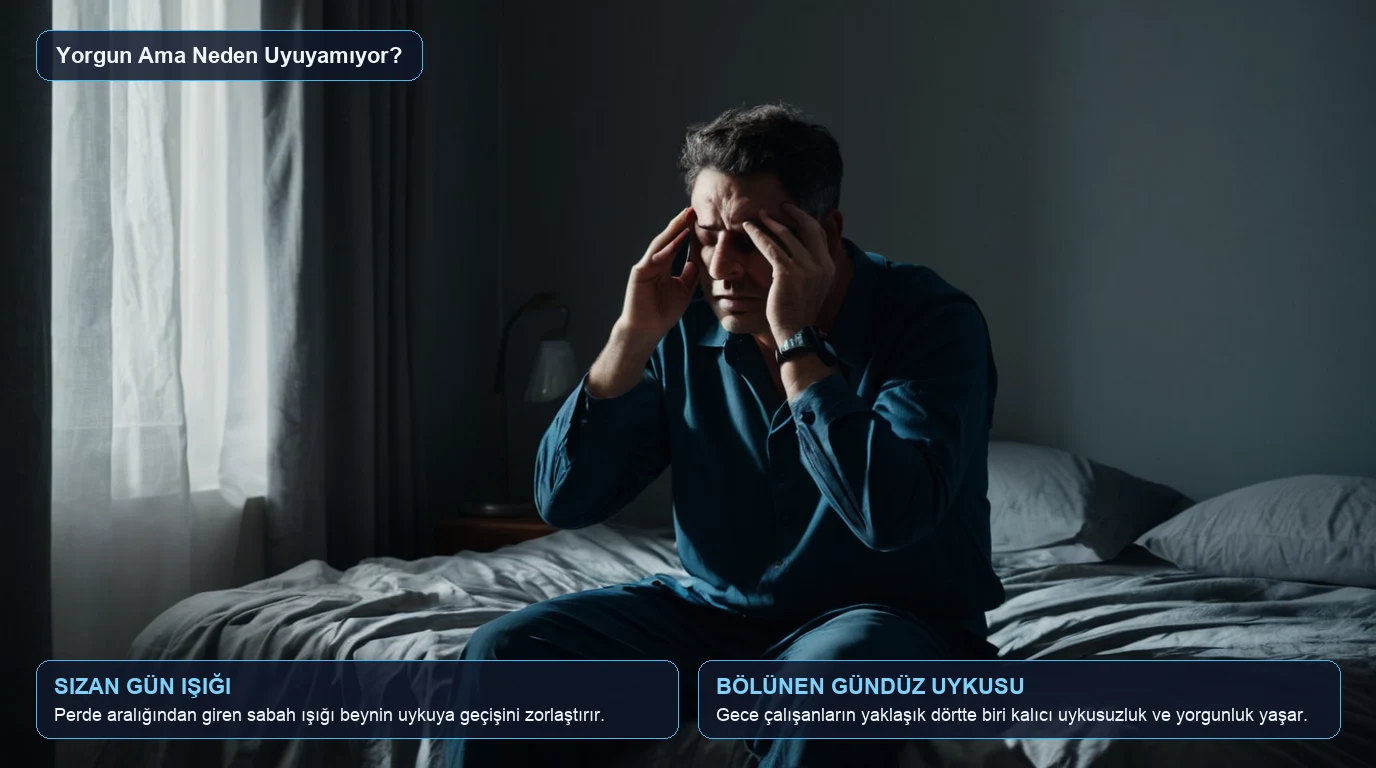
At 07:30 AM, you step through the exit doors of the hospital, manufacturing plant, or data center. Throughout the long nocturnal hours, staring at telemetry screens or assembly lines, your eyelids felt like lead weights; all you could contemplate was collapsing into your mattress. Yet the moment morning sunlight strikes your face as you step off the commuter bus, a sudden, paradoxical surge of alertness courses through your body.
You enter your home, draw blackout curtains, silence your mobile devices, and lie down. Despite deep physical exhaustion, your brain refuses to disengage. You either stare at the ceiling for hours or awaken after ninety minutes of fragmented sleep, entirely unable to drift back off. By the time twilight arrives, you prepare for another nocturnal shift with an unrefreshed, metabolically drained body [3].
If you find yourself trapped in this pattern, you are not alone, nor is it a personal failure of willpower. Over 20% of the world’s working population is employed on shift schedules outside standard daytime hours [3]. A comprehensive meta-analysis pooling 29 international studies revealed that 26.5% of shift workers suffer from Shift Work Disorder—a clinical diagnosis marked by chronic nocturnal sleepiness and severe diurnal insomnia [5].
Furthermore, this disruption extends beyond fatigue. A systematic review of 12 studies evaluating healthcare shift staff revealed that night work more than doubles the risk of metabolic syndrome (hypertension, hyperglycemia, dyslipidemia, and central adiposity) compared to day staff [6]. What biological forces govern this mismatch, and what does the 2026 clinical guideline recommend [1, 2]?
What Happens Inside Your Body During the Night Shift?
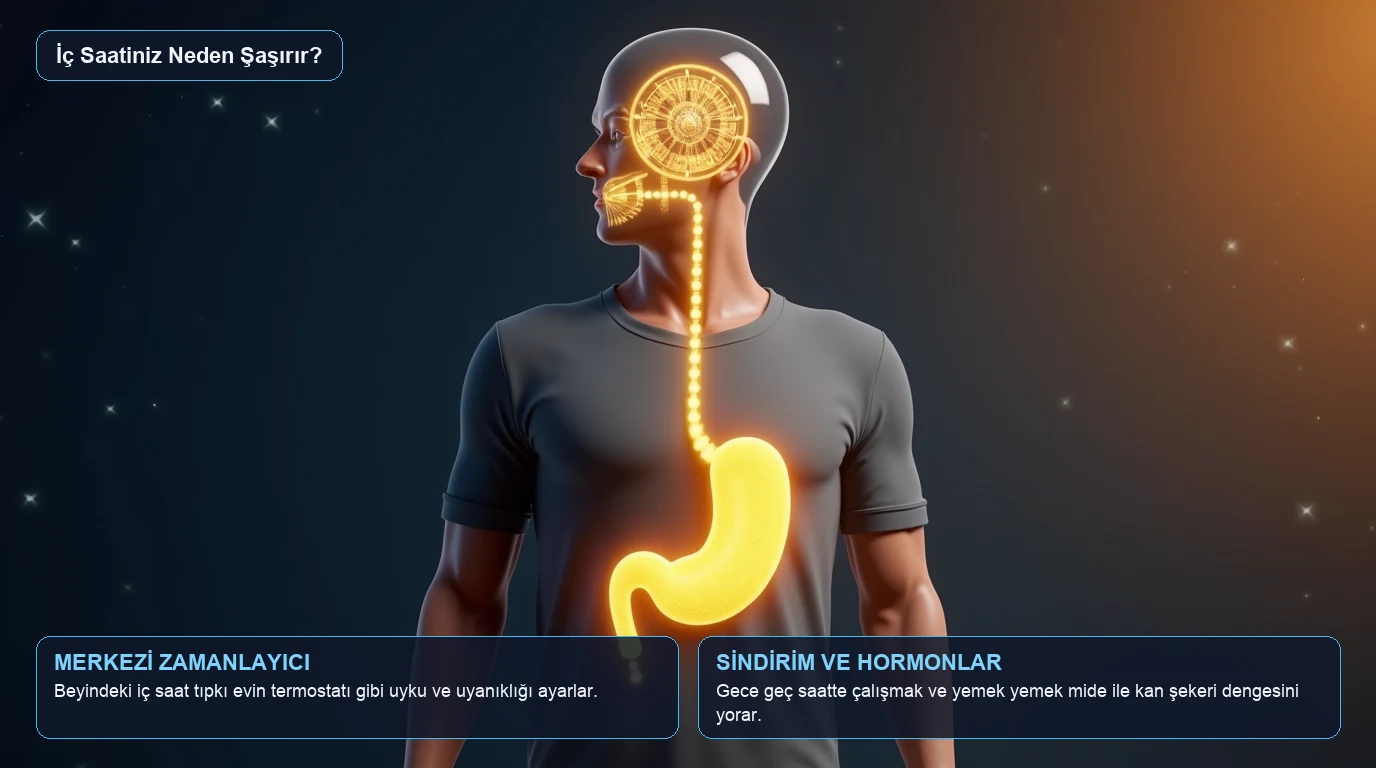
Within your hypothalamus sits a master biological pacemaker operating like a central thermostat: the circadian timing system. Entrained by daily solar irradiance, this internal clock regulates wakefulness, core body temperature, hormone cascades, and digestive enzymes across a 24-hour cycle [3]. When you turn on bright overhead industrial lights to work through the night while your central thermostat attempts to initiate metabolic rest, a fierce physiological tug-of-war erupts [3].
Between midnight and dawn, your circadian pacemaker is biologically hardwired to lower core body temperature, reduce blood pressure, and consolidate slow-wave sleep. Fighting this programming to stay upright floods the nervous system with conflicting neural signals, degrading cognitive reaction times [3, 4]. When you clock out and step into morning daylight, the thermostat switches directly into diurnal waking mode: morning sun suppresses melatonin and spikes cortisol, shattering your daytime sleep architecture [3].
This chronobiological mismatch derails gastrointestinal and metabolic homeostasis. In a randomized crossover clinical trial of 20 healthy volunteers, shifting a standardized dinner from 18:00 to 22:00 resulted in elevated postprandial glucose, heightened nocturnal cortisol, and blunted lipid oxidation during sleep [7]. While conducted in 20 healthy individuals, these findings highlight the metabolic penalty of late-night feeding for shift workers [7].
Consequently, shift-related sleep problems are not merely a matter of total sleep duration; they represent a fundamental temporal collision between internal biological rhythms and external behavioral demands [1, 3]. To provide evidence-based guidance, an expert task force convened by the American Academy of Sleep Medicine (AASM) screened 3,045 medical publications, extracting 118 eligible studies for meta-analytic GRADE synthesis to publish the 2026 clinical practice guideline [1, 2].
All recommendations formulated by the AASM task force are conditional, emphasizing that clinical interventions must be individualized according to occupational constraints, personal patient values, and medical evaluation [1]. Furthermore, because evidentiary certainty across many behavioral interventions remains low or very low, no single panacea works identically for every individual [1, 2].
Sustaining Vigilance: What Keeps You Awake Through the Night?
Remaining vigilant throughout a nocturnal shift resembles driving an overloaded vehicle up a steep mountain pass. When the engine strains, the 2026 AASM guideline systematically evaluates several tactical gears to preserve alertness safely [1]: prophylactic pre-shift naps, timed caffeine, workplace bright light, strategic nutrition, and physician-supervised pharmacotherapy [1].
The foundational behavioral strategy is scheduling a prophylactic pre-shift nap before leaving for work [1]. The guideline conditionally recommends a pre-shift nap over no nap for adults suffering from excessive occupational sleepiness [1]. Pairing this rest with pre-shift or mid-shift caffeine consumption provides an additive alerting effect, substantially outperforming unassisted vigilance [1].
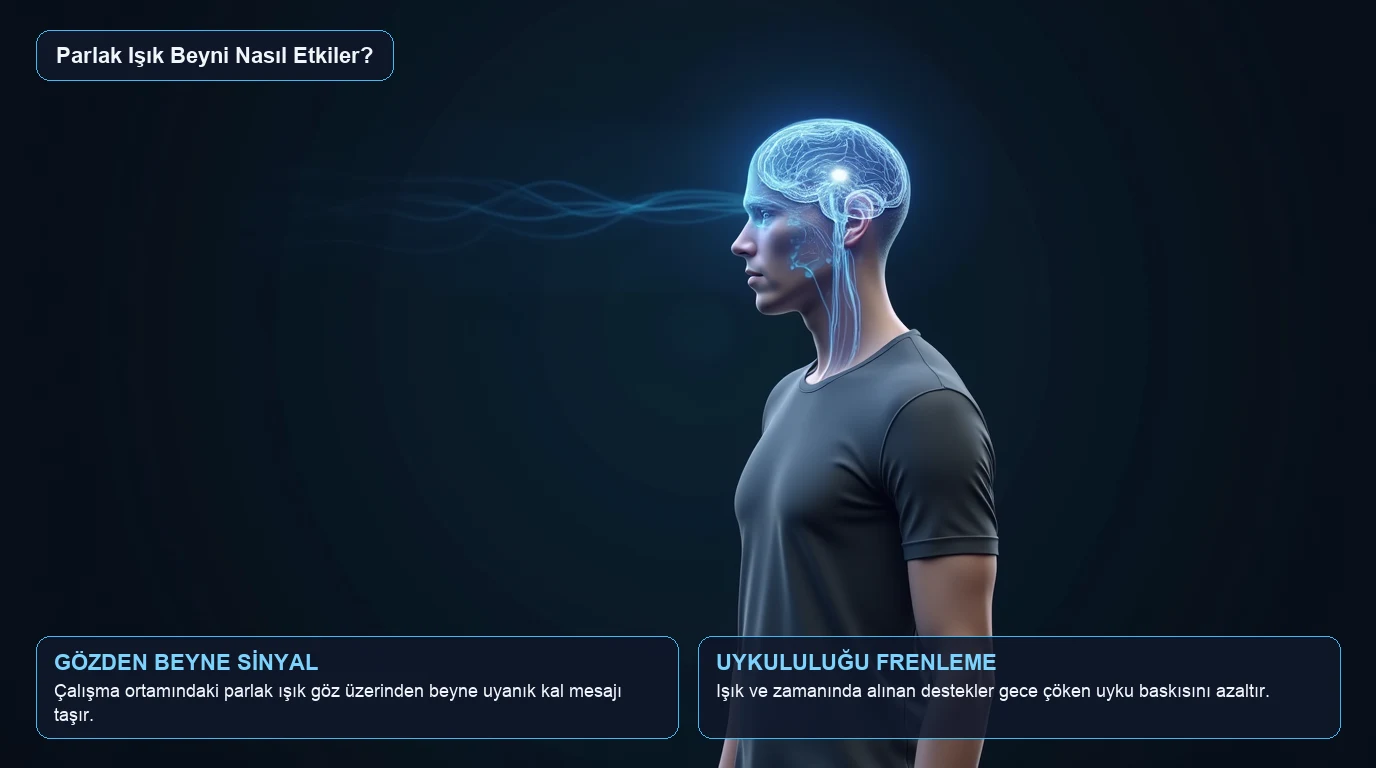
Utilizing bright light exposure during active nocturnal working hours is another validated intervention [1]. The guideline conditionally supports combining ambient bright light with caffeine over passive lighting [1]. Shift workers suffering from both daytime insomnia and impaired nocturnal alertness derive measurable functional improvements from bright light exposure during the shift [1].
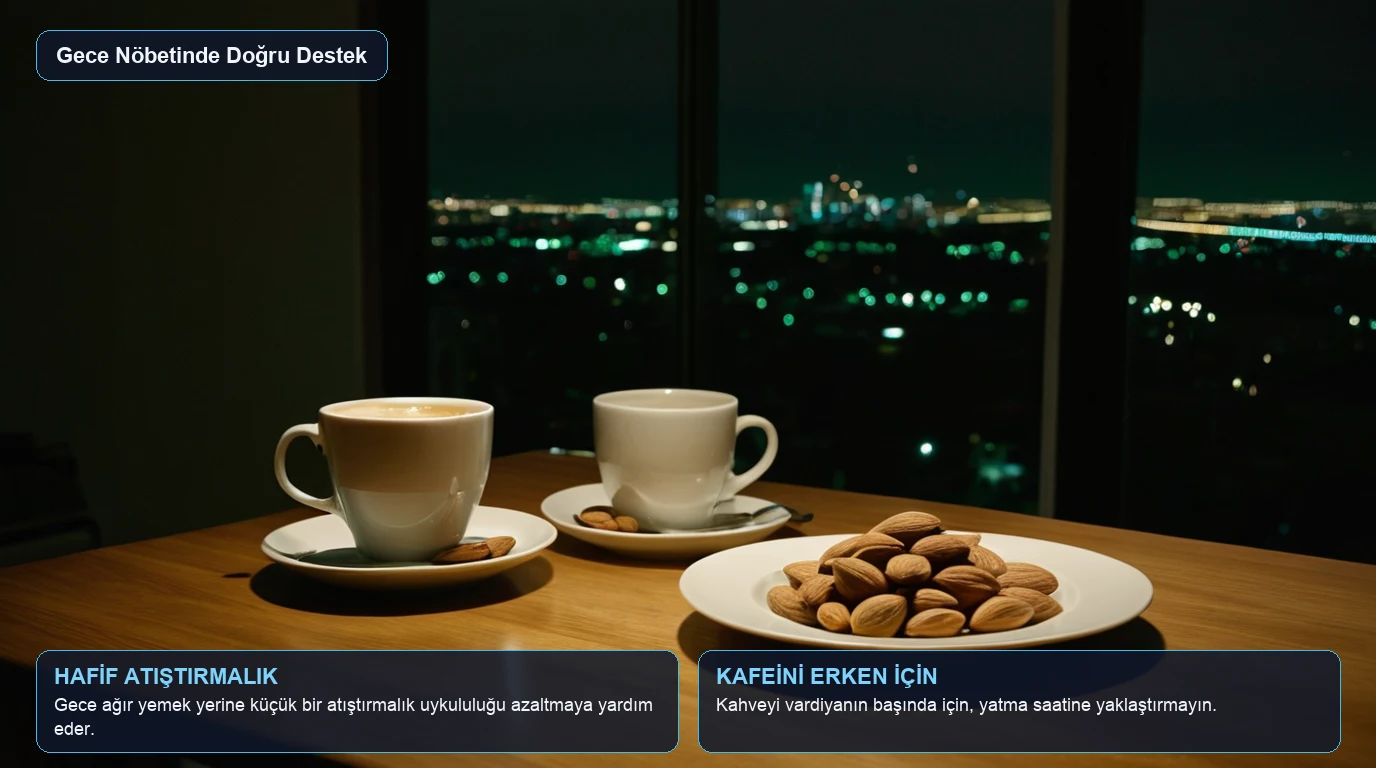
Nutritional strategy plays an equally critical role. The AASM guideline conditionally suggests consuming small, light snacks or practicing nocturnal fasting over heavy, full-course meals during night shifts [1]. Controlled metabolic data proves that heavy nighttime carbohydrate loading elevates systemic glucose and reduces fat burning, worsening circadian metabolic strain [7].
When behavioral countermeasures prove insufficient for disabling excessive sleepiness, the guideline reviews prescription wake-promoting agents—the sole modality possessing moderate certainty of evidence [1]. The AASM conditionally recommends the prescription of modafinil or armodafinil taken 30 to 60 minutes prior to the start of the night shift [1]. In a randomized, double-blind, 3-month trial of 209 patients with Shift Work Sleep Disorder, 200 mg of modafinil significantly prolonged nocturnal sleep latency on the Multiple Sleep Latency Test and improved clinical global impressions in 74% of participants compared to 36% on placebo [4].
However, investigators emphasized a critical reality: while modafinil improved objective attention and reduced nighttime attention lapses, residual nocturnal sleepiness persisted [4]. Pharmacotherapy does not fully eliminate circadian sleep pressure; it must be viewed as an adjunct under rigorous medical supervision, rather than a standalone cure [1, 4].
Navigating the Commute: How to Transition to Daytime Sleep
Stepping into the bright morning sun after a 12-hour night shift triggers the biological equivalent of a fire alarm in your bedroom. Just as your somatic tissues yearn for cellular recovery, morning sunlight strikes your retinas, prompting the SCN to issue a systemic awakening command [1, 3]. The 2026 AASM guideline presents concrete behavioral and pharmacotherapeutic interventions to preserve daytime sleep [1].
For individuals struggling to initiate or maintain daytime sleep, Cognitive Behavioral Therapy for Insomnia (CBT-I) is conditionally recommended as a first-line non-pharmacological therapy [1]. Tailored to non-traditional schedules, CBT-I restructures maladaptive sleep beliefs, limits unrefreshing wakefulness in bed, and stabilizes daytime rest windows [1].
Among chronobiological supplements, exogenous melatonin is conditionally recommended across three distinct operational junctures:
- Immediately prior to daytime sleep following a night shift,
- Preceding a prophylactic nap before the first night of a shift block, and
- During recovery periods when rotating back to nighttime sleep [1]. Because clinical trials examined diverse dosing regimens without identifying a single optimal concentration, specific dosing must be tailored with a physician [1].
Regarding prescription sleep aids, the AASM conditionally suggests melatonin receptor agonists (e.g., ramelteon) or dual orexin receptor antagonists (e.g., suvorexant) for adults with shift-related daytime insomnia, based on low-certainty evidence [1]. Crucially, the guideline explicitly recommends against the use of triazolam and conventional benzodiazepine hypnotics for daytime insomnia due to tolerance, cognitive blunting, and dependence risks [1].
For permanent, non-rotating night workers seeking full circadian adaptation, the guideline identifies a coordinated three-component photic protocol:
- Workplace bright light exposure during the night,
- A strictly anchored, uniform daytime sleep schedule, and
- Wearing light-attenuating (blue-blocking) sunglasses during the morning commute home [1]. This triad dampens morning phase delays, helping the internal clock align with nocturnal wakefulness [1]. However, in rotating shift workers who alternate between days and nights, full circadian realignment is physiologically unfeasible; thus, morning light blocking provides minimal clinical utility in rotating schedules [1].

Ergonomic Shift Scheduling: Minimizing Biological Friction
The structural design of an organization’s shift roster dictates whether workers paddle with or against their biological current. The AASM guideline conditionally recommends clockwise (forward) rotating schedules over counterclockwise (backward) rotations [1].
A clockwise rotation progresses in an orderly sequence: Morning Shift → Afternoon/Evening Shift → Night Shift [1]. This aligns with the natural human endogenous circadian period, which runs slightly longer than 24 hours in most individuals, allowing easier phase delays [1]. Conversely, counterclockwise rotation (Night → Evening → Morning) forces circadian phase advances against biological resistance, escalating daytime fatigue [1].
Addressing the common debate between 8-hour versus 12-hour shifts, the AASM found no definitive superiority between the two schedules for adult night workers employed within standard full-time ranges (36 to 52 hours per week) [1]. Current clinical evidence does not demonstrate that one duration systematically outperforms the other regarding sleep duration or vigilance [1]. However, shifts exceeding 12 hours or back-to-back shift clustering were not analyzed and require independent risk management [1].

Scientific Evidentiary Strength
All recommendations in the 2026 AASM guideline are conditional, with prescription wake-promoting agents being the only intervention backed by moderate-certainty evidence [1, 2]. The evidentiary strength across key findings is summarized below:
| Scientific Finding / Intervention | Evidentiary Strength |
|---|---|
| Epidemiological link between shift work, sleep disruption, and cardiometabolic risk [3, 5, 6] | 🟢 Robust Evidence |
| Prescription wake-promoting agents (modafinil/armodafinil) taken 30–60 min pre-shift [1, 4] | 🟡 Emerging / Moderate |
| Substituting heavy meals with light snacks or fasting during the night shift [1, 7] | 🟡 Emerging / Moderate |
| Targeted exogenous melatonin to transition from night work to daytime sleep [1] | 🟡 Emerging / Moderate |
| Prescription melatonin receptor agonists or orexin antagonists for daytime insomnia [1] | 🟡 Emerging / Moderate |
| Pre-shift naps, caffeine, and bright light therapy to sustain night-shift alertness [1] | 🔴 Low / Insufficient |
| Cognitive Behavioral Therapy for Insomnia and morning light-blocking glasses [1] | 🔴 Low / Insufficient |
| Clockwise shift rotation and 8-hour vs 12-hour schedule comparisons [1] | 🔴 Low / Insufficient |
💡 Evidentiary Grading Definitions:
- 🟢 Robust Evidence: Replicated across large independent cohort studies and systematic meta-analyses.
- 🟡 Emerging / Moderate Evidence: Backed by randomized clinical trials with moderate certainty; requires clinical supervision.
- 🔴 Low / Insufficient Evidence: Statistically promising in small samples but characterized by high methodological heterogeneity or low GRADE certainty.
4 Practical Steps for the Night Shift
- 1. Lighten Nocturnal Intake: Avoid heavy carbohydrate meals during your shift; opt for a handful of nuts, boiled eggs, or hot tea, or practice nocturnal fasting [1, 7].
- 2. Anchor a Pre-Shift Nap: Take a 20- to 45-minute nap at home before heading into your shift, allowing sufficient buffer time upon waking to clear sleep inertia [1].
- 3. Curfew Your Caffeine: Confine coffee or energy drinks to the beginning of your shift; cut off all caffeine at least 4 to 6 hours before you plan to sleep [1].
- 4. Protect the Commute and Bedroom: If on permanent night duty, wear dark amber sunglasses during your morning commute and ensure your bedroom is pitch-black, cool (<19°C), and soundproofed [1].
Timing and Safety Matrix
| Intervention | Optimal Timing | Safety & Operational Precaution |
|---|---|---|
| Prophylactic Nap | Immediately prior to departing for the night shift | Allow 15–20 minutes after waking before driving to clear transient sleep inertia [1]. |
| Caffeine | Pre-shift and during the first half of the work period | Avoid during the second half of the shift to prevent destroying daytime sleep latency [1]. |
| Bright Light | Continuous during nocturnal working hours | In rotating shift staff, light alone does not force circadian realignment [1]. |
| Light Snacks | When hungry during nocturnal breaks | Large meals provoke postprandial somnolence and glycemic volatility [1, 7]. |
| Exogenous Melatonin | Prior to daytime sleep, pre-shift nap, or rotating back | May cause transient drowsiness; verify dosage with a physician [1]. |
| Prescription Wake-Promoting Agents | 30 to 60 minutes before nocturnal shift begins | Requires strict medical prescription; does not fully eliminate residual impairment [1, 4]. |
Operational Precautions and Risk Profiles
While pre-shift naps improve operational vigilance, waking up triggers sleep inertia—a transient state of cognitive grogginess, slowed processing speed, and impaired motor reaction time [1]. Workers must avoid immediately operating motor vehicles or managing safety-critical operations upon waking; a buffer of 15 to 20 minutes is vital to allow neurocognitive clearance [1].
Similar road safety precautions apply to melatonin and morning sunglasses [1]. Exogenous melatonin taken prior to naps can impair reflexes if taken too close to departure times [1]. Furthermore, shift workers utilizing dark sunglasses to attenuate morning sunlight must ensure their lenses do not compromise driving visibility or color distinction during traffic commutes [1].
Caffeine, while an exceptional adenosine receptor antagonist, turns toxic to sleep architecture when consumed too close to clock-out time [1]. Ingesting caffeine during the final hours of a shift extends sleep latency, degrades slow-wave deep sleep, and exacerbates chronic sleep debt [1]. Meanwhile, triazolam and other traditional benzodiazepine hypnotics are explicitly discouraged by the AASM due to next-day sedation and dependence risks [1].
Finally, prescription wake-promoting agents and novel hypnotic classes require strict supervision for adverse effects and cardiovascular drug interactions [1, 4]. Individuals with chronic metabolic or cardiovascular conditions, pregnant or nursing women, and those on rotating schedules exceeding 12 hours must always consult their physician before adopting new medical regimens.

Frequently Asked Questions
Is an 8-hour or 12-hour night shift better for long-term health?
The American Academy of Sleep Medicine task force identified no clear clinical superiority of 8-hour over 12-hour night shifts among adults working standard weekly totals (36 to 52 hours) [1]. Current evidence is of very low certainty and does not establish a difference in total sleep time or overall fatigue [1]. Extended duties exceeding 12 hours were not evaluated in the guideline [1].
Does wearing sunglasses on the morning drive home truly improve daytime sleep?
For permanent, fixed night workers, combining workplace bright light, consistent daytime sleep hours, and morning light-attenuating sunglasses helps prevent sunrise from driving circadian phase delays, facilitating daytime sleep onset [1]. However, in rotating shift workers, circadian adaptation to night work is unachievable, rendering morning sunglasses ineffective for phase shifting [1]. Ensure driving visibility is never compromised [1].
What is the healthiest way to handle hunger during a night shift?
The AASM suggests avoiding full-course, heavy meals during nocturnal working hours, recommending light, protein-focused snacks or nocturnal fasting instead [1]. Randomized metabolic data demonstrates that late-night dinners (e.g., 22:00) increase blood glucose and reduce fat burning compared to early evening meals [7]. Shifting your primary caloric intake outside biological night protects both alertness and cardiometabolic health [1, 7].
Can melatonin or prescription wake-promoting drugs completely cure shift work fatigue?
No pharmaceutical agent or chronobiological supplement completely eradicates the neurobiological penalty of circadian misalignment [1, 4]. For example, in a clinical trial of 209 patients, 200 mg of modafinil improved daytime alertness in 74% of participants, yet measurable sleepiness remained present throughout the nocturnal shift [4]. Pharmacotherapy must always be integrated with behavioral sleep hygiene and circadian light management under medical supervision [1, 4].
Verified References & Clinical Citations
- Wright KP, Abbott SM, Ashbrook L, et al. (2026). Management of shift work disorder: an American Academy of Sleep Medicine clinical practice guideline. Journal of Clinical Sleep Medicine. DOI: 10.1007/s44470-026-00084-w · PMID: 42925456
- Wright KP, Abbott SM, Ashbrook L, et al. (2026). Management of shift work disorder: an American Academy of Sleep Medicine systematic review, meta-analysis, and GRADE assessment. Journal of Clinical Sleep Medicine. DOI: 10.1007/s44470-026-00076-w · PMID: 42925443
- Wright KP, Bogan RK, Wyatt JK (2013). Shift work and the assessment and management of shift work disorder (SWD). Sleep Medicine Reviews, 17(1), 41–54. DOI: 10.1016/j.smrv.2012.02.002 · PMID: 22560640
- Czeisler CA, Walsh JK, Roth T, et al. (2005). Modafinil for excessive sleepiness associated with shift-work sleep disorder. The New England Journal of Medicine, 353(5), 476–486. DOI: 10.1056/nejmoa041292 · PMID: 16079371
- Pallesen S, Bjorvatn B, Waage S, et al. (2021). Prevalence of Shift Work Disorder: A Systematic Review and Meta-Analysis. Frontiers in Psychology, 12, 638252. DOI: 10.3389/fpsyg.2021.638252 · PMID: 33833721
- Sooriyaarachchi P, Jayawardena R, Pavey T, King NA (2022). Shift work and the risk for metabolic syndrome among healthcare workers: A systematic review and meta-analysis. Obesity Reviews, 23(10), e13489. DOI: 10.1111/obr.13489 · PMID: 35734805
- Gu C, Brereton N, Schweitzer A, et al. (2020). Metabolic Effects of Late Dinner in Healthy Volunteers-A Randomized Crossover Clinical Trial. The Journal of Clinical Endocrinology and Metabolism, 105(8), 2789–2802. DOI: 10.1210/clinem/dgaa354 · PMID: 32525525
For informational purposes only; consult a physician for medical diagnosis or treatment.