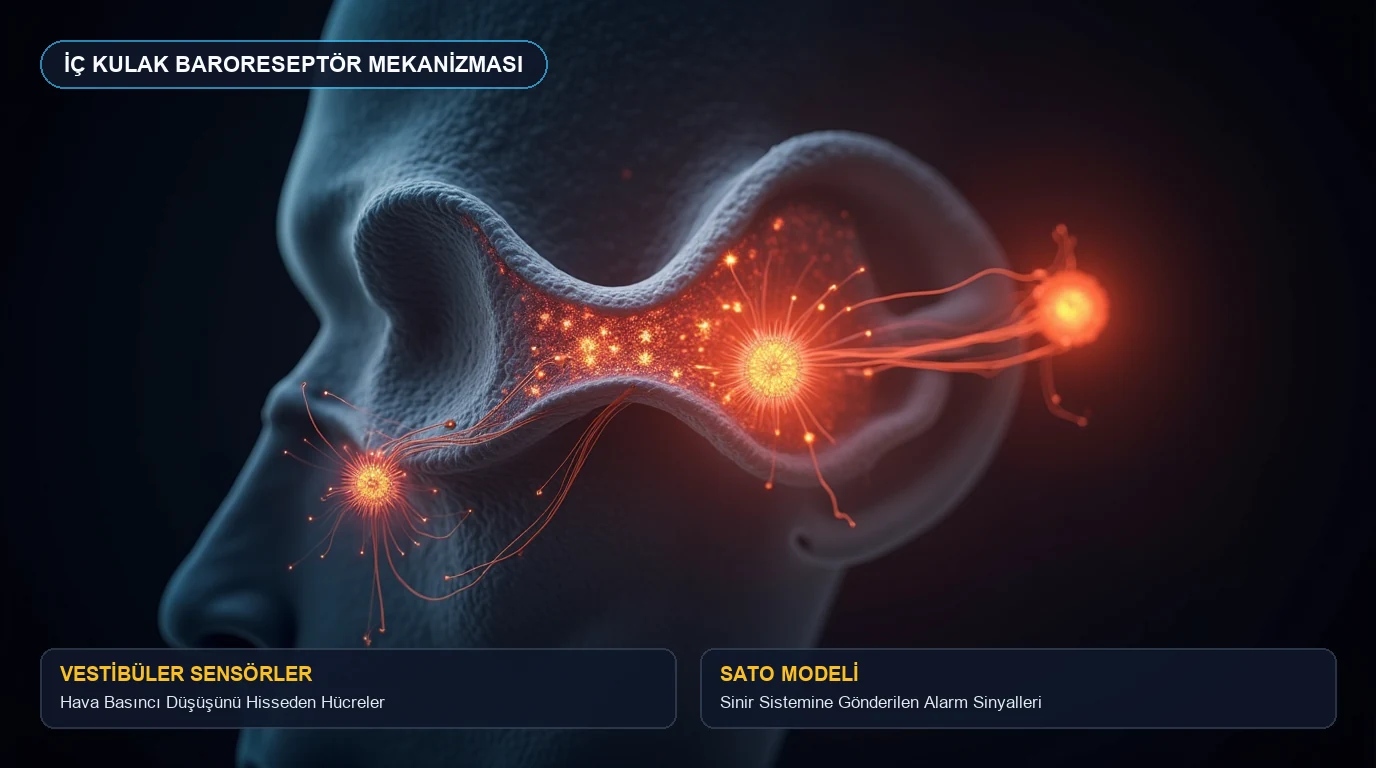
- → The Inner Ear Acts as an Internal Barometer: Sudden drops in barometric air pressure stimulate vestibular ganglion cells, sending an emergency signal to autonomic brain centers (Sato et al., 2025).
- → Cranial Blood Vessels Expand During Pressure Drops: Lower ambient atmospheric pressure allows cranial vasculature to dilate, exciting trigeminal nociceptive nerve endings and triggering migraines (Cuenca-Zaldívar et al., 2026).
- → Joint Capsules Undergo Micro-Expansion: Reduced external air pressure eases the compression on synovial fluid, stretching sensitive capsule mechanoreceptors and causing dull aches (Portt et al., 2026).
- → Vascular Resilience Training Builds Weather Resistance: Traditional contrast hydrotherapy and topical peppermint oil enhance autonomic adaptability during volatile weather shifts (Holistische Gesundheit, 2026).
⚠️ Medical Disclaimer: This article is for informational purposes only and does not replace medical advice, diagnosis, or clinical treatment. If you experience sudden thunderclap headaches, vision disturbances, or acute cardiovascular symptoms, seek immediate evaluation from a neurologist or cardiologist.
In Brief
- Biology tuned to the sky: Experienced by nearly one in three adults, meteoropathy represents an exaggerated adaptive response of the autonomic nervous system to swings in barometric pressure, temperature, and humidity.
- Microscopic atmospheric sensors: Specialized baroreceptive cells inside the vestibular labyrinth detect atmospheric pressure decreases, rapidly activating the sympathetic nervous system.
- Ancient insights meet modern science: Central European nature therapy has utilized Kneipp contrast hydrotherapy for centuries to train blood vessel tone, an approach validated by contemporary neurovascular research.
- Actionable relief: Proper hydration with trace electrolytes, topical peppermint oil on the temples, and brisk walks in fresh air help the body maintain autonomic equilibrium.
Sounds Familiar? “A Storm Is Coming, My Head Starts Throbbing”
Do you notice a sudden dull pressure across your temples whenever the sky fills with heavy gray clouds or warm southern winds pick up? For millions of individuals, a tension in the neck, an ache in previous injury sites, or unexplained sluggishness appears hours before the first raindrop hits the pavement.
In past eras, saying that one could feel an approaching storm in their bones was dismissed as subjective folklore. Today, clinical biometeorology and neurobiology demonstrate that weather sensitivity is grounded in verifiable physiology [1, 2].
The human body is not an isolated capsule shielded from its surroundings. When the atmospheric air mass pressing down on us shifts weight, our regulatory systems must actively recalibrate to maintain homeostasis.
The Internal Barometer: What Happens When Atmospheric Pressure Falls?
Under standard sea-level conditions, Earth’s atmosphere exerts roughly one kilogram of invisible weight on every square centimeter of surface area. When a low-pressure weather front moves in, this ambient external squeeze diminishes rapidly [3].
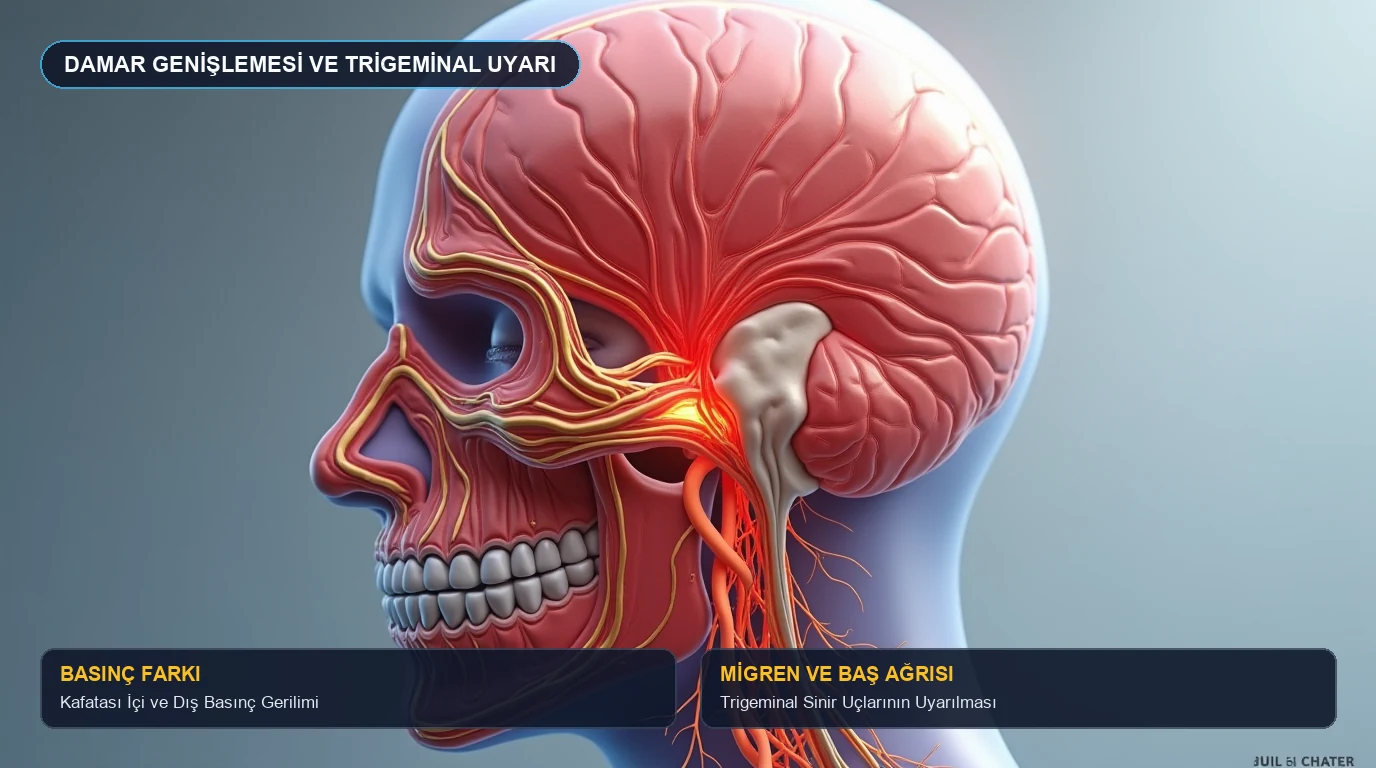
With less external pressure holding tissues in place, internal pressure within closed compartments becomes relatively elevated. Much like the fullness felt in the ears during rapid airplane descents, cranial blood vessels expand outward against surrounding nerves [1].
Groundbreaking research led by Dr. Jun Sato confirmed that vestibular ganglion cells in the inner ear serve as precision baroreceptors [1]. The moment atmospheric pressure dips, these neurons fire signals directly to sympathetic centers, accelerating heart rate, altering arterial tension, and triggering migraine cascades in susceptible individuals [2, 4].
Are Joint Aches Real? Synovial Fluid Pressure and Mechanoreceptors
Individuals suffering from osteoarthritis or recovering from previous bone fractures often predict weather turns with remarkable precision. The physical mechanism behind this phenomenon centers on fluid equilibrium within joint capsules [2].
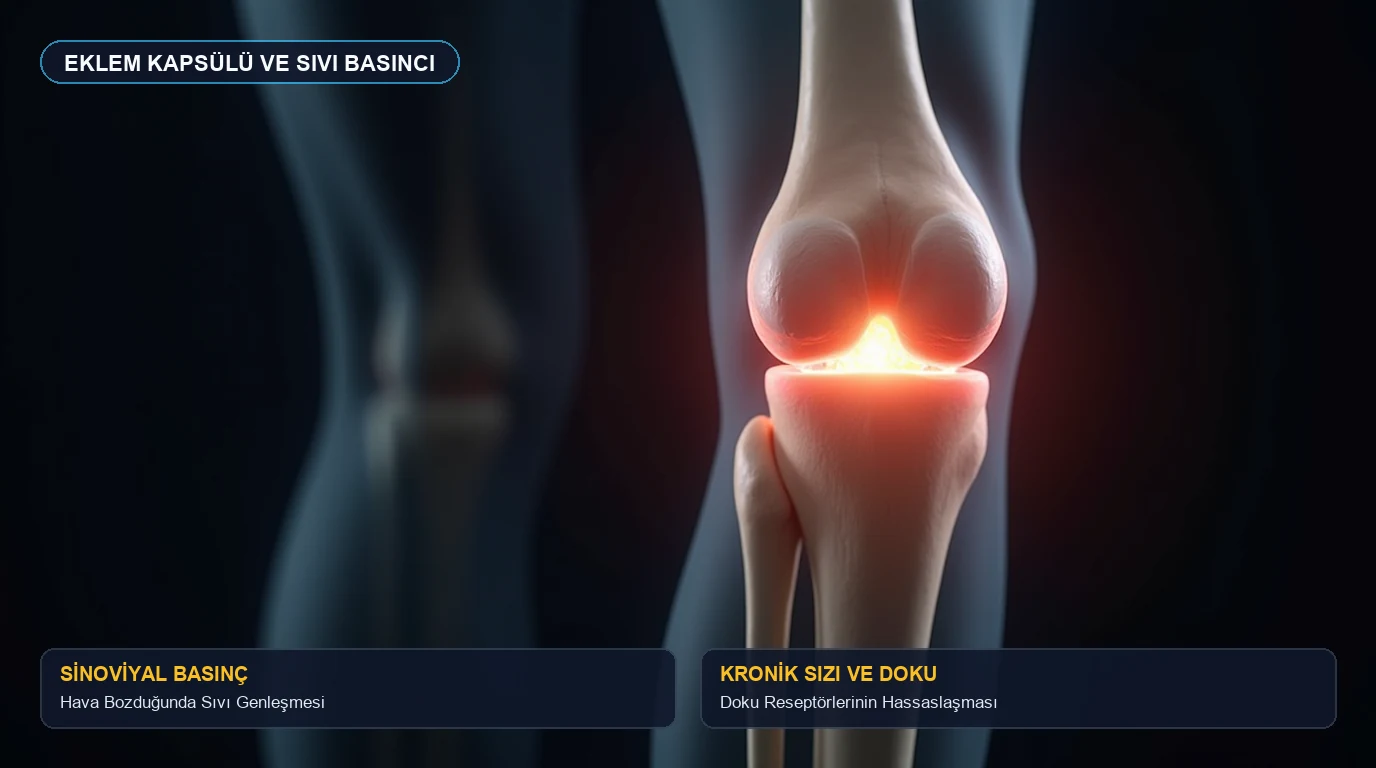
Normally, ambient barometric pressure acts like an invisible supportive wrap around articulating joints. When that external compression lightens, inflamed synovial lining and fluid expand into available microscopic recesses [2].
This tissue expansion stretches the joint capsule, mechanically compressing mechanoreceptors and nociceptive pain fibers. For joints with depleted cartilage cushions or chronic low-grade inflammation, this minute expansion manifests as noticeable stiffness and aching [4].
Traditional Nature Medicine: Kneipp Hydrotherapy and Vascular Gymnastics
In Central European folk medicine, weather sensitivity (Wetterfühligkeit) has long been recognized as a treatable physiological challenge. The foundational modality for this condition was established by German naturopath Sebastian Kneipp [5].
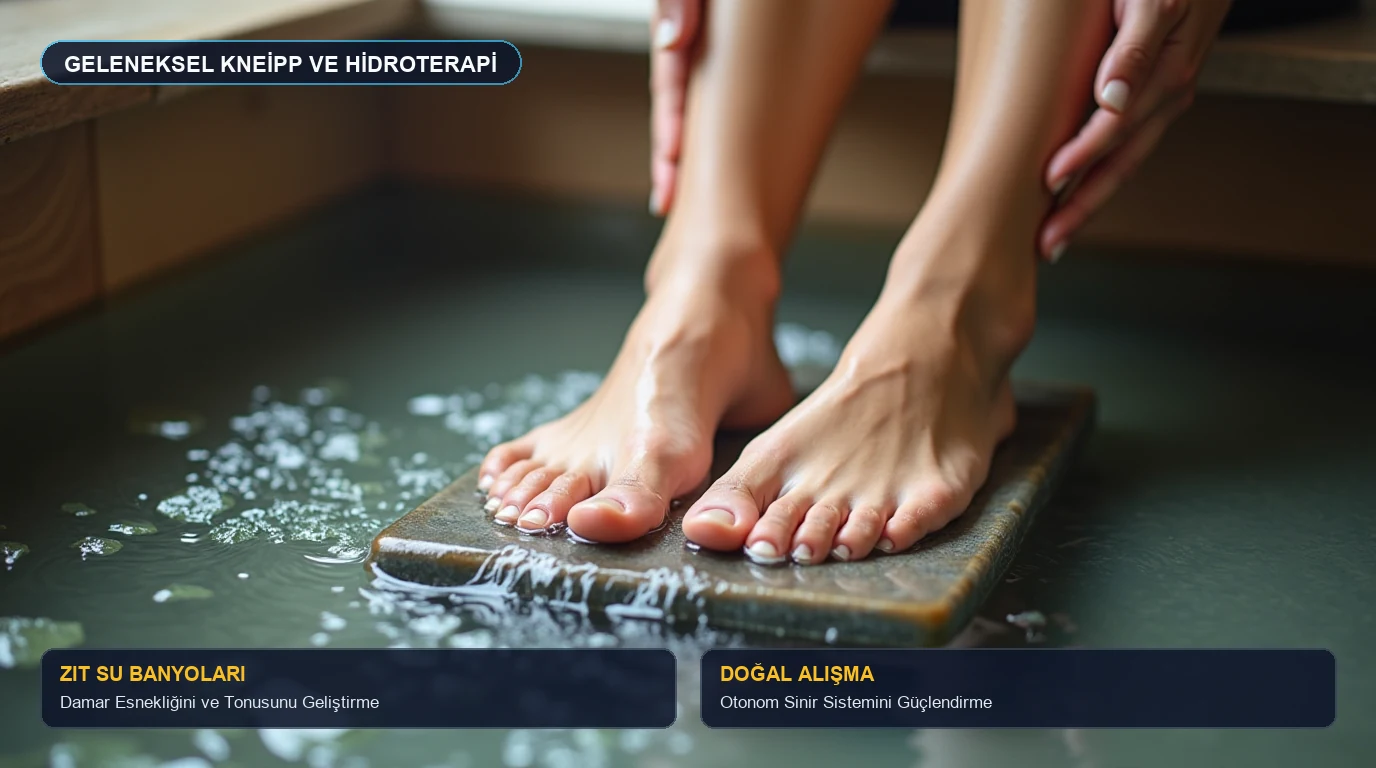
According to the Kneipp philosophy, weather sensitivity is not an innate pathology, but rather a consequence of climate-controlled modern living [5]. Spending days in constant 22°C indoor temperatures deprives the peripheral vascular network of natural thermal challenges, weakening its ability to briskly contract and dilate.
Applying alternating warm and cool water streams to the legs and forearms functions as cardiovascular gymnastics for vascular smooth muscle. By conditioning the autonomic nervous system through contrast bathing, the body learns to adapt calmly rather than overreacting when external air pressure fluctuates [5].
What Can You Do? 4 Evidence-Based Steps for Weather Resilience
While we cannot manipulate atmospheric weather patterns, we can optimize how our neurovascular system responds to environmental volatility.


- Apply Topical Peppermint Oil to the Temples: A 10% solution of pharmaceutical peppermint oil stimulates cutaneous cold-sensitive TRPM8 receptors, inhibiting spinal nociceptive transmission and easing cranial vascular pressure [6].
- Elevate Hydration and Maintain Electrolytes: When atmospheric pressure drops, maintaining intravascular blood volume prevents orthostatic hypotension; drinking warm water with a pinch of unrefined sea salt stabilizes circulation.
- Soothe Vascular Spasms with Magnesium and Lemon Balm: Magnesium glycinate relaxes vascular smooth muscle, while evening lemon balm (Melissa officinalis) tea buffers sympathetic overactivity [5].
- Engage in 20 Minutes of Outdoor Aerobic Movement: Rather than retreating into sealed rooms, walking outdoors in dynamic weather exposes the vestibular system to environmental stimuli, fostering physiological resilience.
How Much Can We Trust This?
| Finding / Intervention | Confidence Level |
|---|---|
| Inner ear baroreceptors exhibit neuronal activation during pressure drops | 🟢 Strong |
| Barometric pressure fluctuations trigger migraine and tension headaches | 🟢 Strong |
| Topical peppermint oil significantly relieves tension-type head discomfort | 🟢 Strong |
| Kneipp contrast hydrotherapy enhances autonomic vascular adaptation | 🟡 Emerging |
| Magnetic bracelets or commercial shields eliminate weather sensitivity | 🔴 Insufficient |
💡 What Do These Confidence Levels Mean?
- 🟢 Strong: Findings verified across multiple independent peer-reviewed human trials and mechanistic animal models.
- 🟡 Emerging: Traditional clinical protocols, pilot clinical studies, and consistent observational evidence.
- 🔴 Insufficient: Commercial claims lacking rigorous clinical trials, unverified hypotheses, or conflicting data.
Frequently Asked Questions
Is weather sensitivity primarily a psychological reaction?
No. Meteoropathy is a genuine physiological condition. Extensive neurobiological research confirms that vestibular ganglion cells in the inner ear physically sense barometric drops and stimulate autonomic and trigeminal pathways.
Which weather patterns trigger headaches most aggressively?
Rapid drops in barometric pressure preceding storm systems, warm foehn or south winds, and sharp spikes in humidity represent the most potent triggers for vascular headaches and migraines.
Can young, active individuals experience meteoropathy?
Yes. While joint aching is more pronounced in older demographics, young individuals with low resting blood pressure, migraine tendencies, or heightened sympathetic tone frequently suffer from acute weather-related fatigue and headaches.
Why do southern foehn winds induce irritability and restlessness?
Warm descending winds alter the atmospheric electrical charge by increasing positive ions while sharply depressing barometric pressure. This environmental shift perturbs serotonin and catecholamine balance, triggering restlessness and sleep fragmentation.
References
- Sato J, Inagaki H, Kusui M, et al. (2025). The inner ear is a barometric pressure sensor—change in barometric pressure induces vestibular ganglion cell activation in mice. Scientific Reports, 15(1):28093. DOI: 10.1038/s41598-025-28093-4
- Cuenca-Zaldívar JN, Corral Del Villar C, García Torres S, et al. (2026). The impact of climatic factors on headache patterns: a 14-year time series analysis of cluster and tension-type headaches in primary care. Journal of Oral & Facial Pain and Headache, 40(4):045. DOI: 10.22514/jofph.2026.045
- Portt AE, Gasparrini A, Ge E, et al. (2026). Weather, air pollution, and migraine: A case-time series analysis examining environmental exposures and transient health outcomes recorded via smartphone application. Environmental Epidemiology, 10(3):e0475. DOI: 10.1097/EE9.0000000000000475
- Konieczny K, Mak M, Karasiewicz K, et al. (2026). Somatosensory Amplification and Psychopathological Symptoms: The Mediating Roles of Meteoropathy and Meteosensitivity. Brain Sciences, 16(6):575. DOI: 10.3390/brainsci16060575
- Holistische Gesundheit. (2026). Wetterfühligkeit: Was wirklich hilft, wenn das Wetter umschlägt. Telegram Signal Source. Telegram Link
- Göbel H, Heinze A, Heinze-Kuhn K, et al. (2016). Peppermint oil in the acute treatment of tension-type headache. Schmerz, 30(3):295-310. DOI: 10.1007/s00482-016-0109-6
For informational purposes only; consult a physician for medical diagnosis or treatment.