- → Shared Neural Substrate: Social exclusion and profound emotional grief activate the dorsal anterior cingulate cortex and anterior insula—the identical neural networks processing visceral physical agony (Eisenberger et al., 2003).
- → Allostatic Overload: Unrelenting psychological tension keeps stress hormones continually elevated, generating cumulative biological wear and tear across cardiovascular, metabolic, and immune tissues (McEwen, 1998).
- → Early Life Imprinting: Adverse Childhood Experiences (ACEs) establish epigenetic cellular footprints that markedly multiply the risk of adult autoimmune disorders, cardiac events, and chronic pain syndromes (Felitti et al., 1998).
- → Systemic Low-Grade Inflammation: Chronic psychosocial distress desensitizes glucocorticoid receptors, triggering persistent pro-inflammatory cytokine secretion throughout bodily organs (Furman et al., 2019).
⚠️ Medical & Health Disclaimer: This guide provides educational information grounded in peer-reviewed biomedical literature and does not substitute for clinical medical diagnosis, physician examination, or therapeutic intervention. Individuals suffering from unexplained persistent pain, chest discomfort, acute gastrointestinal spasms, or somatic distress must consult a licensed physician. Never discontinue or adjust prescribed psychiatric or internal medicine pharmaceuticals without direct medical supervision.
In Brief
- Identical neural pathways: The human brain does not separate emotional anguish from physical trauma; both activate the dorsal anterior cingulate cortex and anterior insula [3].
- The silent cortisol burn: Prolonged psychological strain continuously fires the HPA axis, eventually breeding glucocorticoid resistance and systemic low-grade inflammation [2, 5].
- Epigenetic childhood scars: Unresolved childhood adversity alters long-term immune expression, paving the biological pathway toward adult autoimmune and cardiovascular disease [1].
- The vagal highway: The bidirectional vagus nerve routes repressed emotional conflicts straight into visceral spasms, gastric hyperacidity, and altered gut motility [4].
Sounds Familiar? Clear Lab Results Yet Unrelenting Bodily Aches
Have you struggled for weeks with rock-hard tension across your shoulders, sudden debilitating stomach cramps, or waking up feeling as if you were physically beaten overnight? Does it sound familiar to undergo comprehensive blood panels, ultrasounds, and MRI scans, only to have your physician state: “All tests look completely normal; your symptoms are driven purely by stress”?
For many patients, hearing this explanation feels dismissive—as if their genuine physical suffering were merely imaginary or “all in their head.” From a rigorous physiological perspective, however, the bridge between seelischer Schmerz (emotional anguish) and somatic disease is entirely concrete, measurable, and grounded in neuroendocrine biochemistry. In October 2026, discussions on the holistic health channel Schoepferinsel examining why mental suffering manifests as bodily illness brought psychosomatic neurobiology back into the spotlight.
How does grief, persistent anxiety, or unspoken interpersonal conflict physically damage our tissues? Through which biological channels does the brain broadcast emotional alarms into peripheral organs? In this guide, we investigate the mind-body axis, the cellular erosion of allostatic load, and evidence-based interventions to restore autonomic equilibrium.

1. Do Emotional and Physical Pain Share the Same Brain Circuitry?
The visceral heaviness in your chest following the loss of a loved one or profound social rejection is far from a mere poetic metaphor. A landmark fMRI investigation published in Science demonstrated that social exclusion and heartbreak register in the brain with physiological reality [3].
Neuroscientists discovered that individuals experiencing acute social rejection exhibited intense blood-oxygen-level-dependent (BOLD) activation in the dorsal anterior cingulate cortex (dACC) and anterior insula. These exact neuroanatomical hubs govern the affective, distressing dimension of visceral physical pain, such as touching a burning stove or fracturing a bone [3].
Evolutionarily, human survival hinged entirely on group belonging; social abandonment was as lethal as predator attacks. Consequently, the brain co-opted existing physical pain circuitry to flag emotional exclusion. When the central nervous system registers acute threat, peripheral organs are compelled to absorb the alarm.
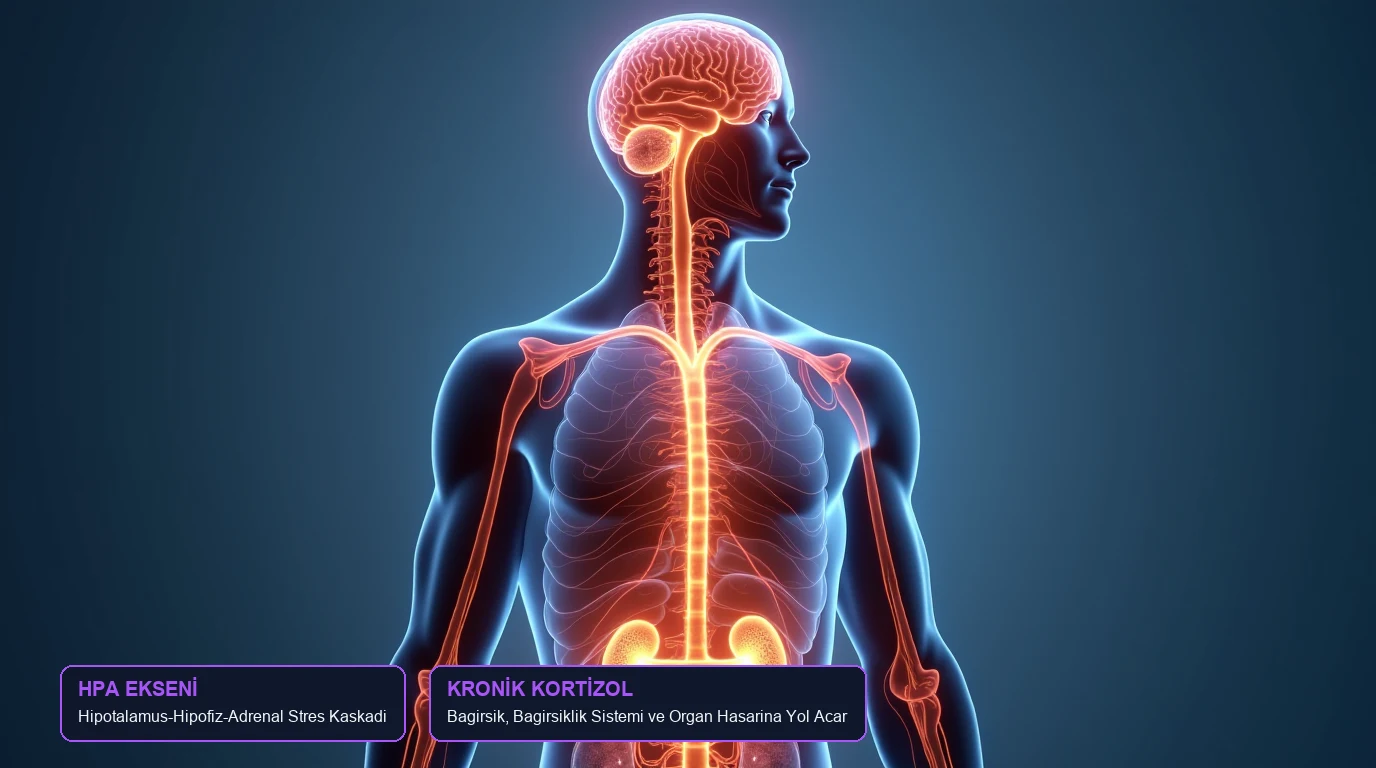
2. The HPA Axis and Cortisol Resistance: When Survival Hormones Become Destructive
Under acute survival encounters, cortisol serves as an indispensable physiological shield; it suppresses non-essential inflammation, elevates blood glucose, and prepares muscles for flight. When psychological grief or chronic dread persists for months, however, the HPA axis remains perpetually locked in high gear [2].
Faced with relentless circulating glucocorticoids, peripheral immune cells initiate a defensive downregulation of glucocorticoid receptors. Similar to the cellular pathology of insulin resistance, target tissues become deaf to cortisol’s anti-inflammatory signaling [5].
Unchecked by physiological feedback, immune cells continuously release pro-inflammatory cytokines, including interleukin-6 (IL-6) and tumor necrosis factor-alpha (TNF-alpha). This persistent biochemical wildfire erodes vascular endothelium, tightens musculature, and generates widespread somatic malaise [5].
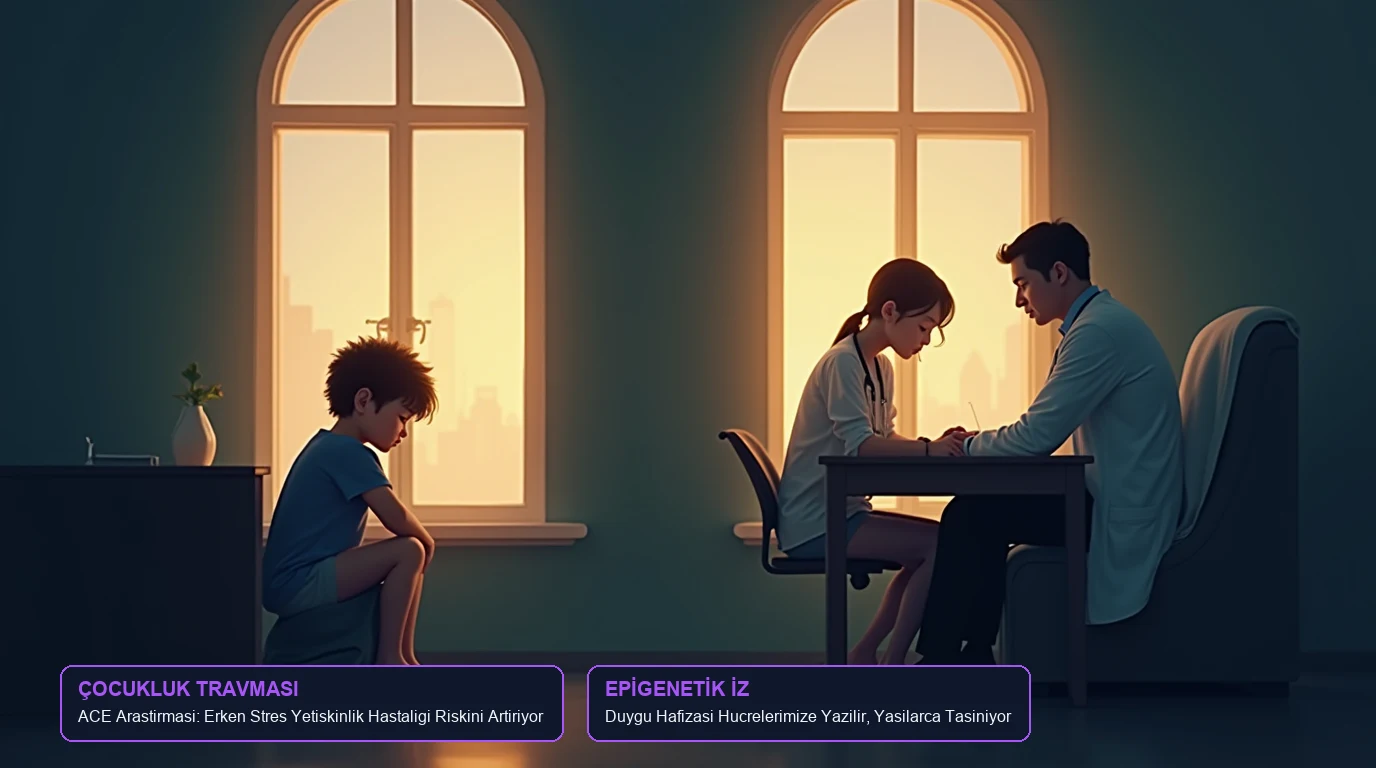
3. Adverse Childhood Experiences (ACEs) and Adult Disease Susceptibility
The definitive epidemiological validation of emotional suffering causing somatic disease stems from the monumental Adverse Childhood Experiences (ACE) investigation encompassing over 17,000 adult participants [1].
Dr. Vincent Felitti and colleagues uncovered a rigorous dose-response relationship between early emotional abuse, neglect, or household dysfunction and the manifestation of adult chronic disease. Individuals reporting four or more ACE categories exhibited dramatically higher incidences of autoimmune conditions, ischemic heart disease, and chronic pulmonary illness [1].
This seminal finding verified that early emotional trauma does not vanish as memory; it reconfigures the epigenome of developing immune cells. Years later, unresolved psychological wounds translate into clinical organ deterioration.
4. Allostatic Overload: The Cumulative Wear and Tear on Bodily Systems
Neuroendocrinologist Bruce McEwen pioneered the concepts of “allostasis”—maintaining physiological stability through environmental change—and “allostatic load,” the cumulative biological price exacted on organs [2].
A person carrying unexpressed emotional trauma or chronic interpersonal strain may maintain a calm exterior; internally, however, sympathetic tone remains hyperactive, arterial pressure subtly climbs, and heart rate variability (HRV) contracts. The biological engine never returns to true restorative idle [2].
Over years, accumulated allostatic overload stiffens microvasculature, shrinks hippocampal dendritic branching, and accelerates telomere attrition. The unaddressed emotional deficit eventually presents its clinical invoice as hypertension, migraine, or irritable bowel syndrome (IBS).

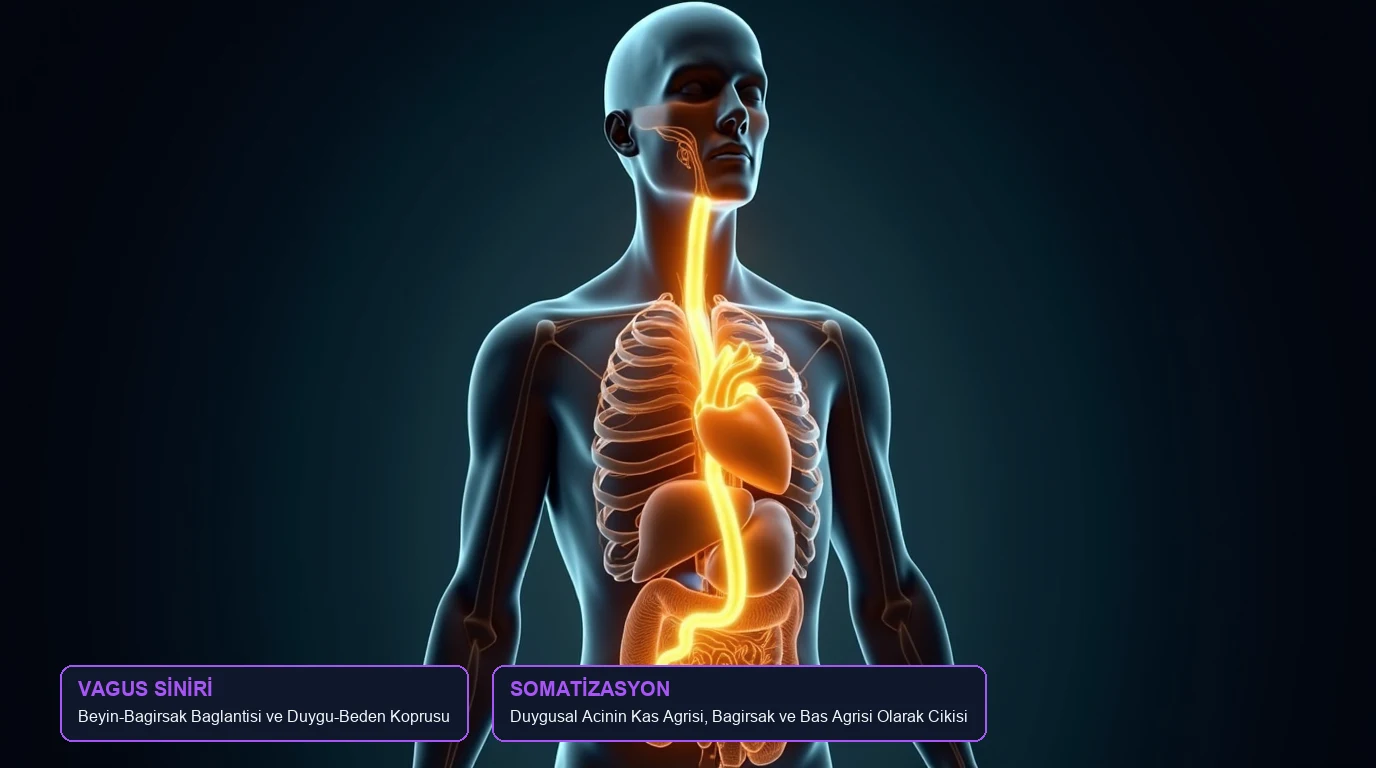
5. The Vagus Nerve and Somatization: From a Tight Throat to Visceral Spasms
The constriction in your throat or churning sensation in your gut during periods of heartbreak is governed by precise neuroanatomy. Originating in the brainstem and branching throughout the thoracic and abdominal cavities, the wandering vagus nerve forms our primary autonomic conduit [4].
Dr. Stephen Porges’ Polyvagal Theory explains that human physiology continually conducts subconscious environmental surveillance (neuroception) [4]. When interpersonal safety is breached, the social engagement system disengages, dropping the vagal brake and triggering sympathetic defense or dorsal vagal immobilization.
Under dorsal vagal shutdown, gastrointestinal peristalsis stalls or oscillates erratically, digestive secretions alter, and pelvic musculature hyper-contracts. Unspoken emotional turmoil somatizes directly into visceral cramping, nausea, and spastic colon symptoms.
6. The Nocebo Effect: How Anticipatory Fear Amplifies Physical Agony
While the restorative capabilities of the placebo effect are widely recognized, its inverse—the nocebo response—wields immense power in chronic psychosomatic pathology. Catastrophic cognition, such as convinced beliefs that “my back is permanently shattered” or “this pain will destroy me,” prompts the central release of cholecystokinin (CCK).
CCK functions as a physiological anti-opioid, directly obstructing the analgesic activity of endogenous endorphins. Consequently, central pain thresholds plummet; minor myofascial twitches that healthy nervous systems filter out are processed as excruciating lancinating blows.
Emotional despondency does not merely imagine discomfort—it physically amplifies sensory gating. The brain reconfigures nervous sensitivity to match its anticipated perils.

7. Four Evidence-Based Practices to Restore Mind-Body Coherence
Because psychosomatic manifestations represent genuine physiological states, addressing them requires more than intellectual willpower. Integrating the following four neurobiologically grounded habits supports autonomic down-regulation:
- Extended Exhalation (The Physiological Sigh): Inhale deeply through the nose, append a brief secondary nasal sip to fully inflate collapsed alveoli, then execute a prolonged, relaxed oral exhalation. Extending exhalation activates the baroreflex and vagus nerve, rapidly slowing sinus node firing.
- Somatic Discharge and Tremoring: Mammalian species naturally discharge acute traumatic activation through rhythmic shaking. Gentle somatic movement, yoga stretching, or brisk walking assists in releasing mechanical hypertonicity locked within myofascial sheets.
- Co-Regulation Through Social Connection: Under polyvagal architecture, engaging in warm eye contact or safe physical presence with a trusted companion activates the ventral vagal complex, sending immediate safety signals to the amygdala [4].
- Affect Labeling: Translating implicit distress into explicit linguistic markers (“I am feeling acute vulnerability and anger right now”) down-regulates amygdala hyperactivity through prefrontal inhibitory recruitments.

Comparative Matrix of Psychosomatic Pathways
| Biological Mechanism | Psychological Trigger | Target Tissue & System | Clinical Manifestation |
|---|---|---|---|
| Shared Pain Matrix (dACC / Insula) | Social rejection, grief, abandonment | Central sensory gating circuits | Unexplained chronic pain, fibromyalgia |
| HPA Axis Cortisol Resistance | Chronic work exhaustion, conflict | Peripheral leukocytes, endothelium | Systemic inflammation, vascular stiffness |
| Allostatic Overload Accumulation | Years of unresolved mourning | Cardiovascular tree, hippocampus | Essential hypertension, cognitive brain fog |
| Vagal Freeze & Somatization | Helplessness, traumatic shock | Gastric lining, enteric plexuses | Irritable bowel syndrome (IBS), reflux, spasms |
| Nocebo & CCK Anti-Opioid Release | Catastrophic dread, health anxiety | Endogenous opioid receptor pathways | Hyperalgesia, heightened tactile sensitivity |
Frequently Asked Questions (FAQ)
Does “psychosomatic” mean my illness is imaginary?
No. Psychosomatic medicine investigates how mental and emotional states trigger genuine, quantifiable biochemical alterations in physical tissues. Muscle spasms, vasoconstriction, gastric hyperacidity, and cytokine release are entirely physical occurrences.
Why do standard clinical blood tests frequently appear normal?
Standard laboratory assays are engineered to identify acute microbial infections or end-stage organ pathology. Subclinical allostatic load and low-grade neuroendocrine imbalances may stay within standard reference ranges while still generating distressing physical sensations.
How do adverse childhood experiences influence cardiovascular health decades later?
Early developmental trauma alters glucocorticoid receptor methylation and epigenetic gene expression. This primes the immune system toward chronic low-grade inflammation, gradually accelerating arterial plaque formation and endothelial dysfunction across adult life [1, 5].
Can these nervous pathways be recalibrated without pharmaceuticals?
For mild-to-moderate psychosomatic symptoms, vagal breathwork, psychotherapy, somatic movement, and restorative social bonding yield profound biological improvements. In severe depressive episodes or panic disorders, however, clinical medical treatment must be coordinated alongside lifestyle adjustments under psychiatric care.
References & Academic Citations
- Felitti VJ, Anda RF, Nordenberg D, Williamson DF, Spitz AM, Edwards V, Koss MP, Marks JS. (1998). Relationship of childhood abuse and household dysfunction to many of the leading causes of death in adults: The Adverse Childhood Experiences (ACE) Study. American Journal of Preventive Medicine, 14(4), 245–258. PMID: 9635069
- McEwen BS. (1998). Protective and damaging effects of stress mediators. The New England Journal of Medicine, 338(3), 171–179. PMID: 9428819
- Eisenberger NI, Lieberman MD, Williams KD. (2003). Does rejection hurt? An fMRI study of social exclusion. Science, 302(5643), 290–292. PMID: 14551436
- Porges SW. (2007). The polyvagal perspective. Biological Psychology, 74(2), 116–143. PMID: 17049418
- Furman D, Campisi J, Verdin E, Carrera-Bastos P, Targ S, Franceschi C, Ferrucci L, Gil PC, Shen-Orr S, Montana GS, Gao F, Slavich GM. (2019). Chronic inflammation in the etiology of disease across the life span. Nature Medicine, 25(12), 1822–1832. PMID: 31806905
For informational purposes only; consult a physician for medical diagnosis or treatment.