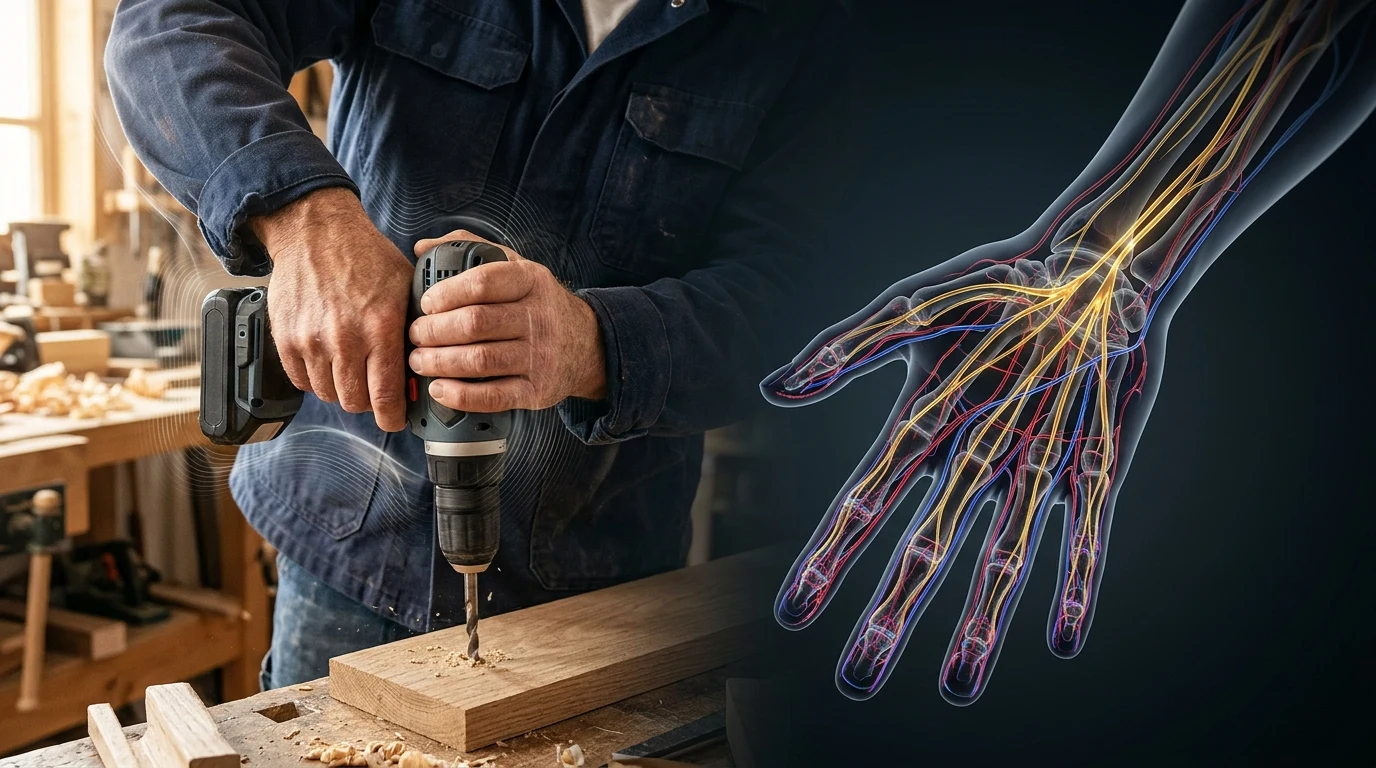
- → Vibration Temporarily Desensitizes Mechanoreceptors: High-frequency vibration overstimulates deep Pacinian and Meissner corpuscles, producing hours of numbness and tingling (Bovenzi et al., 1997; Griffin, 2015).
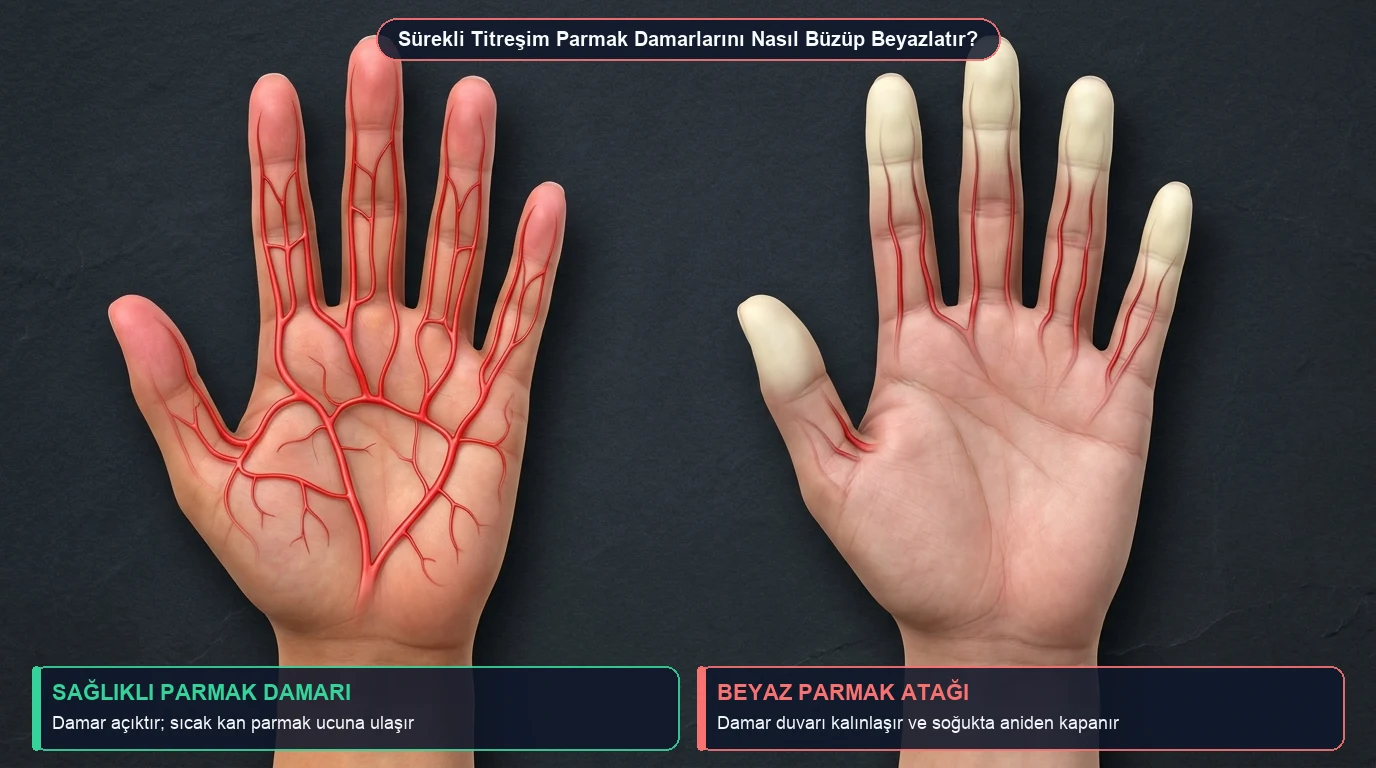
- → Recurrent Vibration Thickens and Constricts Digital Arteries: Prolonged vibration damages vascular endothelium; in cold temperatures, digital perfusion abruptly halts, turning fingers blanch white (Kennedy et al., 1999; Stoyneva et al., 2003).
- → Vibration White Finger and Neuropathy Risk Multiplies: Regular occupational exposure increases Raynaud's phenomenon risk ~7-fold and carpal tunnel syndrome risk ~3-fold (Nilsson et al., 2017).
- → Gloves Alone Are Insufficient; Relaxed Grip Is Crucial: Anti-vibration gloves fail to damp low-frequency shocks; real protection comes from loose grip tension, warm hands, and frequent rest pauses (Hewitt, 1998; Budd & House, 2017).
⚠️ Informational Notice: This article provides general educational information grounded in peer-reviewed scientific literature; it does not replace clinical evaluation or medical diagnosis. If you experience sharply demarcated blanching (white fingers) in cold weather, persistent cyanosis, nocturnal numbness awakening you from sleep, loss of fine motor dexterity, or declining grip strength, consult a neurologist, vascular surgeon, or occupational health specialist immediately.
In Brief
- The persistent “buzzing” or tingling in your palms after releasing a vibrating power tool stems from temporary sensory fatigue and overstimulation of cutaneous mechanoreceptors [2, 4].
- Over months and years, repeated shock exposure damages the endothelial lining of digital arteries, provoking secondary Raynaud’s phenomenon—commonly termed “vibration white finger” [1, 5, 6].
- Choking the handle too tightly significantly magnifies the transmission of mechanical shock into digital bones, median nerves, and carpal structures [4, 9].
- No thick glove can eliminate heavy mechanical shock; maintaining well-serviced tools, a relaxed grip, warm extremities, and structured rest breaks offer the strongest clinical protection [7, 8].
Sound Familiar?
Over the weekend, you operated a rotary hammer to drill into masonry, mowed the lawn, or gripped the vibrating handlebars of a bicycle or scooter across rough cobblestones. You finished the project and set the tool aside, yet deep inside your palms, an invisible bee seems to continue buzzing indefinitely.
When you reach for a coffee mug or attempt to button your shirt collar, your fingertips feel unusually swollen, clumsy, and dull. Most people brush it off: “I just worked hard today; it will be gone by tomorrow morning.”
Yet the UK Health and Safety Executive (HSE) workplace noise and vibration campaigns consistently highlight an insidious reality [10]: neurovascular damage caused by hand-arm vibration develops silently and painlessly; by the time individuals recognize clinical symptoms, structural damage is frequently permanent [3, 10].
In this guide, we demystify how this phantom tingling originates, examine what chronic oscillation does to delicate blood vessels and peripheral nerves, and explore 4 straightforward habits to protect your hands for life.

1. Why Do Hands Still “Buzz” Long After Putting Down the Tool?
Human fingertips possess the densest sensory innervation in the entire body. We distinguish the fine texture of woven linen or the serrated edges of a brass key thanks to specialized tactile sensors embedded in the skin.
In deeper dermal layers lie Pacinian corpuscles (onion-layered sensory capsules tuned to high-frequency vibration), while Meissner corpuscles (rapidly adapting sensors for light touch) populate the dermal papillae [2, 3]. When you operate an angle grinder, orbital sander, or pneumatic chisel oscillating dozens or hundreds of times per second, these receptors fire continuously at maximum thresholds.
Think of it like leaving a loud rock concert: your ears ring and soft whispers become temporarily inaudible. Italian occupational health researcher Massimo Bovenzi and colleagues evaluated industrial workers operating impact wrenches and discovered significant temporary threshold shifts (TTS) in vibrotactile perception by the end of their shifts [2].
Because these receptors are exhausted by extreme mechanical agitation:
- After putting down the tool, nerve fibers continue firing spontaneous residual impulses, creating a “phantom buzzing” sensation across the palm [2, 4].
- Fingertips lose fine discriminations; handling small coins, screws, or thin needles feels clumsy and disconnected [2].

| Vibration Exposure Pattern | Palmar and Digital Manifestations |
|---|---|
| Single 10–30 min DIY session | Mild palmar buzzing upon release, transient tingling resolving within 1–2 hours [2, 4]. |
| Full-shift daily operation | Numbness lasting into the evening, reduced manual dexterity, grip muscular fatigue [2]. |
| Months and years of repetitive use | Severe cold-induced blanching (“white finger”), nocturnal paroxysms, irreversible sensory loss [1, 3]. |
2. From Temporary Buzzing to “White Finger”: How Vessels and Nerves Deteriorate
Occasional weekend use of a home power tool rarely causes permanent organic pathology; resting the nerve endings for a few hours allows full physiological recovery. However, in construction, metal fabrication, woodworking, landscaping, or automotive repair where vibration is sustained day after day, the clinical outcome shifts drastically.
Known clinically as Hand-Arm Vibration Syndrome (HAVS), this progressive disorder compromises two critical physiological systems [1, 3]:
1. Digital Arteries Suffer Endothelial Damage and Spasm
Chronic mechanical oscillations batter the delicate endothelial lining of digital microvessels. In Scotland, Gwen Kennedy and colleagues demonstrated that patients with established HAVS exhibit impaired endothelial-dependent vasodilation, failing to respond normally to nitric oxide (the fundamental vascular relaxant) [5].
Simultaneously, circulating levels of endothelin-1 (a potent vasoconstrictor peptide) surge, and the muscular tunica media of the digital arterial wall hypertrophies over time [6]. Consequently, when exposed to chilly morning air or chilled water, digital arteries abruptly clamp down into severe vasospasm:
- Perfusion ceases, and fingertips turn chalky, waxy white [3, 6].
- As tissues experience acute ischemia, fingers turn cyanotic (blue), followed by throbbing rubor (redness) and intense pain as reactive hyperemia forces blood back through the reopening vessels. This hallmark pathology is termed vibration-induced Raynaud’s phenomenon or vibration white finger [1, 3].
2. Neural Sheaths Degenerate and Carpal Compression Arises
While vessels constrict, peripheral nerve fibers endure direct mechanical trauma. The insulating myelin sheaths surrounding peripheral axons undergo segmental demyelination and intraneural edema [3].
In Sweden, Torning Nilsson and co-researchers conducted an expansive systematic review and meta-analysis across occupational cohorts [1]:
- Regular exposure to vibrating hand tools increases the risk of vibration white finger and digital sensory neuropathy by ~7-fold.
- The same workers face a ~3-fold higher risk of carpal tunnel syndrome, involving median nerve compression at the flexor retinaculum [1].
Crucially, neurological deficits (sensory dullness, tactile loss) often precede vascular blanching, and once axonal damage establishes itself, therapeutic reversal is exceedingly difficult [1, 3].
3. Why a Death Grip and Ill-Suited Gloves Multiply Harm
The most widespread ergonomic error made by power tool users is gripping the tool handle with excessive muscular force to maintain control.
The Grip Force Trap: Tightening Amplifies Energy Transfer
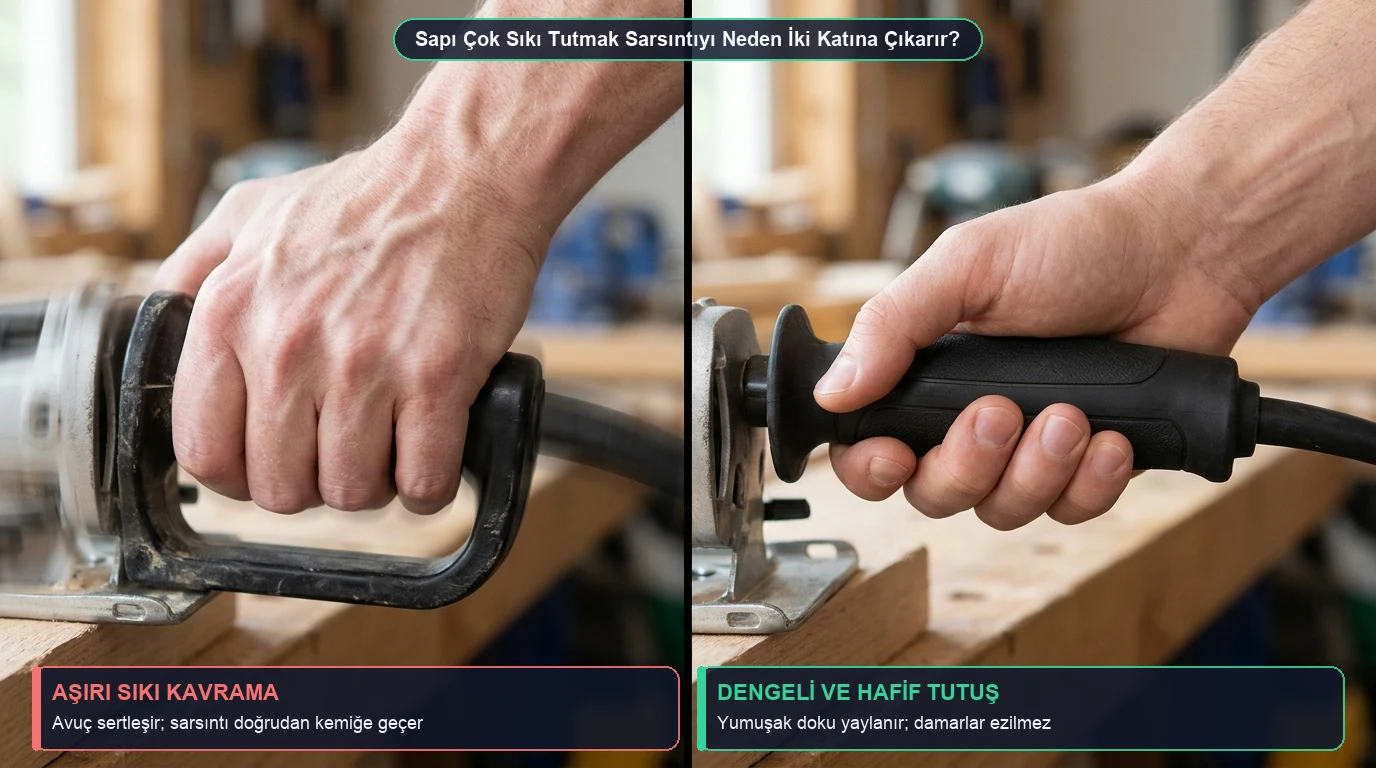
If you place a vibrating smartphone on a down pillow, you barely hear or feel it. But press that same phone hard against a wooden tabletop, and the entire room vibrates. The identical mechanical principle dictates the coupling between your hands and power tools [4, 9].
When you squeeze a handle with white-knuckle intensity:
- Palmar soft tissues compress, eliminating the natural shock-absorbing damping of subcutaneous adipose tissue [9].
- Mechanical vibration bypasses soft tissue and shoots directly into the metacarpal bones, wrist joints, and median/ulnar nerves [4, 9].
- Simultaneously, high muscular tension physically compresses the digital arteries internally, strangling microcirculatory flow [3].
Do “Anti-Vibration Gloves” Solve Everything?
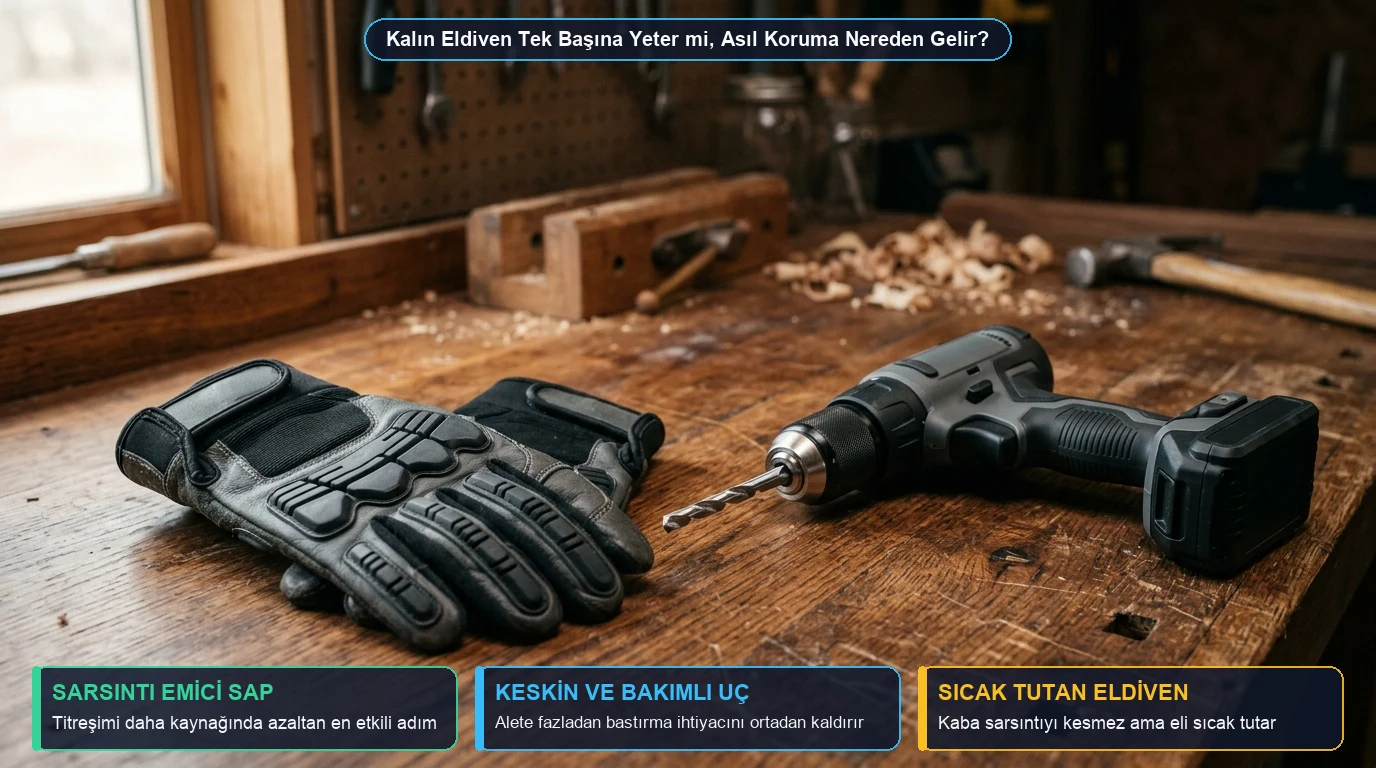
Many workers believe that donning heavily padded gloves provides complete immunity from mechanical vibration. However, rigorous research by Stephen Hewitt, David Budd, and Ronald House sounds a clear note of caution [7, 8]:
- Gloves certified under international standard EN ISO 10819 are primarily effective at attenuating high-frequency, fine buzzing (>200 Hz) [7, 8].
- They offer negligible attenuation against the low-frequency, high-amplitude shocks (<40 Hz) generated by rotary hammers, impact drivers, and pneumatic breakers—and can occasionally amplify resonance [7, 8].
- Even worse, bulky, stiff gloves reduce tactile feedback and dexterity, prompting workers to squeeze the tool handle significantly harder [8].
The genuine primary protective benefit of work gloves is keeping hands warm and dry, preventing cold-induced reflex vasospasm from compounding the mechanical insult [3, 8].
4. Evidence-Based Protection: 4 Practical Steps
- 1. Avoid the death grip; let the tool do the work: Maintain the minimum grip tension necessary to steer the machine safely. A lighter grip preserves palmar tissue damping and prevents vascular occlusion [4, 9].
- 2. Replace dull drill bits and worn discs immediately: A dull bit requires twice the downward thrust, prolonging exposure time and doubling vibration transmission into your joints [10].
- 3. Break tasks into 15–20 minute segments: Rather than grinding continuously for hours, take short micro-breaks to flex and extend your fingers, restoring microvascular perfusion and neural signaling [2, 10].
- 4. Keep hands and core warm; avoid tobacco/nicotine: Cold environments and nicotine provoke severe digital vasoconstriction, accelerating vibration-induced vascular collapse [3, 6].
The simplest and most impactful step to implement today is Step 1: whether drilling drywall or cycling on cobblestones, consciously drop your shoulders and loosen your finger clamp. Lightening grip force can halve the intensity of post-work palm tingling immediately.

Evidence Evaluation
| Finding | Evidence Level |
|---|---|
| High-frequency vibration fatiguing cutaneous receptors to induce transient numbness | 🟢 Robust |
| Chronic multi-year vibration exposure multiplying white finger and carpal tunnel risk | 🟢 Robust |
| Excessive grip force increasing mechanical shock transmission into wrist and nerves | 🟢 Robust |
| Anti-vibration gloves completely preventing low-frequency shock injuries | 🔴 Insufficient |
💡 What Do These Confidence Tiers Signify?
- 🟢 Robust: Confirmed by multiple independent human trials, epidemiological registries, and clinical consensus.
- 🟡 Emerging: Supported by smaller cohorts or promising preliminary laboratory measurements.
- 🔴 Insufficient: Lacking clinical human substantiation, contradictory, or proven ineffective.
Frequently Asked Questions
When does hand tingling after using a power tool become clinically alarming?
Transient buzzing that resolves completely within 1–2 hours after home DIY work usually reflects temporary receptor fatigue [2]. However, if numbness persists into the next day, wakes you from sleep at night, turns your fingertips stark white in cold conditions, or hinders buttoning clothes, seek immediate medical evaluation from a specialist [1, 3].
Can anti-vibration gloves prevent vibration white finger entirely?
No, gloves alone cannot prevent HAVS [7, 8]. While ISO 10819 certified gloves reduce high-frequency oscillations, they cannot halt coarse low-frequency impact shocks; their chief clinical value lies in keeping hands warm, dry, and protected from cold-induced vasospasm [8].
Why is a tight grip so harmful when holding vibrating equipment?
Tightly clenching the handle flattens the palm’s natural subcutaneous fat pad, directly transmitting vibrations to bones and median nerves [4, 9]. Furthermore, high muscular compression physically squeezes digital arteries, precipitating localized ischemia [3].
What are the official occupational exposure limits for hand-arm vibration?
Under UK and European regulations (Control of Vibration at Work Regulations), the daily Exposure Action Value (EAV) is 2.5 m/s² A(8), while the strict daily Exposure Limit Value (ELV) is 5.0 m/s² A(8) [10, 11]. Exceeding the action value legally mandates technical controls, work rotation, and ongoing medical health surveillance [11].
Summary
That subtle, lingering vibration in your palm after releasing a tool is your body’s neurological system signaling for rest. By loosening your grip, replacing blunt bits promptly, keeping extremities warm, and pausing every 20 minutes, you preserve both today’s comfort and your fingers’ precious tactile sensitivity for decades to come.
Last Updated: October 2026
Scientific References & Bibliography
- [1] Nilsson, T., Wahlström, J., & Burström, L. (2017). “Hand-arm vibration and the risk of vascular and neurological diseases—A systematic review and meta-analysis.” PLoS ONE, 12(7), e0180795. DOI: 10.1371/journal.pone.0180795 · PMID: 28723929
- [2] Bovenzi, M., Apostoli, P., Alessandro, G., & Vanoni, O. (1997). “Changes over a workshift in aesthesiometric and vibrotactile perception thresholds of workers exposed to intermittent hand transmitted vibration from impact wrenches.” Occupational and Environmental Medicine, 54(8), 577–587. DOI: 10.1136/oem.54.8.577 · PMID: 9326161
- [3] Heaver, C., Goonetilleke, K. S., Ferguson, H., & Shiralkar, S. (2011). “Hand-arm vibration syndrome: a common occupational hazard in industrialized countries.” Journal of Hand Surgery (European Volume), 36(5), 354–363. DOI: 10.1177/1753193410396636 · PMID: 21325375
- [4] Griffin, M. J. (2015). “Predicting and controlling risks from human exposures to vibration and mechanical shock.” Ergonomics, 58(5), 683–697. DOI: 10.1080/00140139.2014.933887 · PMID: 25115201
- [5] Kennedy, G., Khan, F., McLaren, M., & Belch, J. J. (1999). “Endothelial activation and response in patients with hand arm vibration syndrome.” European Journal of Clinical Investigation, 29(7), 577–581. DOI: 10.1046/j.1365-2362.1999.00502.x · PMID: 10411662
- [6] Stoyneva, Z., Lyapina, M., Tzvetkov, D., & Vodenicharov, E. (2003). “Current pathophysiological views on vibration-induced Raynaud’s phenomenon.” Cardiovascular Research, 57(3), 615–624. DOI: 10.1016/S0008-6363(02)00728-9 · PMID: 12643997
- [7] Hewitt, S. (1998). “Assessing the performance of anti-vibration gloves—a possible alternative to ISO 10819, 1996.” Annals of Occupational Hygiene, 42(4), 245–252. DOI: 10.1016/S0003-4878(98)00030-1 · PMID: 9713247
- [8] Budd, D., & House, R. (2017). “Application of ISO 10819 to Anti-Vibration Gloves.” Annals of Work Exposures and Health, 61(4), 379–383. DOI: 10.1093/annweh/wxw018 · PMID: 28395349
- [9] Dong, R. G., McDowell, T. W., Welcome, D. E., Warren, C., Wu, J. Z., & Rakheja, S. (2009). “Analysis of anti-vibration gloves mechanism and evaluation methods.” Journal of Sound and Vibration, 321(3–5), 843–854. DOI: 10.1016/j.jsv.2008.09.055. Diagnostic consensus: Bovenzi, M. (1998). International Archives of Occupational and Environmental Health, 71(8), 509–518. DOI: 10.1007/s004200050301 · PMID: 9820549
- [10] UK Health and Safety Executive — HSE (October 2026). Workplace Noise and Vibration Campaign (“Assess. Control. Protect.”) & Hand-Arm Vibration at Work (INDG175 / L140). hse.gov.uk/vibration
- [11] European Parliament and Council Directive 2002/44/EC (June 2002). Minimum health and safety requirements regarding the exposure of workers to the risks arising from physical agents (vibration). Official Journal L 177, 06/07/2002 P. 0013 - 0020.
For informational purposes only; consult a physician for medical diagnosis or treatment.