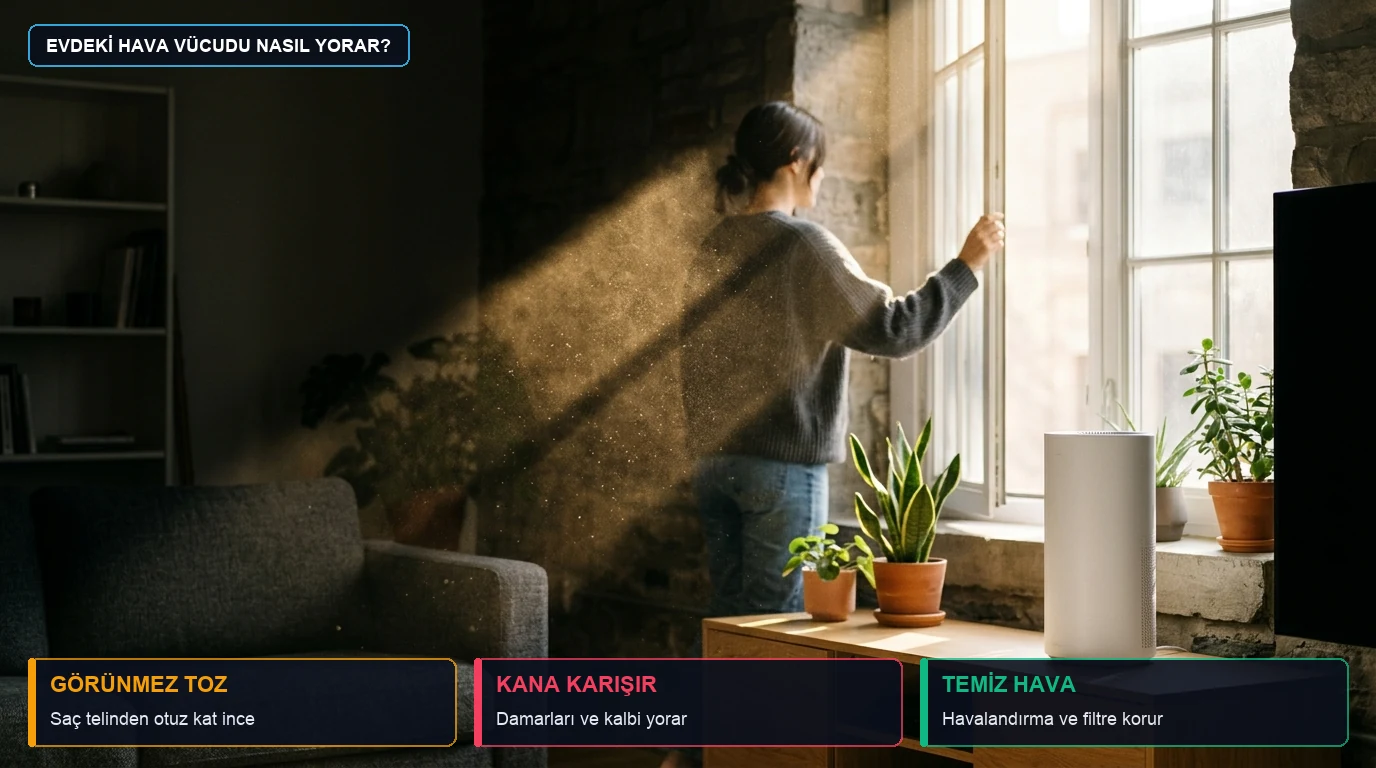
- → 30 Times Finer Than a Human Hair: Invisible PM2.5 particles bypass upper nasal defenses to reach deep pulmonary alveoli; WHO guidelines recommend maintaining annual averages below 5 µg/m³ (WHO, 2021).
- → Beyond the Lungs: A Direct Cardiovascular Burden: Fine particulates translocate systemic inflammation and autonomic imbalance, accelerating endothelial dysfunction and cardiovascular risks (Brook et al., 2010).
- → Air Filtration Suppresses Stress Hormones: True HEPA purifiers deployed in student dormitories reduced indoor PM2.5 by over half, accompanied by significant drops in circulating cortisol, epinephrine, and blood pressure (Li et al., 2017).
- → Renovation Dust Carries Carcinogenic Risks: Crystalline silica aerosolized during concrete, tile, and stone cutting provokes irreversible pulmonary fibrosis and is an established Group 1 human carcinogen (Leung et al., 2012; IARC, 2012).
⚠️ Informational Notice: This article is for general educational purposes grounded in peer-reviewed scientific studies in environmental medicine and occupational hygiene; it does not replace clinical consultation. If you suffer from asthma, chronic obstructive pulmonary disease (COPD), cardiovascular disease, or persistent unexplained coughing, consult a pulmonologist or cardiologist. For high occupational particulate exposure, consult your workplace safety physician.
In Brief
- Invisible fine particulate matter (PM2.5) penetrates deep into pulmonary alveoli and enters the vascular system, taxing cardiovascular physiology [3, 4].
- Searing cooking oils, burning scented candles, and sitting in unventilated rooms can make indoor air substantially more contaminated than ambient outdoor air [2, 5].
- Operating a true mechanical HEPA filter in your bedroom significantly reduces fine particulate burdens and systemic stress hormones (cortisol, adrenaline) [5, 11].
- While observational associations connect air pollution to biological aging biomarkers, rigorous causal proof of accelerated epigenetic aging remains emerging [6].
Does This Sound Familiar?
You cook a stir-fry or pan-sear protein in the evening, but neglect to switch on the kitchen range hood. Or you spend hours working inside a sealed room during winter without cracking a window, noticing a sluggish brain fog, mild tension headache, and heavy fatigue descending by mid-afternoon.
Because airborne particulates and accumulating bioeffluents are invisible to the naked eye, we instinctively blame our afternoon slump on poor sleep or screen fatigue.
Yet, as emphasized in the British Safety Industry Federation’s (BSIF) respiratory health initiative [1], a fundamental hierarchy governs respiratory defense: personal protective equipment is the last line of defense. True mitigation begins with controlling emissions at the source, followed by active ventilation and air filtration [1].
This guide examines how indoor aerosol physics impacts systemic cardiovascular health, and outlines four practical interventions to purify the air you breathe.

1. Where Do Invisible Fine Particulates Originate?
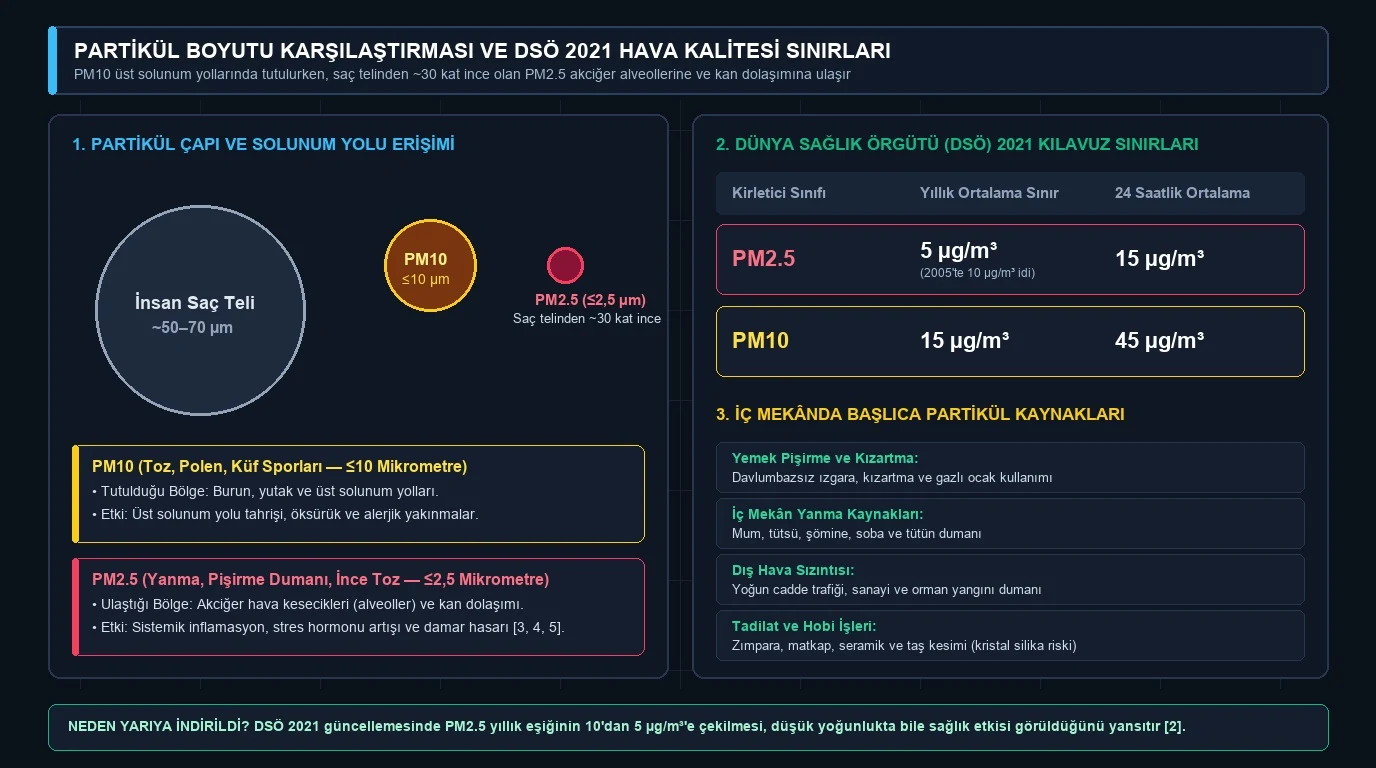
Aerosolized particles suspended in air are categorized by aerodynamic diameter. Coarser particles, designated as PM10 (pollen, coarse house dust, mechanical debris), are mostly trapped by nasal hairs and mucous membranes in the upper respiratory tract.
The critical physiological hazard is PM2.5—fine inhalable particles with diameters of 2.5 micrometers or smaller. Given that an average human hair strand measures roughly 60 micrometers across, PM2.5 particulates are approximately 30 times finer than a human hair.
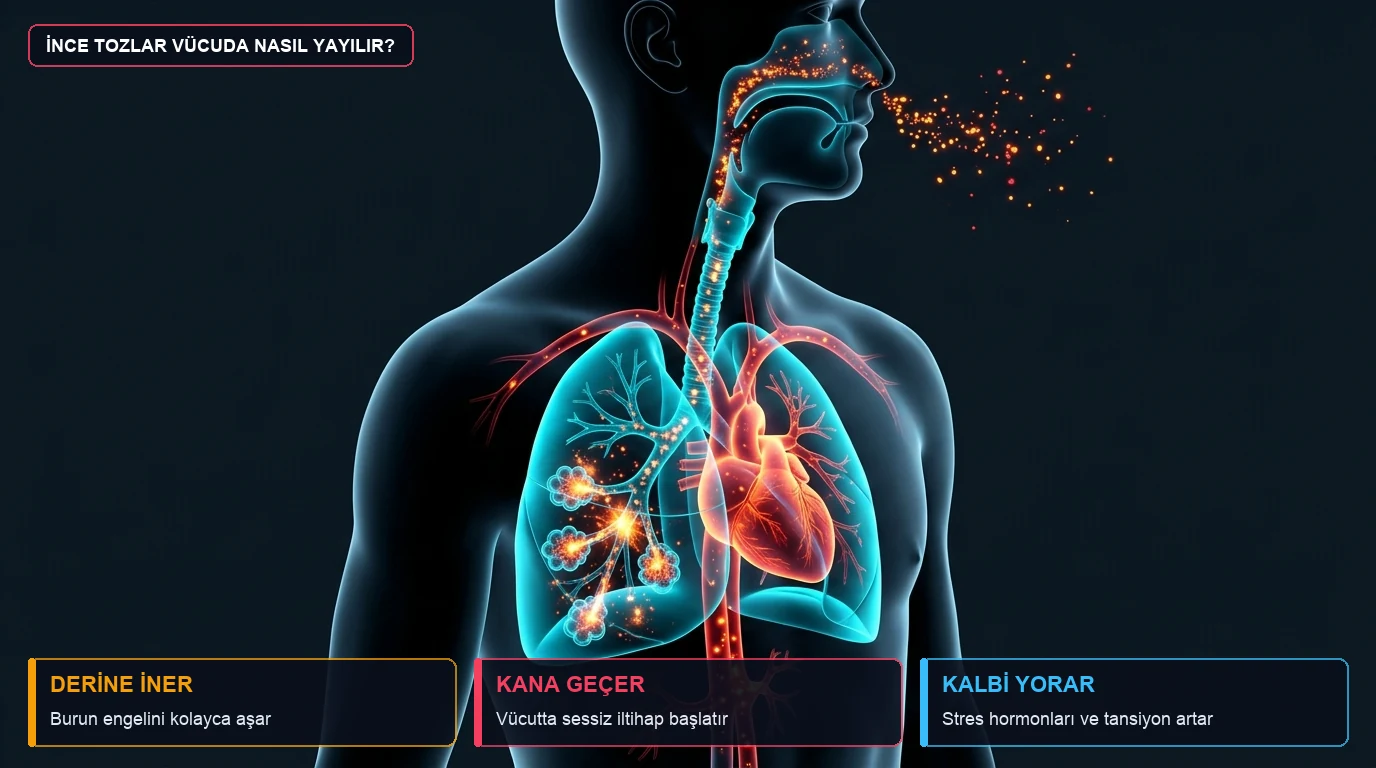
Because of their minuscule mass, they effortlessly slip past the upper airway’s mucociliary escalator, migrating into the deepest terminal bronchioles and alveolar sacs (alveoli) [3, 4].
In 2021, the World Health Organization (WHO) overhauled its Global Air Quality Guidelines, cutting recommended exposure thresholds by half based on decades of epidemiological evidence [2]:
| Particulate Category | Annual Mean Target | 24-Hour Mean Threshold | Primary Domestic Sources |
|---|---|---|---|
| Fine Particulates (PM2.5) | 5 µg/m³ | 15 µg/m³ | Searing/frying oils, candles, incense, tobacco, outdoor traffic infiltration [2]. |
| Coarse Particulates (PM10) | 15 µg/m³ | 45 µg/m³ | Resuspended floor dust, pollen, dry sanding and drywall dust [2]. |
2. From Alveoli to the Circulatory System: How Particles Provoke Systemic Stress
The human respiratory tree can be envisioned as an expansive biological air filter with a surface area matching a tennis court. When this delicate interface is continually inundated with combustion soot and ultrafine aerosols, the injury does not remain localized to the lungs; it translocates to the vascular bed [3, 4].
According to the comprehensive scientific statement published by the American Heart Association (AHA), inhaled particulate matter induces cardiovascular distress via three distinct pathways [4]:
- Systemic Inflammatory Cascades: Alveolar macrophages phagocytose particulate foreign bodies, releasing pro-inflammatory cytokines (IL-6, TNF-alpha) into systemic circulation [3, 4].
- Autonomic Nervous System Instability: Inhaled particulates stimulate pulmonary vagal afferents, shifting autonomic tone toward sympathetic dominance and suppressing heart rate variability (HRV) [4].
- Endothelial Dysfunction: Direct oxidative stress attenuates endothelial nitric oxide synthase (eNOS), impairing vasodilation and elevating systemic arterial blood pressure [4].
Do Bedroom Air Filters Lower Stress Hormones?
Researchers at Fudan University conducted a rigorous double-blind, randomized crossover trial across 55 healthy college students living in dormitory rooms [5]. Rooms were equipped with active air purifiers for 9 consecutive days, and sham (filterless) purifiers for another 9 days, with neither students nor technicians knowing the active sequence.
Operating the true HEPA filter (High-Efficiency Particulate Air mechanical filter capturing ≥99.97% of 0.3-micron particles) slashed indoor PM2.5 concentrations by 54% [5]. More strikingly, reducing the particulate burden triggered significant, objective reductions in circulating stress hormones (cortisol, cortisone, epinephrine, norepinephrine), systemic blood pressure, and insulin resistance biomarkers [5].
A parallel trial by Ryan Allen and colleagues in a woodsmoke-impacted Canadian community demonstrated that HEPA filtration decreased indoor woodsmoke particulates by 60%, yielding direct improvements in reactive hyperemia index (endothelial function) and systemic inflammatory markers [11].
Does Air Pollution Accelerate Biological Aging?
Large-scale epidemiological cohorts in Germany and the US observed that individuals subjected to higher chronic ambient particulate exposure exhibited slight accelerations in biological aging markers (epigenetic methylation clocks) [6]. However, these studies remain observational; fully disentangling ambient air quality from socioeconomic confounding factors is challenging [6]. While cardiopulmonary impairment is indisputably proven, causal claims that air pollution speeds up your biological age clock by a quantified number of years remain an emerging hypothesis.
3. Stale Indoor Air and Renovation Dust: Two Distinct Hazards
Beyond combustion-derived fine particulates, modern indoor environments present two distinct airborne challenges: stagnant carbon dioxide accumulation and respirable crystalline silica.
Why Does Stale Room Air Impair Cognitive Performance?
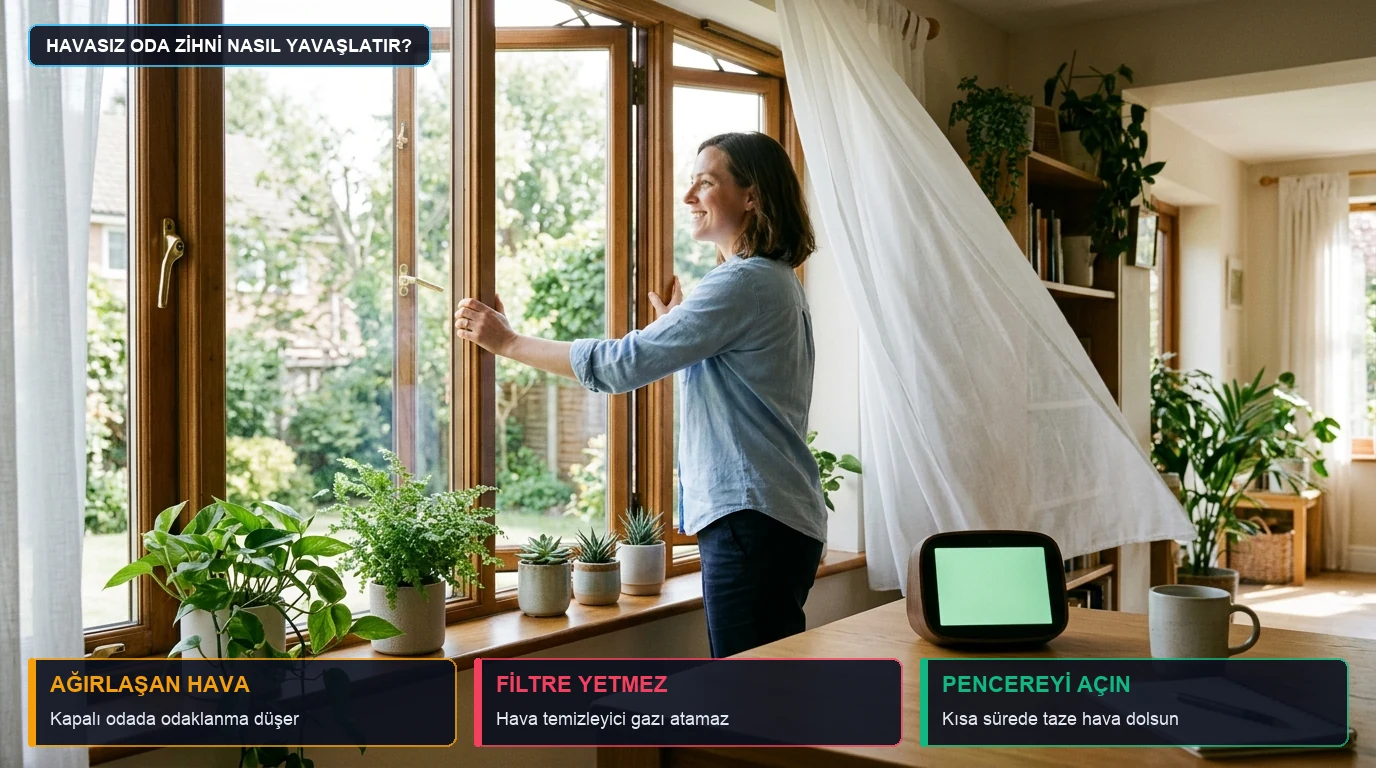
When rooms remain hermetically sealed, human metabolic respiration drives up indoor carbon dioxide (CO2) concentrations alongside volatile human bioeffluents. In a controlled exposure study conducted by Harvard T.H. Chan School of Public Health across 24 knowledge workers, participants working in well-ventilated spaces with low VOCs and fresh air exchange demonstrated dramatically higher cognitive performance scores in strategic decision-making and crisis response [9].
Further controlled chamber trials at the Technical University of Denmark clarified the underlying physics [10]: Cognitive degradation is driven not solely by CO2 gas itself, but by the failure to exhaust accumulated metabolic bioeffluents and stale indoor air. Standalone air purifiers only trap particulates; they cannot scrub CO2. The only physiological remedy is fresh outdoor air exchange [10].
(Note: Do not conflate stale indoor carbon dioxide with deadly carbon monoxide (CO) gas leaking from faulty boilers or water heaters. For CO symptoms and prevention, see our guide on Carbon Monoxide Poisoning, Cellular Hypoxia, and Mitochondrial Toxicity.)
Construction & Stone-Cutting Dust: Respirable Crystalline Silica
The fine white or grey dust generated during domestic drilling, tile cutting, dry-sanding drywall, or quartz countertop fabrication is far more toxic than standard household dust. Concrete, brick, and artificial stone composites contain dense concentrations of crystalline silica (quartz) [7].
When inhaled, these razor-sharp microscopic crystals penetrate alveolar walls, provoking chronic, irreversible pulmonary scar tissue formation (silicosis) [7]. The International Agency for Research on Cancer (IARC) classifies respirable crystalline silica as a proven human carcinogen (Group 1) [8]. During domestic renovations, dry mechanical cutting should be replaced with wet methods, and cleanup must be performed using wet wipes or HEPA-filtered vacuum extractors rather than dry brooms [14].

4. In-Home Monitoring, Filtration, and Respirator Standards
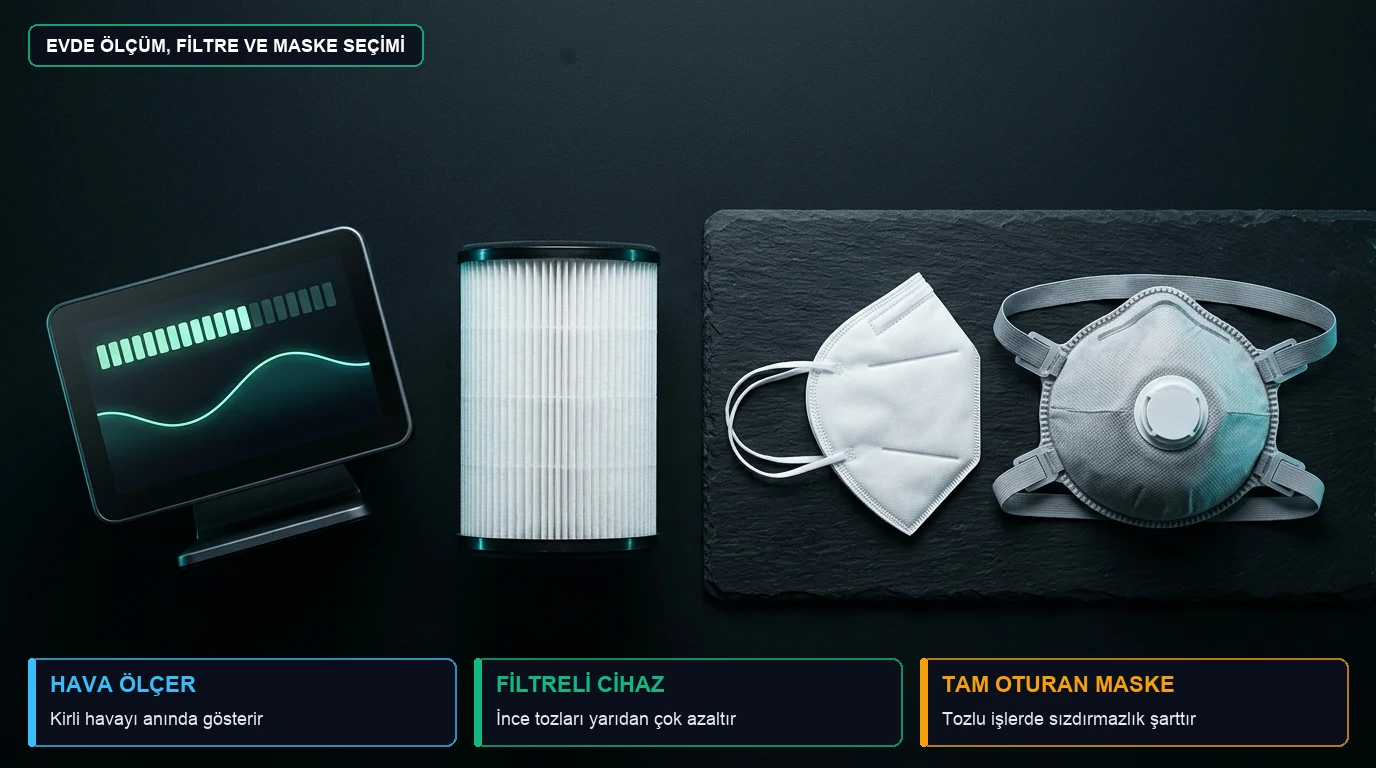
Optimizing domestic air quality does not require industrial budgets. Equipping your workspace with an infrared (NDIR) carbon dioxide and optical particulate monitor provides immediate visual feedback on when windows must be opened.
When selecting an air purifier, ensure the Clean Air Delivery Rate (CADR) matches your room’s cubic volume. Avoid devices marketing “ionizers”, “plasma generators”, or “ozone disinfection,” as these secondary reactions generate ground-level ozone—a potent respiratory irritant. Stick strictly to pure mechanical HEPA and activated carbon filtration.
During construction, sanding, or demolition work, standard surgical or cloth masks are completely ineffective. Certified filtering facepiece respirators meeting European Standard EN 149 are mandatory [12]:
| Respirator Class | Filtration Efficiency | Clinical / Practical Application |
|---|---|---|
| FFP2 Respirator | ≥ 94% (10-fold reduction) | Urban smog, ambient wildfire smoke, standard sanding tasks [12]. |
| FFP3 Respirator | ≥ 99% (20-fold reduction) | Concrete, ceramic, stone, silica cutting, and toxic fine dusts [12]. |
⚠️ Critical Rule on Face Seals: A respirator protects only to the degree that it seals against facial contours. Facial hair (beards or multi-day stubble) breaks the perimeter gasket, allowing contaminated air to bypass the filter media entirely through path-of-least-resistance leakage [13].
5. Daily Protocols: 4 Actionable Habits
- 1. Run the Range Hood Before Igniting the Burner: Start kitchen exhaust ventilation at the very beginning of cooking and keep it running for 10 minutes post-cooking to evacuate ultra-fine oil aerosols.
- 2. Perform Brief Cross-Ventilation Twice Daily: Open windows on opposing building facades for 5–10 minutes during low-traffic windows to rapidly flush stagnant CO2 and bioeffluents [9, 10].
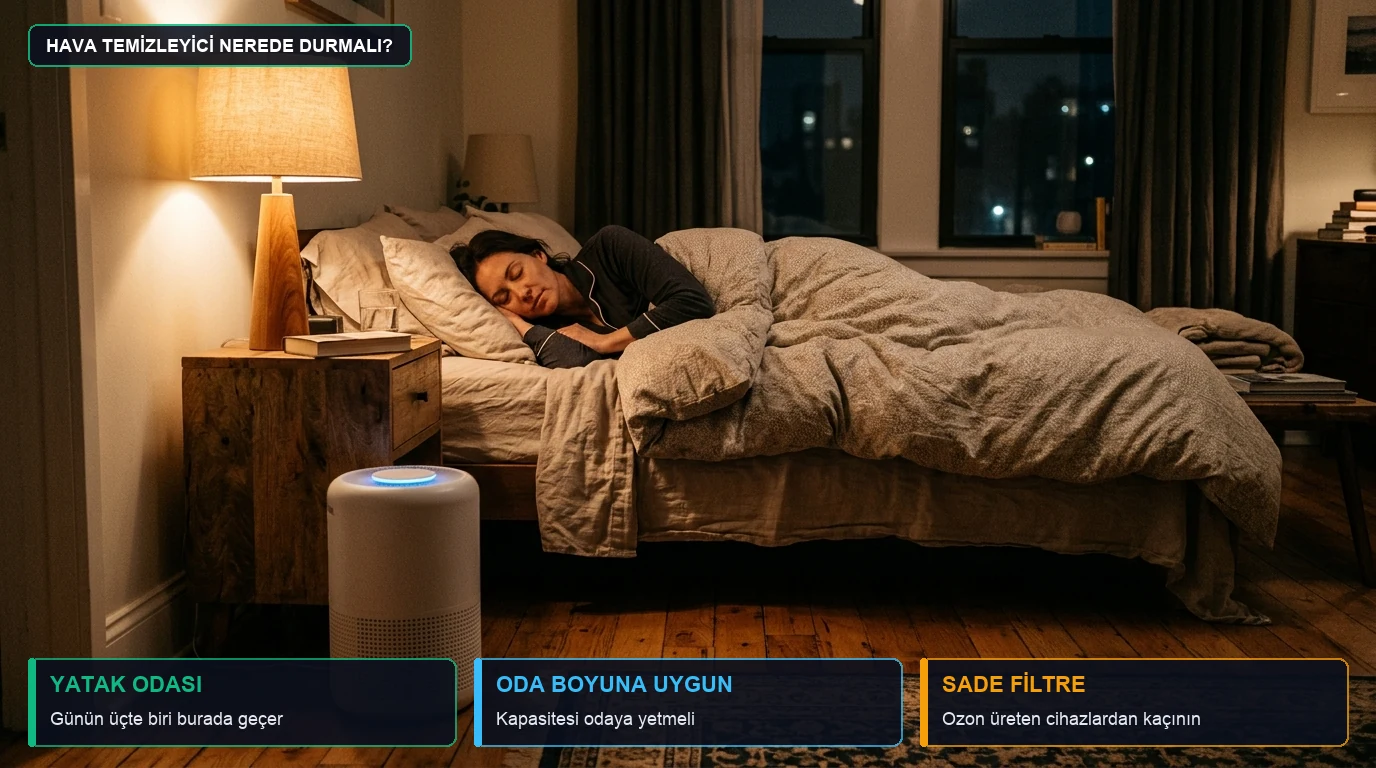
- 3. Position an Ozone-Free HEPA Purifier in the Bedroom: Run a true mechanical HEPA air purifier throughout the night where you spend 7–8 continuous hours asleep [5, 11].
- 4. Don an FFP3 Respirator During Renovation Work: Use a tight-fitting FFP3 respirator during tile, masonry, or drywall sanding, pairing it with wet cleaning methods [12, 14].
The simplest, zero-cost habit is Step 1: Turning on your kitchen exhaust fan before cooking oil heats up eliminates the single largest spike in indoor fine particulate exposure.
Evidence Level & Scientific Reliability
| Finding | Evidence Level |
|---|---|
| Chronic exposure to PM2.5 driving vascular inflammation, endothelial dysfunction, and cardiovascular risk | 🟢 Strong |
| Inhalation of respirable crystalline silica causing irreversible silicosis fibrosis and lung carcinogenesis (IARC Group 1) | 🟢 Strong |
| Mechanical HEPA filtration reducing indoor PM2.5 by >50% in residential settings | 🟢 Strong |
| Domestic air purification lowering circulating stress hormones (cortisol) and vascular inflammation markers | 🟡 Emerging |
| Elevated indoor carbon dioxide and bioeffluents impairing higher-order executive cognitive function | 🟡 Emerging |
| Ambient particulate matter directly accelerating biological epigenetic clocks | 🔴 Insufficient |
💡 Understanding Evidence Levels
- 🟢 Strong: Validated by extensive randomized human trials, large prospective cohorts, and international regulatory consensus (WHO, AHA, IARC).
- 🟡 Emerging: Replicated in smaller double-blind crossover trials or controlled environmental chambers.
- 🔴 Insufficient: Correlational or exploratory; lacking direct causal demonstration.
Frequently Asked Questions
What constitutes a safe domestic PM2.5 particulate level?
Under the WHO 2021 guidelines, the recommended annual average threshold is 5 µg/m³, with a 24-hour mean ceiling of 15 µg/m³ [2]. Because searing food or lighting candles can cause indoor spikes exceeding 50 to 100 µg/m³ within minutes, active mechanical extraction while cooking is paramount.
Do consumer air purifiers meaningfully improve biological markers?
Yes. Randomized, double-blind crossover trials demonstrate that true HEPA purifiers cut indoor PM2.5 levels by 50–60%, accompanied by measurable reductions in circulating cortisol, adrenaline, and blood pressure [5, 11]. For maximum benefit, locate the unit in your bedroom and select pure mechanical filters without ozone-generating ionizers.
What respirator is required for tile cutting and home demolition?
Masonry, ceramic, concrete, and artificial stone cutting generate crystalline silica, requiring a tight-fitting FFP3 respirator that filters at least 99% of airborne particulates [12]. The user must be clean-shaven along the mask perimeter to prevent ambient bypass leakage [13].
Can a HEPA air purifier lower indoor carbon dioxide levels?
No. Mechanical HEPA and activated carbon filters trap particulates and absorb select VOCs, but cannot filter carbon dioxide gas. Reducing accumulated CO2 and bioeffluents requires physical ventilation by opening windows to introduce fresh outdoor air [10].
Conclusion
The quality of the indoor air we breathe daily is one of the most powerful modifiable drivers of long-term cardiovascular and metabolic resilience. Protecting yourself does not require complex installations: engaging the kitchen extractor, implementing brief daily cross-ventilation, running a quiet HEPA purifier in the bedroom, and utilizing certified respirators during renovations quietly shields your physiology.
Last Updated: October 2026
Verified Bibliography & Scientific References
- [1] British Safety Industry Federation (BSIF) Respiratory Protection Group. Clean Air? Take Care! campaign. bsif.co.uk
- [2] World Health Organization (2021). WHO global air quality guidelines: particulate matter (PM2.5 and PM10), ozone, nitrogen dioxide, sulfur dioxide and carbon monoxide. who.int
- [3] Pope, C. A. 3rd, & Dockery, D. W. (2006). “Health effects of fine particulate air pollution: lines that connect.” Journal of the Air & Waste Management Association, 56(6), 709–742. DOI: 10.1080/10473289.2006.10464485
- [4] Brook, R. D., Rajagopalan, S., Pope, C. A. 3rd, et al. (2010). “Particulate matter air pollution and cardiovascular disease: An update to the scientific statement from the American Heart Association.” Circulation, 121(21), 2331–2378. DOI: 10.1161/CIR.0b013e3181dbece1
- [5] Li, H., Cai, J., Chen, R., et al. (2017). “Particulate Matter Exposure and Stress Hormone Levels: A Randomized, Double-Blind, Crossover Trial of Air Purification.” Circulation, 136(7), 618–627. DOI: 10.1161/CIRCULATIONAHA.116.026796
- [6] Ward-Caviness, C. K., Nwanaji-Enwerem, J. C., Wolf, K., et al. (2016). “Long-term exposure to air pollution is associated with biological aging.” Oncotarget, 7(46), 74510–74525. DOI: 10.18632/oncotarget.12903
- [7] Leung, C. C., Yu, I. T. S., & Chen, W. (2012). “Silicosis.” The Lancet, 379(9830), 2008–2018. DOI: 10.1016/S0140-6736(12)60235-9
- [8] International Agency for Research on Cancer (IARC). IARC Monographs Volume 100C: Arsenic, Metals, Fibres, and Dusts (2012). Crystalline silica dust (quartz or cristobalite): Group 1.
- [9] Allen, J. G., MacNaughton, P., Satish, U., et al. (2016). “Associations of Cognitive Function Scores with Carbon Dioxide, Ventilation, and Volatile Organic Compound Exposures in Office Workers: A Controlled Exposure Study of Green and Conventional Office Environments.” Environmental Health Perspectives, 124(6), 805–812. DOI: 10.1289/ehp.1510037
- [10] Zhang, X., Wargocki, P., Lian, Z., & Thyrod, C. (2017). “Effects of exposure to carbon dioxide and bioeffluents on perceived air quality, self-assessed acute health symptoms, and cognitive performance.” Indoor Air, 27(1), 47–64. DOI: 10.1111/ina.12284
- [11] Allen, R. W., Carlsten, C., Karlen, B., et al. (2011). “An air filter intervention study of endothelial function among healthy adults in a woodsmoke-impacted community.” American Journal of Respiratory and Critical Care Medicine, 183(9), 1222–1230. DOI: 10.1164/rccm.201010-1572OC
- [12] Health and Safety Executive (HSE). Respiratory protective equipment at work: A practical guide (HSG53). hse.gov.uk. EN 149:2001+A1:2009 standards.
- [13] Health and Safety Executive (HSE). Guidance on respiratory protective equipment (RPE) fit testing (INDG479). hse.gov.uk
- [14] Official Dust Control Regulation. Official Gazette of the Republic of Turkey, Nov 2013, Issue: 28812. resmigazete.gov.tr
For informational purposes only; consult a physician for medical diagnosis or treatment.