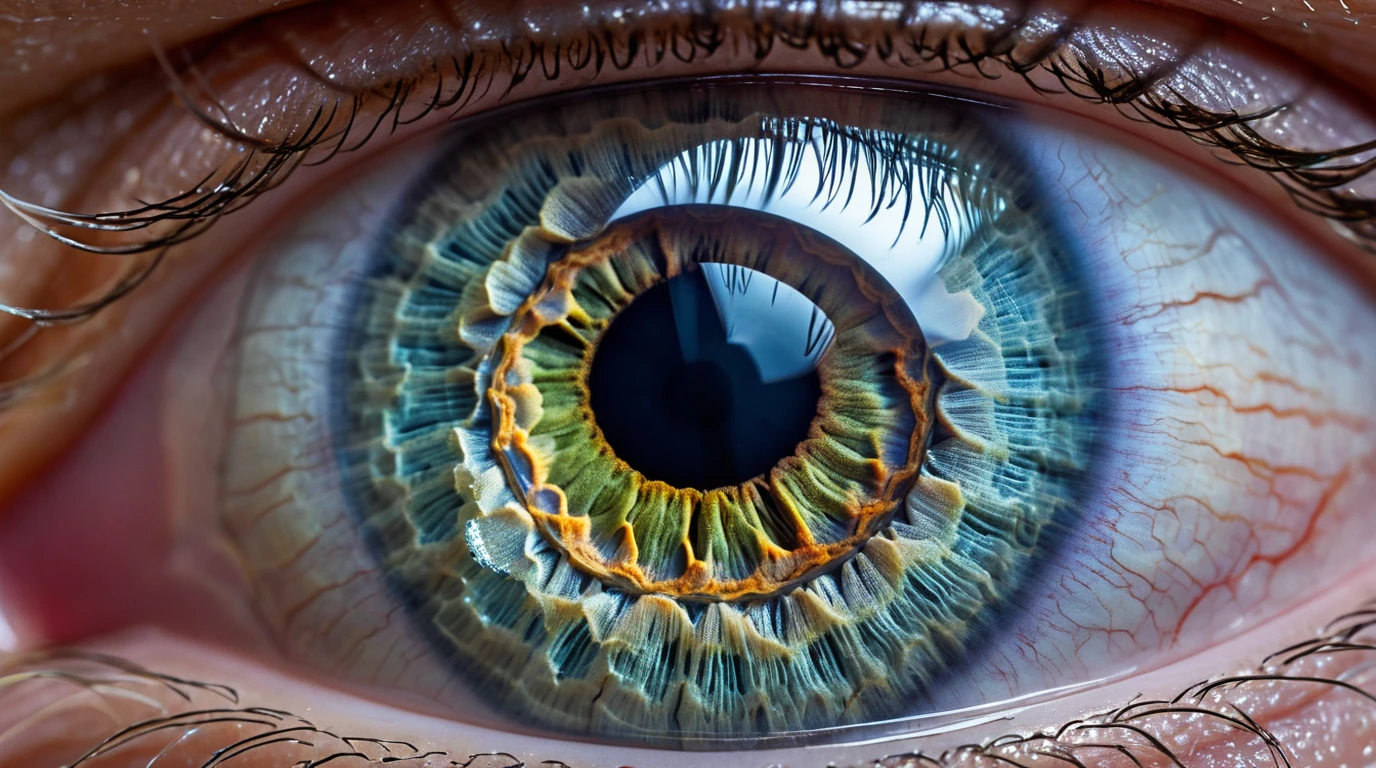
- → Blink Rate Plummets by Two-Thirds at Screens: Normal resting blinks of 15–20 per minute drop to 5–7 per minute during screen work, accelerating tear film evaporation (Tsubota & Nakamori, 1993; Coles-Brennan et al., 2019).
- → The Real Issue is Often Lipid Evaporation, Not Water Deficit: Most dry eye cases stem from meibomian gland dysfunction where the lipid seal hardens, allowing aqueous tears to vaporize instantly (Craig et al., 2017; Bron et al., 2017).
- → Bottled Preservatives Can Worsen Dryness: Benzalkonium chloride (BAK), used to prevent microbial growth in multi-dose bottles, dissolves the lipid layer and damages corneal epithelial cells upon frequent instillation (Baudouin et al., 2010).
- → DIY DMSO or Botanical Drops Pose Severe Blindness Risks: Non-sterile homemade solutions and industrial solvents like DMSO disrupt lens architecture and cause drug-resistant bacterial keratitis requiring enucleation (Gordon, 1967; Rubin, 1975; Grossman et al., 2024).
⚠️ Informational Notice: This guide provides general health education grounded in peer-reviewed ophthalmic literature and does not replace in-person medical evaluation. If you experience severe ocular pain, extreme photophobia, acute vision loss, persistent redness, or purulent yellow-green discharge, seek urgent consultation with an ophthalmologist.
In Brief
- Frozen Gaze at Displays: Focusing on computer monitors and smartphone screens cuts spontaneous blink frequency by two-thirds; without regular replenishment, the protective tear film breaks down within seconds [1, 2].
- Hidden Irritation from Multi-Dose Bottles: Chemical preservatives formulated into standard eye drop bottles to prevent bacterial contamination strip away the eye’s natural lipid shield with frequent use, trapping patients in a vicious cycle of irritation [4].
- The Extreme Danger of DIY Concoctions & Industrial Solvents: Unregulated internet recipes involving tap water, kitchen saline, plant oils, and industrial solvents (such as DMSO) risk lens opacity, chemical corneal melting, and catastrophic antibiotic-resistant infections [5, 7].
- Thermal Restoration of Meibomian Glands: The root cause of evaporative dry eye is solidified lipid secretions clogging eyelid margins; nightly 5-minute warm compresses combined with preservative-free single-dose vials restore tear film integrity safely [8, 9].
Does This Sound Familiar?
By late afternoon, the text on your workstation display starts to lose crispness. Beneath your eyelids, you feel a gritty, scratchy irritation—as if fine grains of sand are lodged across the surface of your eyes. Paradoxically, your eyes burn, turn bloodshot, and suddenly water uncontrollably. Even worse, the commercial eye drops in your desk drawer offer only twenty minutes of relief before returning with a harsher rebound dryness.
Searching for answers online, you encounter dangerous wellness trends: viral videos recommending “homemade natural eye drops”, applying cosmetic botanical oils directly to the sclera, or instilling diluted “miracle solvents” such as dimethyl sulfoxide (DMSO).
Let us examine why standard bottled drops often backfire and why DIY ophthalmic concoctions can inflict irreversible anatomical damage to your cornea and intraocular lens.

1. Why Do Our Eyes Dry Out? The Tri-Layer Tear Film and the Screen Effect
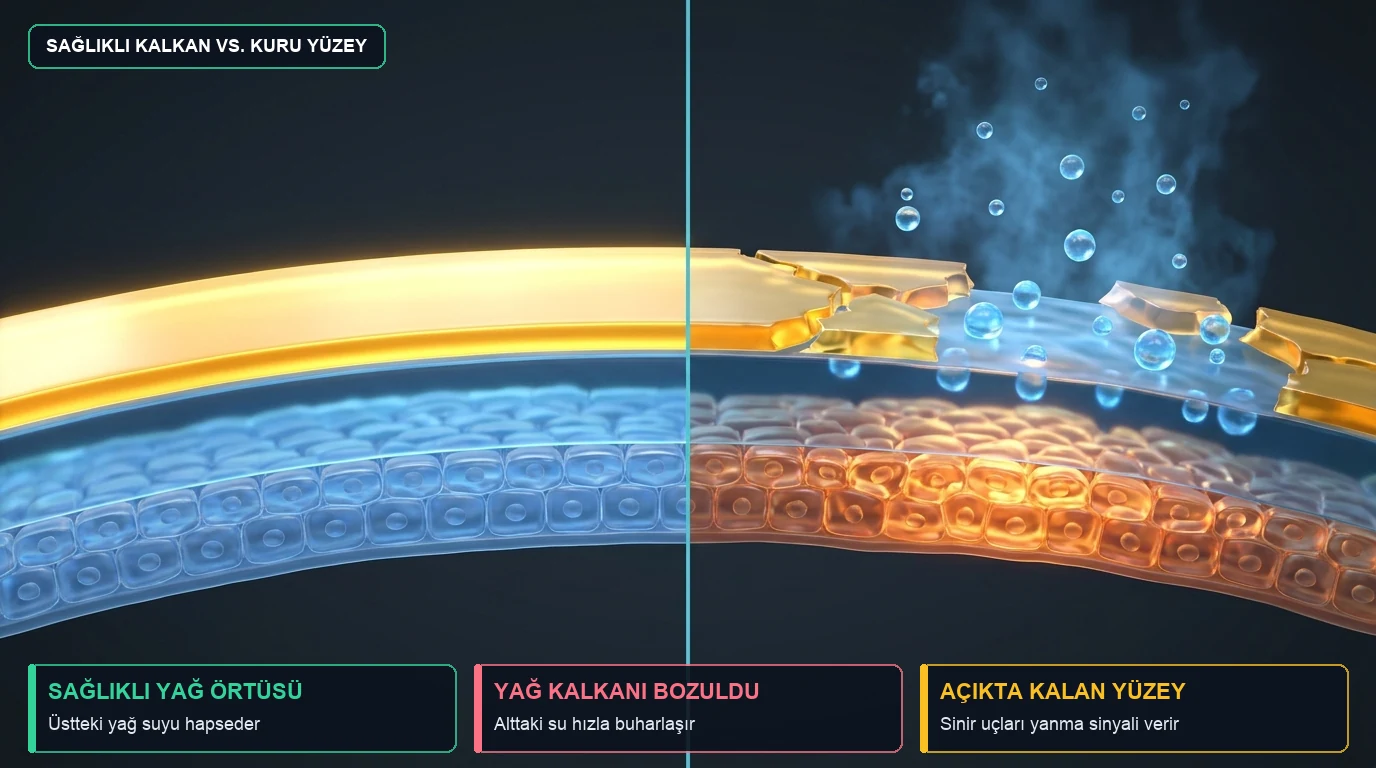
Many assume tears are simply sterile saline. In reality, the ocular surface is protected by an exquisitely balanced, tri-laminar tear film [1, 3]. At the base lies the mucin layer, which adheres tears to the hydrophobic corneal epithelium. The middle aqueous layer supplies oxygen, electrolytes, and antimicrobial proteins. Crucially, the outermost surface is capped by a microscopic lipid layer designed to prevent rapid evaporation [1, 3].
Think of this lipid layer as a delicate sheen of olive oil floating over a hot bowl of soup. As long as the oil film remains intact, steam cannot easily escape. Strip that lipid layer away, and the underlying water molecules flash off into the ambient atmosphere in seconds [3].
This vital lipid shield is synthesized by the meibomian glands—tiny linear oil glands embedded vertically within the upper and lower eyelids. With every complete blink, these glands are mechanically squeezed, shearing fresh meibum across the cornea like an automated windshield wiper [1, 3].
A landmark paper by Japanese researchers Kazuo Tsubota and Masakazu Nakamori in The New England Journal of Medicine proved how digital screens sabotage this physiology [2]:
Under relaxed conditions, humans blink 15 to 20 times per minute. When staring intently at visual display terminals, blink rate plummets to 5 to 7 blinks per minute [2, 10]. Furthermore, up to 60% of blinks at screens are incomplete blinks, where the upper and lower eyelid margins fail to touch [10].
Without full mechanical contact, the meibomian glands are never milked. The stagnant oils within the ducts cool down and solidify [3, 10]. Consequently, the vast majority of dry eye cases are not caused by an inability to produce water, but by evaporative dry eye triggered by a compromised lipid seal [1, 3].
This explains why dry eyes frequently flood with tears. When dry spots form, exposed corneal sensory nerves fire emergency distress signals to the brainstem. The lacrimal gland responds by flooding the eye with reflex tears. But lacking a lipid sealant, this watery surge cascades uselessly down your cheeks, leaving the underlying cornea as desiccated as before [3].
| Condition | Physiological State at the Ocular Surface |
|---|---|
| Normal Conversation or Outdoor Walk | 15–20 complete blinks per minute. Meibomian glands are continuously milked, maintaining an unbroken lipid seal [2, 3]. |
| Intense Focus at a Display Terminal | Blink rate drops to 5–7 per minute. Prolonged inter-blink intervals cause tear film break-up and epithelial dry spots [2, 10]. |
| Air-Conditioned Office with Incomplete Blinks | Incomplete eyelid closure leaves meibum stagnant; dry ambient air rapidly vaporizes the unshielded aqueous layer [3, 10]. |
2. Are All Eye Drops Harmless? Bottled Preservatives and the “Redness-Relief” Trap
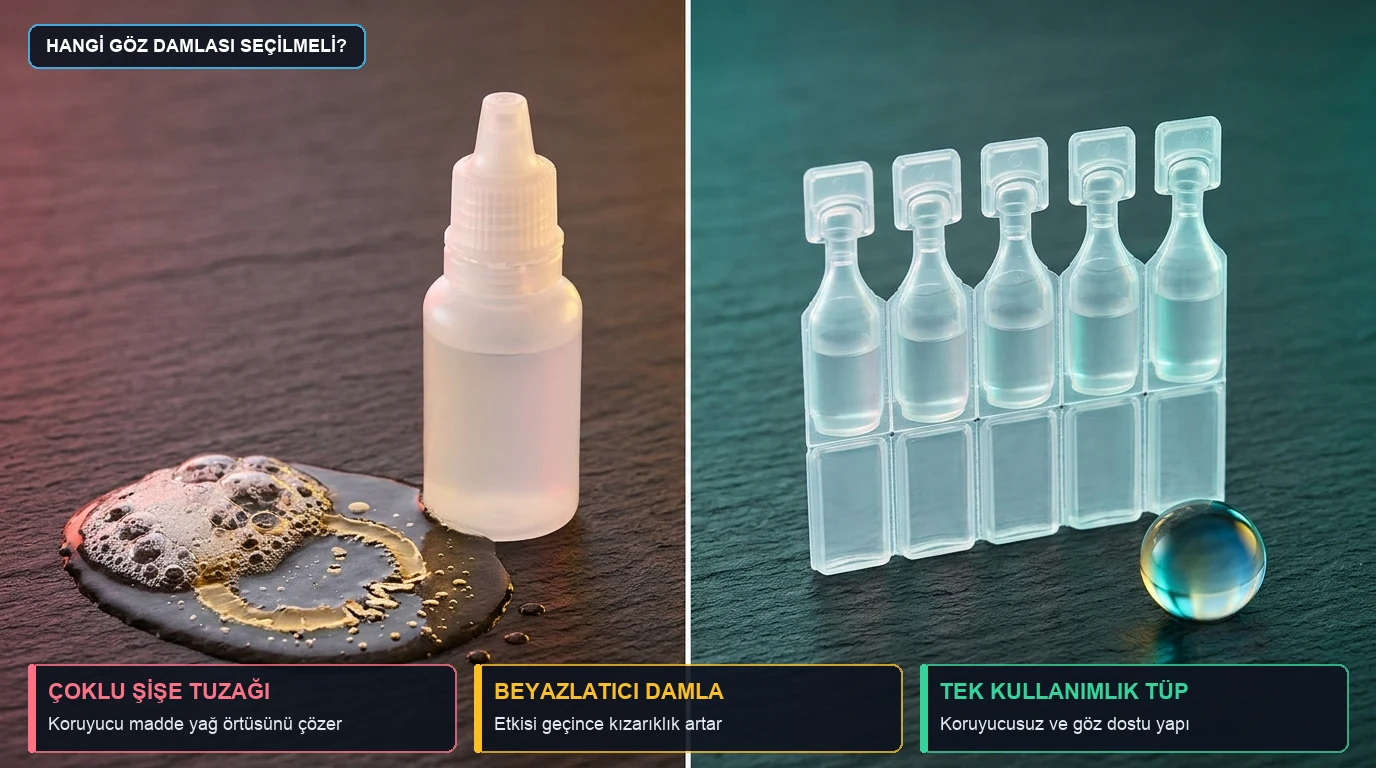
When eyes feel inflamed, the instinctive reaction is to purchase a generic multi-dose bottle of artificial tears or a commercial “redness-reliever.” Unfortunately, inappropriate formulations frequently accelerate ocular surface deterioration [4, 9].
French ophthalmology pioneer Christophe Baudouin and colleagues conducted exhaustive investigations into the toxicological footprint of ophthalmic preservatives [4]. Standard multi-dose bottles are designed to be uncapped and used over several weeks. To prevent opportunistic pathogens from multiplying inside the container, manufacturers include biocidal chemical preservatives [4].
The most pervasive preservative is benzalkonium chloride (BAK), a quaternary ammonium detergent [4]. BAK functions by lysing bacterial cell membranes. However, when applied to human eyes, its detergent properties act like dish soap against the tear film’s fragile lipid seal, actively emulsifying and destroying the very oils protecting your cornea [4].
Instilled once or twice a day, the ocular surface can generally recover. But for symptomatic dry eye sufferers instilling drops more than 4 times daily, repeated BAK exposure destroys corneal epithelial microvilli, triggers inflammatory cell death, and damages meibomian orifices [4, 9].
An even more deceptive hazard is found in over-the-counter vasoconstrictor “redness-reliever” drops [9]. These formulations contain adrenergic agonists (such as naphazoline or tetrahydrozoline) that chemically clamp down engorged conjunctival blood vessels to artificially blanch the sclera [9].
They do nothing to resolve underlying tear deficiency. Once the pharmacological vasoconstriction wears off a few hours later, starved vascular tissue suffers compensatory ischemia, triggering rebound hyperemia—an even more pronounced, chronic vascular dilation [9]. Breaking free requires immediately discontinuing vasoconstrictors and transitioning exclusively to preservative-free unit-dose vials [4, 9].
3. The Dangerous Trend of Homemade Eye Drops and “DMSO Drops”
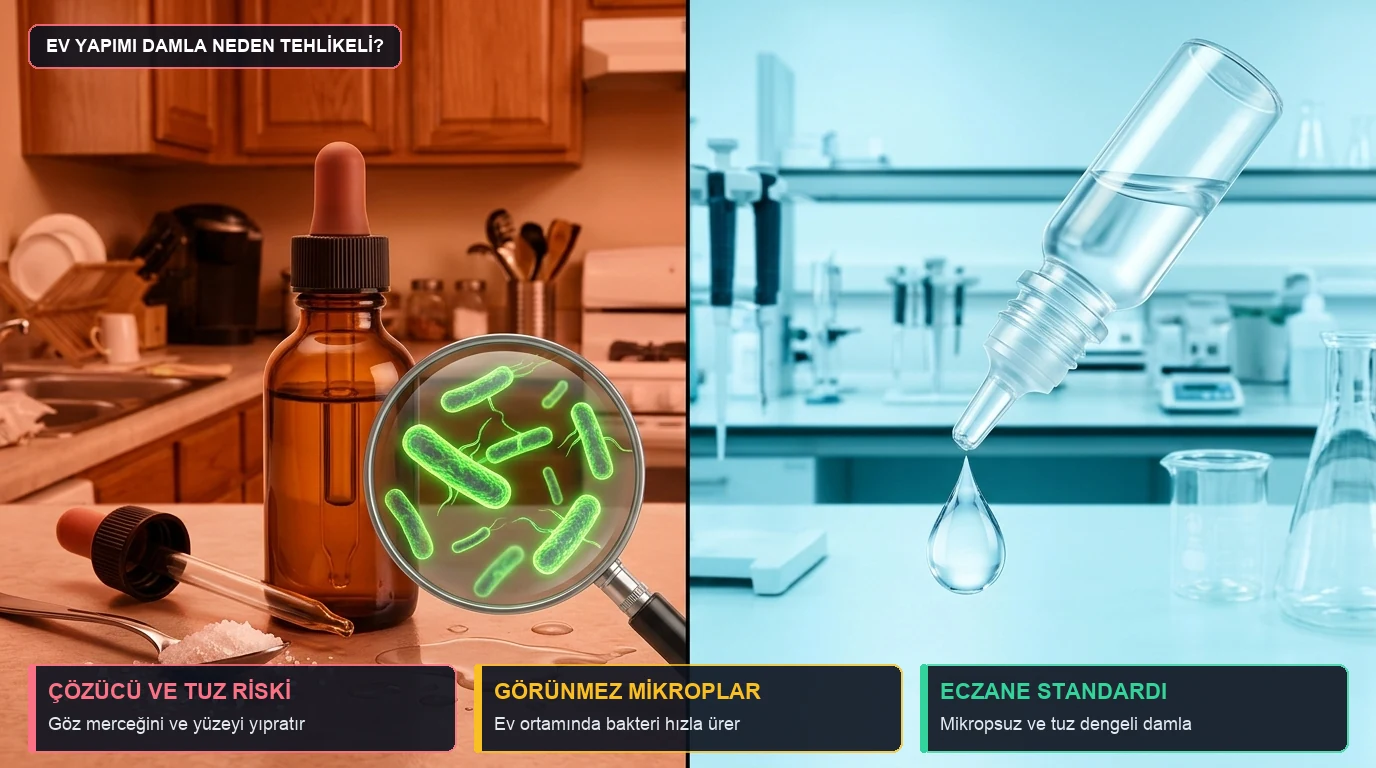
In recent years, unregulated wellness channels, fringe forums, and social media influencers have promoted DIY ophthalmic recipes: mixing kitchen salt into tap water, instilling raw castor oil, or compounding diluted industrial solvents like dimethyl sulfoxide (DMSO). From an anatomical perspective, these practices court disaster [5, 6, 7].
The cornea possesses the highest sensory nerve density in the human body and has zero vascular supply; it depends entirely on the tear film and aqueous humor for metabolic survival [3]. Introducing homemade formulations exposes this delicate window to three catastrophic mechanisms:
1. Solvent Penetration and Intraocular Lens Toxicity
Marketed online as a “natural miracle solvent to dissolve cataracts and cure floaters,” dimethyl sulfoxide (DMSO) is an industrial sulfur-derived compound primarily used in chemical manufacturing and cryopreservation [5, 6]. Clinical reviews by ophthalmic researcher Dan Gordon and toxicologist Lionel Rubin document its severe hazards [5, 6].
At concentrations used in informal recipes, DMSO induces immediate chemical burns, deep epithelial sloughing, and stromal edema [5]. More alarmingly, animal and laboratory studies demonstrate that DMSO rapidly penetrates the anterior chamber, altering the refractive index and crystalline protein architecture of the lens, inducing permanent lens hazing and cataracts [5, 6].
Furthermore, DMSO is a ruthless universal penetrant [5]. Any impurity present in a non-medical dropper—heavy metals, plasticizers, microscopic chemical residues—is instantly dragged across the corneal barrier directly into the anterior chamber of the globe [5, 6].
2. Osmolar and pH Mismatch
Natural tears are precisely buffered at a neutral pH of 7.4 with a narrow physiological osmolarity of 295–305 mOsm/L [1, 3]. Pharmaceutical artificial tears are formulated with exacting buffer systems to mirror this osmotic equilibrium [9].
Kitchen concoctions measured with spoons cannot match this precision [3]. Hypotonic liquids cause corneal epithelial cells to swell and burst; hypertonic saline draws water out through osmosis, desiccating and desquamating the surface layer [3].
3. Drug-Resistant Bacterial Keratitis and Blindness
Boiling water at home or using a “clean” bottle does not create an ophthalmic-grade aseptic environment. A nationwide outbreak investigation published in 2024 by Marissa Grossman, Maroya Walters, and the CDC team illustrates the fragility of ophthalmic sterility [7].
The CDC tracked an outbreak of extensively drug-resistant Pseudomonas aeruginosa linked to contaminated commercial artificial tears produced under compromised cleanroom standards [7]. The bacterium produced a rare carbapenemase enzyme resistant to nearly all antibiotics. Dozens suffered catastrophic corneal ulcers; multiple patients lost their vision permanently, and several required emergency surgical enucleation (complete removal of the eyeball) to prevent intracranial sepsis [7].
If industrial cleanrooms with minor filtration lapses can cause irreversible blindness, kitchen counters and unsterilized droppers represent an extreme biological hazard. No non-pharmaceutical, unverified liquid should ever be introduced into the human eye [7, 9].
4. Melting Solidified Eyelid Lipids: Warm Compresses and Intentional Blinking
The most potent, physiologically restorative intervention for dry eyes requires zero chemical instillation: targeted thermal therapy applied to closed eyelids [8, 9].
In a healthy eyelid, meibomian secretions resemble clear, fluid olive oil, melting freely at normal body temperatures (~32–35 °C at the lid margin) [3]. However, in meibomian gland dysfunction (MGD), the chemical composition shifts toward branched fatty acids with elevated melting thresholds. The oil congeals into the consistency of refrigerated butter or toothpaste, completely obstructing the glandular ducts [3, 8].
Pioneering clinical trials led by Donald Korb and colleagues at Harvard Medical School demonstrated how to clear this obstruction [8, 9]. Applying moist heat at 40–45 °C for 5 to 10 minutes across closed eyelids raises the internal temperature of the tarsal plates above the melting point of hardened meibum [8, 9].
Quantitative interferometry confirms that a single 5-minute warm compress application produces an immediate, substantial thickening of the tear film lipid layer [8]. Incorporating a nightly 5-minute warm compress using a clean moist towel or specialized microwavable eye mask liquefies stagnant meibum and restores the biological anti-evaporative barrier [8, 9].

5. Daily Protocols: 4 Evidence-Based Habits
Protecting your eyes during demanding digital work requires simple, consistent habits grounded in ocular surface science [2, 9, 10]:
- 1. Position Monitors Below Eye Level: Align the top bezel of your display 10–15 cm below direct line of sight. Looking downward lowers the upper lid, significantly narrowing the exposed ocular surface area and slowing evaporation [2, 10].
- 2. The 20-20-20 Full-Blink Break: Every 20 minutes, gaze at an object at least 6 meters (20 feet) away for 20 seconds. Deliberately execute 4 to 5 slow, complete blinks, ensuring lid margins make full contact to express meibum [9, 10].
- 3. Apply a Nightly 5-Minute Warm Compress: Place a clean moist compress heated to 40–45 °C over closed eyes for 5 minutes before bed to melt solidified glandular secretions [8, 9].
- 4. Choose Exclusively Preservative-Free Drops: If lubricating drops are needed, use single-dose preservative-free vials (e.g., sodium hyaluronate or trehalose). Discard multi-dose bottles containing BAK, and avoid DIY recipes entirely [4, 7, 9].
The single most immediate step you can execute right now at zero cost is adjusting your display height [2, 10]. Looking straight ahead or upward holds the palpebral fissure wide open. Lowering your display angles your visual axis downward, allowing the upper lid to shield the cornea like a natural awning [2].

Evidence Level & Scientific Reliability
| Finding | Evidence Level |
|---|---|
| Blink rate falling by ~66% and incomplete blinks driving evaporative tear break-up at display terminals | 🟢 Strong |
| Meibomian gland dysfunction and lipid layer deficiency serving as the primary etiology of dry eye | 🟢 Strong |
| Benzalkonium chloride (BAK) in multi-dose bottles inducing corneal epithelial toxicity and lipid dissolution | 🟢 Strong |
| 40–45 °C warm compresses melting inspissated meibum and thickening tear film lipids | 🟢 Strong |
| Claims regarding the therapeutic safety or efficacy of DIY DMSO and homemade botanical eye drops | 🔴 Refuted / Dangerous |
💡 Understanding Evidence Levels
- 🟢 Strong: Confirmed across multiple peer-reviewed randomized clinical trials and international consensus reports (e.g., TFOS DEWS II).
- 🟡 Emerging: Small clinical cohorts or early exploratory data.
- 🔴 Refuted / Dangerous: Lacks biological safety validation; clinically documented to cause severe ocular harm or permanent blindness.
Frequently Asked Questions
Why do my dry eyes water excessively?
Reflex tearing is an emergency neurological response to corneal drying [1, 3]. When the superficial lipid layer breaks down, exposed epithelial nerve endings trigger the lacrimal gland to flood the eye with watery tears. However, lacking a lipid seal, these reflex tears cannot adhere to the ocular surface and simply spill over the cheeks, failing to relieve the underlying desiccation [3].
Can I reuse single-dose preservative-free eye drop vials the following day?
No. Preservative-free unit-dose vials must be discarded within 12 to 24 hours of opening, and ideally used immediately [4, 7]. Because they contain no chemical antimicrobials, any bacteria introduced to the tip from eyelashes or airborne dust multiply exponentially at room temperature, creating an acute infection risk [7].
Can I prepare a sterile saline eye wash at home by boiling tap water?
Under no circumstances. Boiling does not achieve medical-grade ophthalmic sterility, nor does it buffer pH or osmolarity [5, 7]. As boiled water cools, airborne pathogens and contaminated droppers quickly introduce microbes like Pseudomonas or Acanthamoeba, which can burrow into the cornea and cause irreversible vision loss within 48 hours [7].
Are tea bags suitable for warm compresses?
No. Using a clean washcloth soaked in warm water or an ophthalmic heat mask is far safer [8, 9]. Commercial tea bags release particulate plant debris, tannins, acidic residues, and bleaching agents that can seep into the conjunctival sac, provoking acute allergic contact blepharitis and severe chemical irritation [9].
Conclusion
The persistent burning, redness, and grittiness caused by modern screen immersion is not an inescapable tax on digital productivity. Once we understand that the true culprit is reduced blinking and congealed eyelid lipids, the solution shifts from chemical dependence to physiological restoration [1, 2].
Reject hazardous internet formulations and toxic multi-dose preservatives [4, 7]. Lowering your display, practicing deliberate complete blinks, applying nightly 5-minute warm compresses, and relying exclusively on sterile preservative-free artificial tears will safeguard your ocular surface for decades to come [8, 9, 10].
Last Updated: October 2026
Verified Bibliography & Scientific References
- [1] Craig, J. P., Nichols, K. K., Akpek, E. K., et al. (2017). “TFOS DEWS II Definition and Classification Report.” The Ocular Surface, 15(3), 276–283. DOI: 10.1016/j.jtos.2017.05.008 · PMID: 28736335
- [2] Tsubota, K., & Nakamori, K. (1993). “Dry eyes and video display terminals.” New England Journal of Medicine, 328(8), 584. DOI: 10.1056/NEJM199302253280817 · PMID: 8426634
- [3] Bron, A. J., de Paiva, C. S., Chauhan, S. K., et al. (2017). “TFOS DEWS II Pathophysiology Report.” The Ocular Surface, 15(3), 438–510. DOI: 10.1016/j.jtos.2017.05.011 · PMID: 28736340
- [4] Baudouin, C., Labbé, A., Liang, H., Pauly, A., & Brignole-Baudouin, F. (2010). “Preservatives in eyedrops: the good, the bad and the ugly.” Progress in Retinal and Eye Research, 29(4), 312–334. DOI: 10.1016/j.preteyeres.2010.03.001 · PMID: 20302969
- [5] Gordon, D. M. (1967). “Dimethyl sulfoxide in ophthalmology, with especial reference to possible toxic effects.” Annals of the New York Academy of Sciences, 141(1), 392–401. DOI: 10.1111/j.1749-6632.1967.tb34902.x · PMID: 5232250
- [6] Rubin, L. F. (1975). “Toxicity of dimethyl sulfoxide, alone and in combination.” Annals of the New York Academy of Sciences, 243(1), 98–103. DOI: 10.1111/j.1749-6632.1975.tb25348.x · PMID: 1093466
- [7] Grossman, M. K., Rankin, D. A., Maloney, M., et al. (2024). “Extensively Drug-Resistant Pseudomonas aeruginosa Outbreak Associated With Artificial Tears.” Clinical Infectious Diseases, 79(1), 6–14. DOI: 10.1093/cid/ciae052 · PMID: 38315890 · PMCID: PMC11259536
- [8] Olson, M. C., Korb, D. R., & Greiner, J. V. (2003). “Increase in tear film lipid layer thickness following treatment with warm compresses in patients with meibomian gland dysfunction.” Eye & Contact Lens, 29(2), 96–99. DOI: 10.1097/01.ICL.0000060998.20142.8D · PMID: 12695712
- [9] Jones, L., Downie, L. E., Korb, D., et al. (2017). “TFOS DEWS II Management and Therapy Report.” The Ocular Surface, 15(3), 575–628. DOI: 10.1016/j.jtos.2017.05.006 · PMID: 28736343
- [10] Coles-Brennan, C., Sulley, A., & Young, G. (2019). “Management of digital eye strain.” Clinical and Experimental Optometry, 102(1), 18–29. DOI: 10.1111/cxo.12798 · PMID: 29797453
For informational purposes only; consult a physician for medical diagnosis or treatment.