- → The Clear Lens Fallacy: Standard clear blue light glasses filter only 10% to 25% of blue photons; the remaining light is more than enough to stimulate retinal ipRGC sensors.
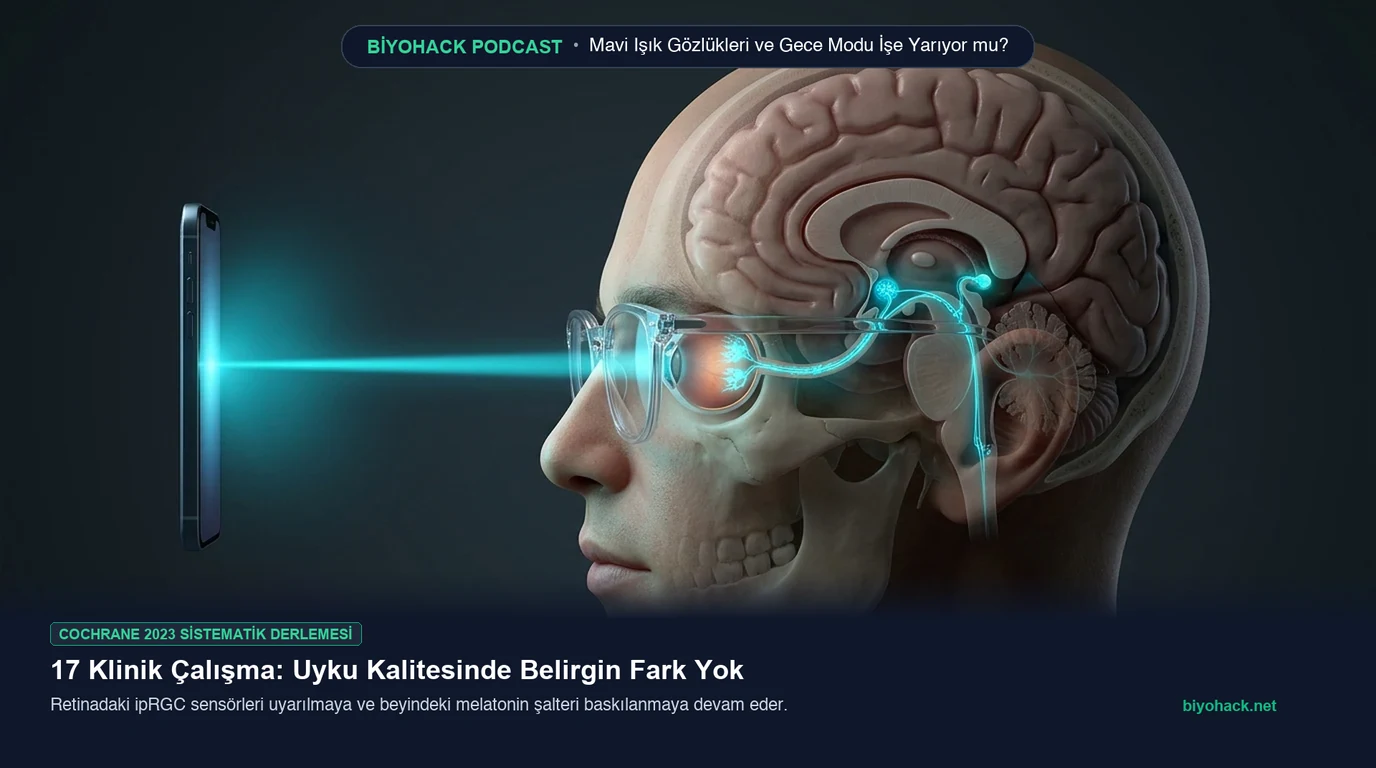
- → Cochrane 2023 Review: Analyzing 17 randomized controlled trials, the Cochrane review found the clinical impact of commercial clear lenses on sleep quality and digital eye strain to be uncertain and indeterminate.
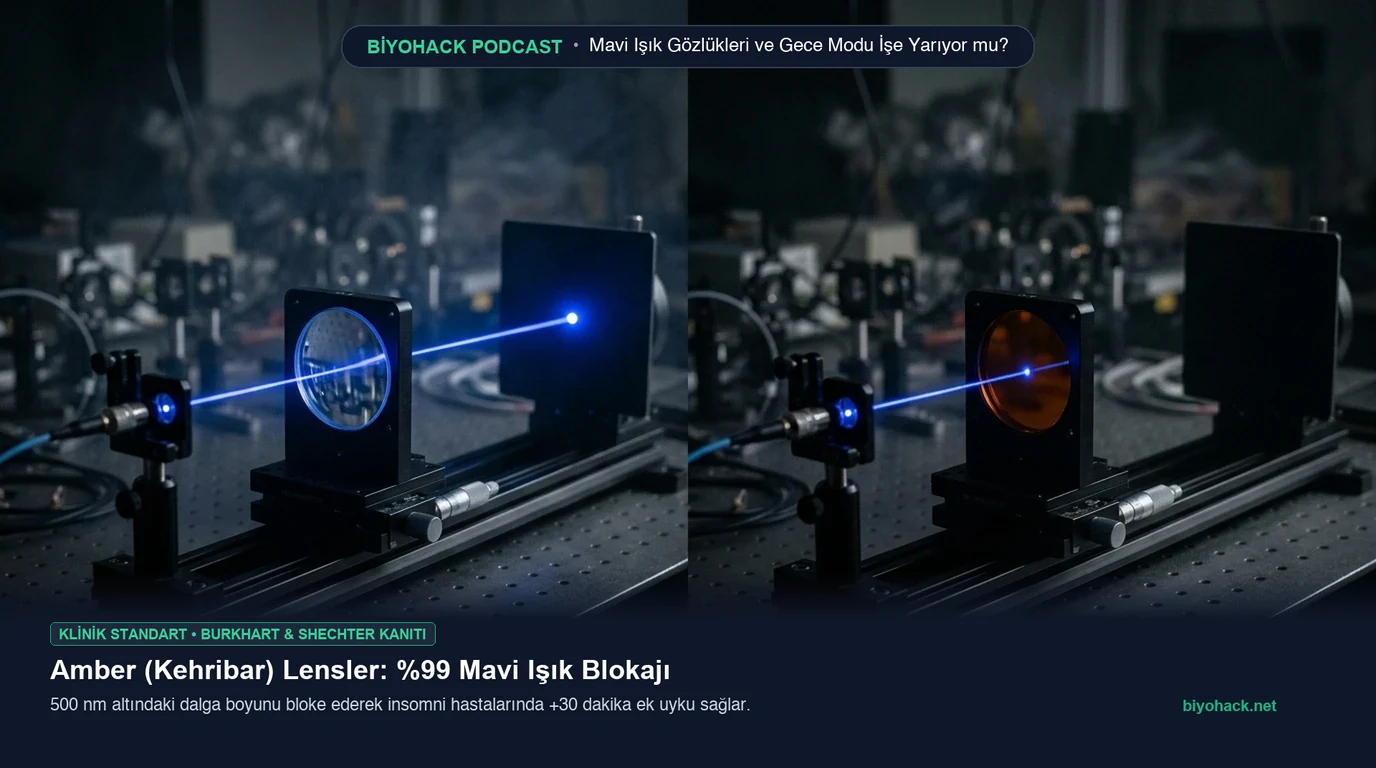
- → The Amber Lens Difference: True amber lenses blocking 98% to 99% of light below 500 nm (Shechter 2018) objectively increased total sleep time by approximately 30 minutes in patients with insomnia.
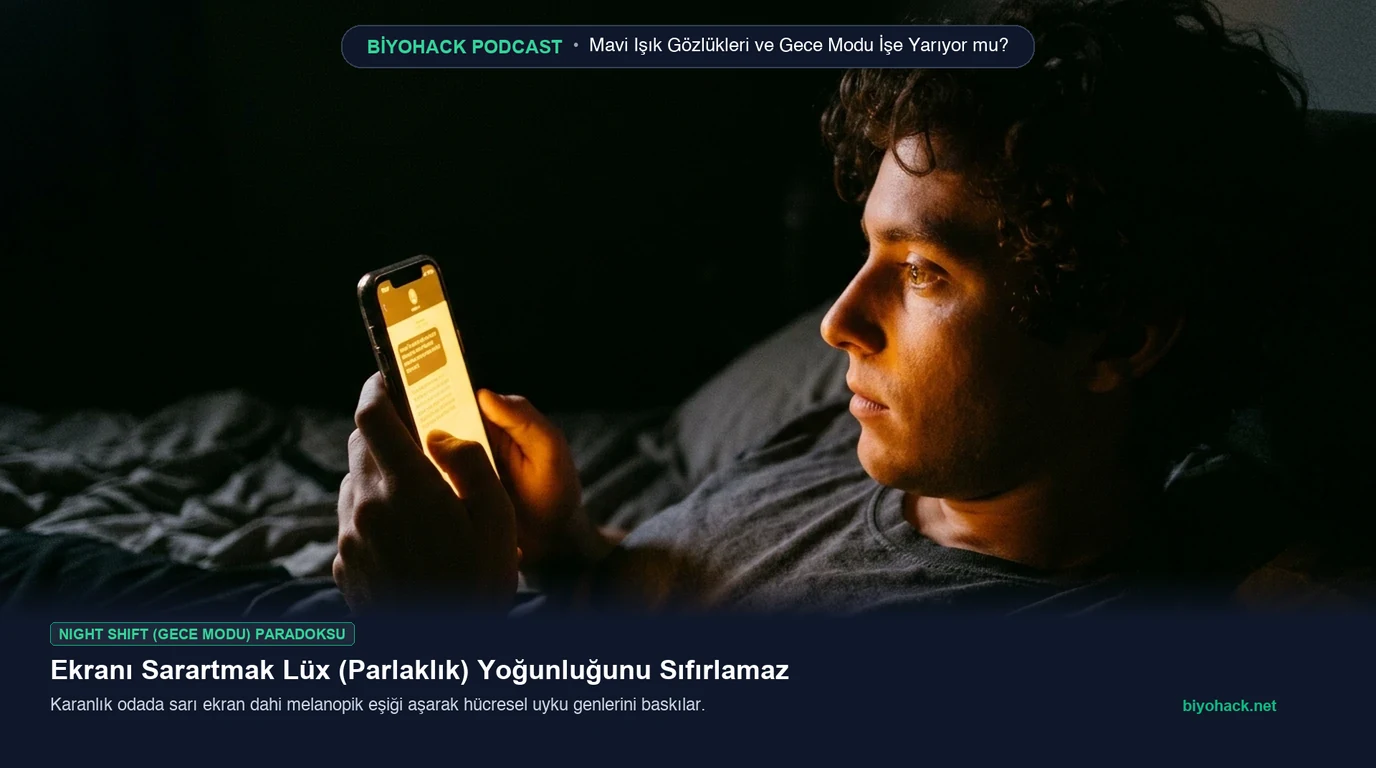
- → The Night Shift Paradox: Shifting display colors to orange alters the spectrum but fails to eliminate total photon flux (lux); in a dark room, a bright screen still trips the biological clock switch.
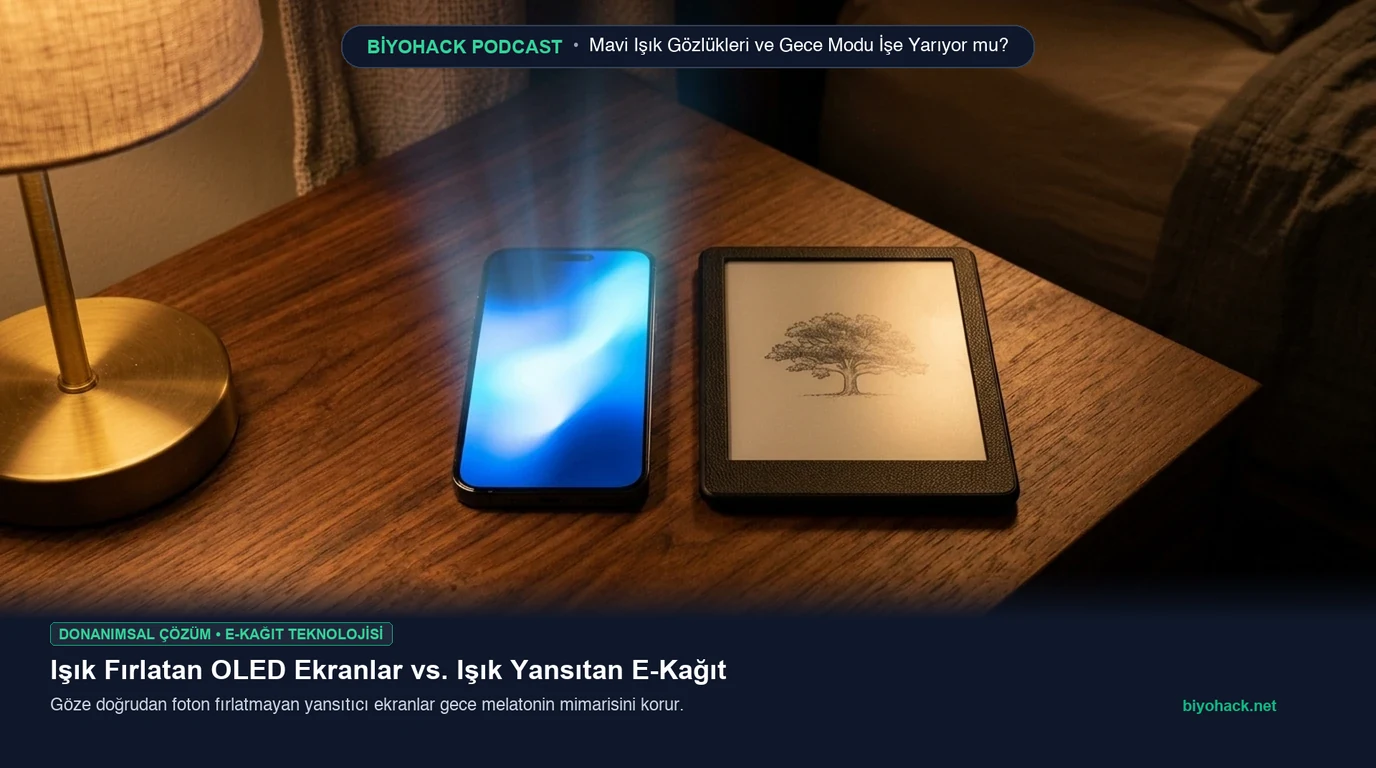
- → Emissive vs. Reflective Displays: Instead of active photon-firing OLED/LCD panels, ambient light-reflecting E-Paper technology provides a true hardware solution for nocturnal screen hygiene.
Do Blue Light Glasses and Night Shift Work? 2026 Clinical Evidence
⚠️ Medical Disclaimer: This review synthesizes clinical and optical evidence from peer-reviewed photobiology and circadian literature. It does not substitute for professional ophthalmological examination, prescription eyeglasses, or medical treatment for sleep disorders.
🟢 Evidence Level: Systematic Review & Randomized Controlled Trials — Based on the Cochrane 2023 systematic review, alongside clinical trials by Burkhart (2009) and Shechter (2018).
What This Guide Examines
Millions of computer workers wear clear blue-blocking lenses, believing they are preventing digital eye strain and protecting sleep. Simultaneously, almost every modern smartphone features a built-in “Night Shift” mode that shifts screens toward a warm orange hue.
Believing they are biologically shielded, many individuals continue staring at screens late into the night right up until bedtime.
However, clinical optometry data and photobiology measurements reveal a dramatically different reality. In this guide, grounded in the Cochrane Systematic Review [1] and randomized trials by Burkhart [2] and Shechter [3], we examine why clear lenses fail, why amber lenses succeed, and the fundamental physics limits of software Night Shift modes.
1. Cochrane 2023 Systematic Review: Why Clear Blue Light Glasses Fail
The Cochrane Library, universally recognized as the gold standard of evidence-based medicine, published the most comprehensive systematic review to date on blue-filtering spectacle lenses in adults [1].
Led by Singh and colleagues, the review meticulously evaluated 17 randomized controlled clinical trials:
- Sleep Quality & Melatonin: The effect of standard clear blue-filtering lenses on sleep latency, sleep quality, and nocturnal melatonin release was determined to be uncertain and indeterminate.
- Eye Strain (Asthenopia): Clear lenses demonstrated no statistically significant clinical advantage in reducing digital eye fatigue or headache frequency over standard lenses.
- Macular Protection: No clinical trial demonstrated that clear commercial lenses protect retinal photoreceptors or the macular pigment against photochemical damage.
The Optical Reality
Commercial clear glasses filter merely 10% to 25% of high-energy blue photons (400–480 nm). Because the intrinsic photosensitive retinal ganglion cells (ipRGCs) in the human eye are exquisitely sensitive, having 75% to 90% of blue light pass through uninhibited tells the brain’s central clock (the suprachiasmatic nucleus, SCN) that it is still midday, halting melatonin release.
2. Clinical Success of Amber (Orange) Lenses: Burkhart and Shechter Trials
While clear lenses fail to meet clinical thresholds, medical photobiology demonstrates clear efficacy with amber (orange/red-tinted) lenses. These lenses block 98% to 99% of all optical wavelengths below 500 nm.
Burkhart & Phelps (2009): Controlled Sleep Quality
In a randomized clinical trial published in Chronobiology International [2], participants wore either amber blue-blocking glasses or clear control glasses for the 3 hours prior to sleep.
- Findings: Participants wearing amber lenses exhibited significant improvements in subjective sleep quality (p < 0.001) and substantial mood stabilization.
Shechter et al. (2018): Objective Actigraphy in Insomnia Patients
In a randomized controlled crossover study published in the Journal of Psychiatric Research [3], individuals diagnosed with clinical insomnia wore amber lenses or clear placebo lenses for 2 hours before bed over two-week intervals.
- Findings: While the clear placebo glasses showed no benefit, the amber lens group exhibited a significant drop in the Pittsburgh Insomnia Rating Scale and an objective net increase of ~30 minutes in total sleep time (TST) as measured by wrist actigraphy.
By filtering 98–99% of light below 500 nm, amber glasses simulate physiological darkness behind the retina, allowing the pineal gland to initiate nocturnal melatonin synthesis even under indoor electric light.
3. Why Smartphone Night Shift Mode Is Insufficient
Software night modes shift display color temperature from 6500K cool white to 3000K warm amber. While this lowers the proportion of blue photons, it encounters the fundamental paradox of lux and intensity:
- Spectrum vs. Illuminance (Lux): ipRGC activation depends not solely on spectral composition, but on total photon flux reaching the retina.
- Dark-Adapted Sensitivity: In a pitch-black bedroom, the pupil dilates. Even an orange-shifted display delivers enough melanopic lux to trigger central circadian arousal.
- Software Cannot Eliminate Photon Emission: Turning pixels orange does not reduce the total photons fired into the vitreous body unless brightness is reduced to near zero.
As noted in biomedical analyses by Dr. med. Kurt Mosetter [4], evening screen exposure suppresses cellular clock genes (Schlaf-Gene) and disrupts slow-wave sleep architecture (Schlafarchitektur).
4. Hardware Solution: Emissive Displays vs. Reflective E-Paper
For individuals who read or work digitally at night, the true physiological solution lies in display physics:
- Emissive Displays (OLED / LCD): Active photon-firing panels that direct high-flux light straight into the visual axis.
- Reflective Displays (E-Paper / E-Ink): Microcapsule technology that reflects ambient light exactly like physical paper.
Reading on an E-Paper screen illuminated by warm, indirect room light (<2000K amber bulb) fires zero direct photons into the retina, preventing ipRGC stimulation and leaving melatonin production unimpeded.
5. Practical Circadian Light Protocol
- Daytime: Get 15–30 minutes of natural outdoor sunlight within 60 minutes of waking to anchor the SCN clock and suppress melatonin cleanly.
- Evening (2 hours before bed): If you must use digital screens, put on true wrap-around amber lenses (99% block below 500 nm).
- Night Shift is Not a License to Scroll: Do not treat Night Shift as an excuse for late-night social media feeds in bed (See our guide on Why We Scroll in Bed: Revenge Bedtime Procrastination).
- Bedroom Darkness: Sleep in a pitch-black room (<0.1 lux) with blackout curtains or a comfortable eye mask.
References & Academic Citations
- Singh, S., Downie, L. E., et al. (2023). Blue-light filtering spectacle lenses for visual performance, sleep, and macular health in adults. Cochrane Database of Systematic Reviews, Issue 8. DOI: 10.1002/14651858.CD013244.pub2 | PMID: 37593770
- Burkhart, K., & Phelps, J. R. (2009). Amber lenses to block blue light and improve sleep: a randomized trial. Chronobiology International, 26(8), 1602-1612. DOI: 10.3109/07420520903523719 | PMID: 20030543
- Shechter, A., et al. (2018). Blocking nocturnal blue light for insomnia: A randomized controlled trial. Journal of Psychiatric Research, 96, 196-202. DOI: 10.1016/j.jpsychires.2017.10.015 | PMID: 29101797
- Dr. med. Kurt Mosetter & Henning Fritz. Gestörter Melatonin-Haushalt. QS24 Schweizer Gesundheitsfernsehen. YouTube.
For informational purposes only; consult a physician for medical diagnosis or treatment.