
- → Our mental workspace holds only 3–5 items: Working memory can actively retain only 3 to 5 discrete pieces of information at once; when engaged in demanding tasks, zero cognitive bandwidth remains for peripheral monitoring (Cowan, 2001).
- → Intense focus creates situational blindness: In the classic invisible gorilla experiment, nearly half of the participants counting basketball passes completely failed to see a person in a gorilla suit pounding their chest in plain sight (Simons & Chabris, 1999).
- → Experts err when interrupted, novices err when uninformed: Experienced professionals miss steps when automatic routines are disrupted; beginners err because they lack internalized rules (Reason, 2000).
- → 17 hours awake impairs like mild intoxication: Extended wakefulness severely slows reaction latency; standardized written checklists reduce surgical mortality rates by nearly half (Dawson & Reid, 1997; Haynes et al., 2009).
⚠️ Informational Notice: This article provides general educational information based on peer-reviewed scientific literature and does not substitute for clinical diagnosis or medical consultation. If you experience severe chronic inattention, excessive daytime sleepiness, or suspect sleep apnea, consult a qualified medical professional.
In Brief
- The human brain can actively hold only 3 to 5 chunks of information simultaneously; once this capacity is saturated, peripheral awareness collapses [3].
- When hyper-focused on a single task, we can fail to notice obvious hazards passing directly before our eyes—a phenomenon known as inattentional blindness [1].
- Remaining awake for 17 consecutive hours slows motor response and visual reaction times to levels comparable to a blood alcohol concentration of 0.05% [4].
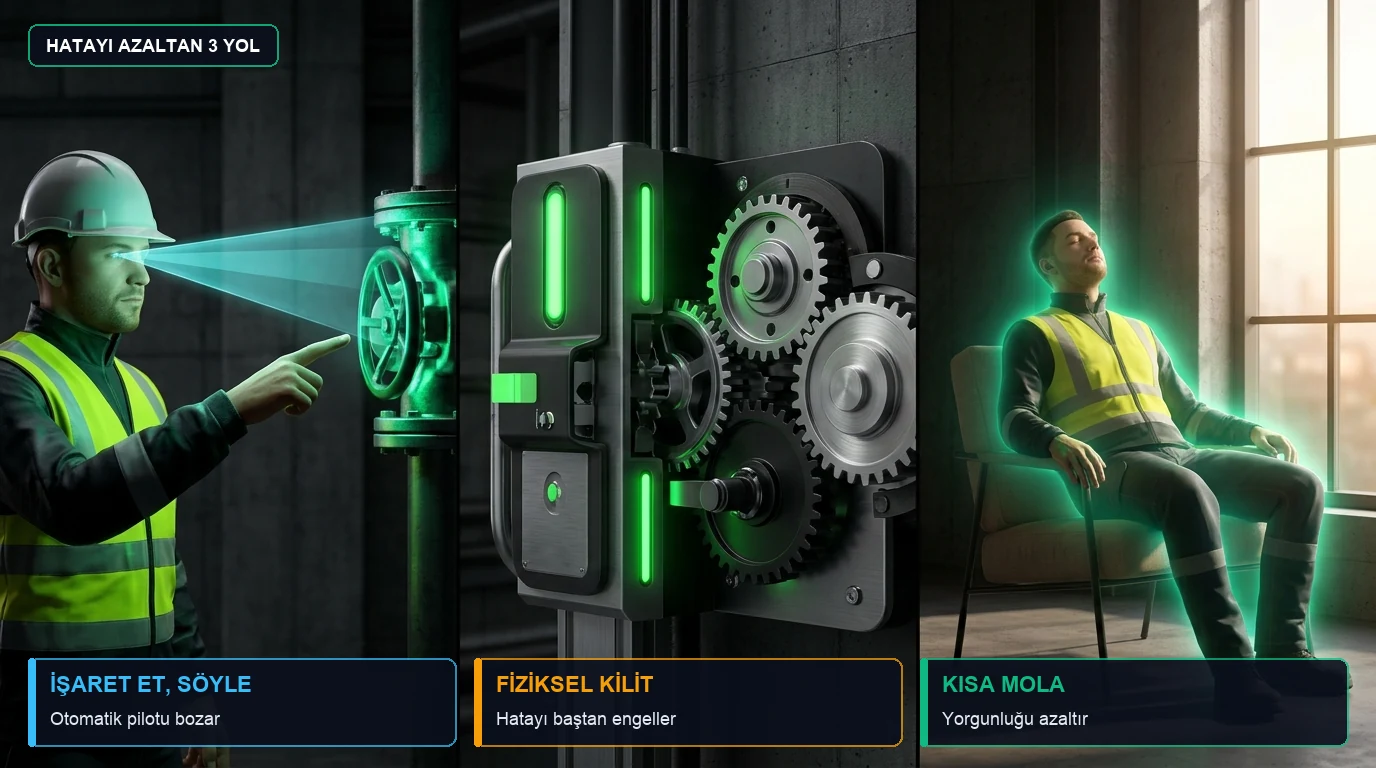
- Implementing written checklists [6], using the “Point-and-Call” verification method, and taking brief micro-breaks [7] substantially reduce omission errors.
Does This Sound Familiar?
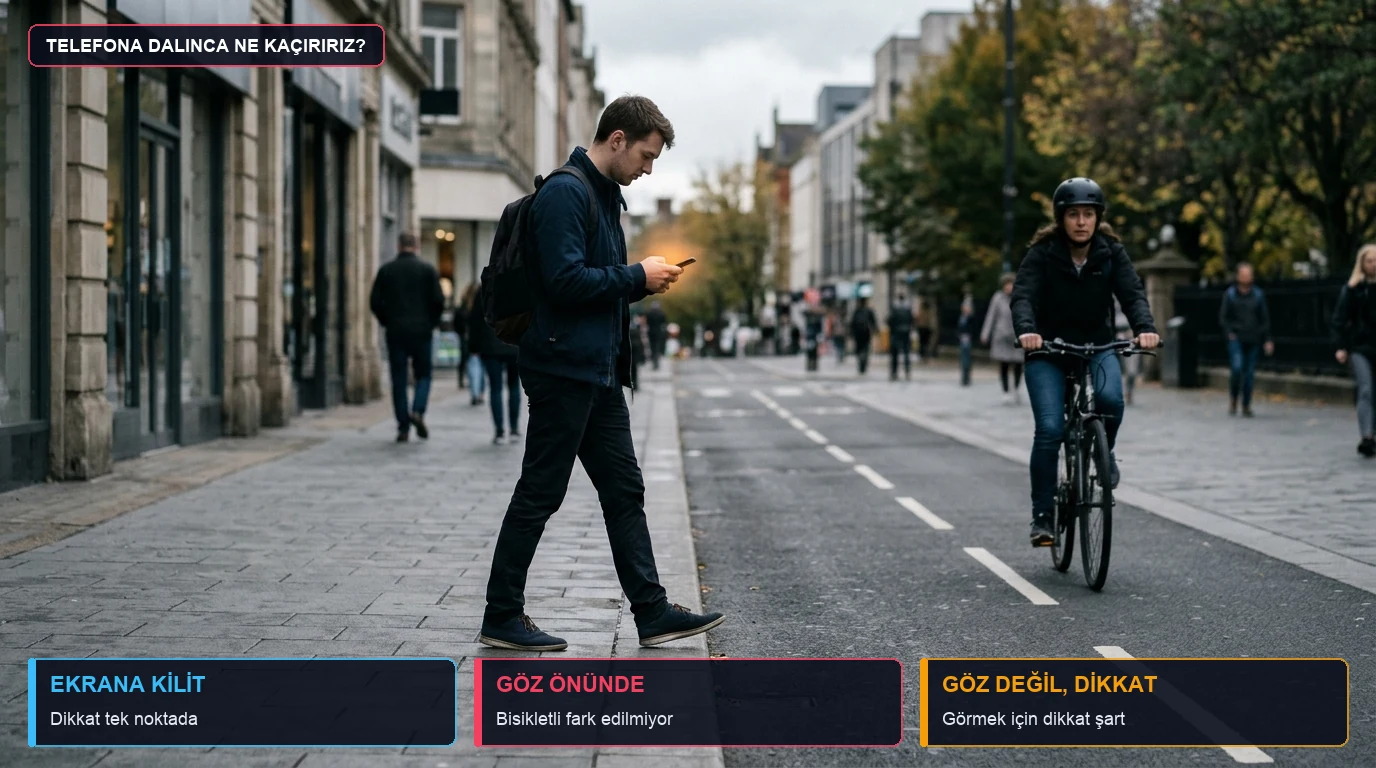
You are walking down the sidewalk, glancing down to type a quick reply to a text message. At that very second, a cyclist darts past, missing you by inches. Or you are rushing out of your home while taking an urgent phone call; you pull the door shut behind you, only to realize your keys are sitting on the hallway counter.
Whenever a preventable accident or cognitive oversight occurs, outside observers instinctively react the same way: “How could they miss that enormous truck?”, “How did they forget to pull the handbrake?”, “The flashing warning light was right in front of them!”
We mistakenly assume our eyes function like video cameras, passively and flawlessly recording every stimulus in our visual field. Neuroscience demonstrates the exact opposite: The eyes merely register light; it is the brain that sees. If attentional bandwidth is consumed elsewhere, what is directly in front of our eyes remains completely invisible [1, 3].
1. Why Is Our Mental Workspace So Constrained?
To understand why a novice technician feels overwhelmed or why a seasoned specialist misses a critical warning sign during troubleshooting, we must examine the neurobiology of working memory—the brain’s temporary mental desktop.
Only 3 to 5 Chunks at Any Given Moment
Landmark research by cognitive psychologist John Sweller and memory researcher Nelson Cowan demonstrated that our conscious working memory capacity is far narrower than previously assumed [3]:
- The human brain can actively manipulate only 3 to 5 meaningful information chunks (averaging 4 items) at any given instant [3].
- Picture this as a compact physical desk. Once you place four bulky boxes on it, all usable surface area is gone.
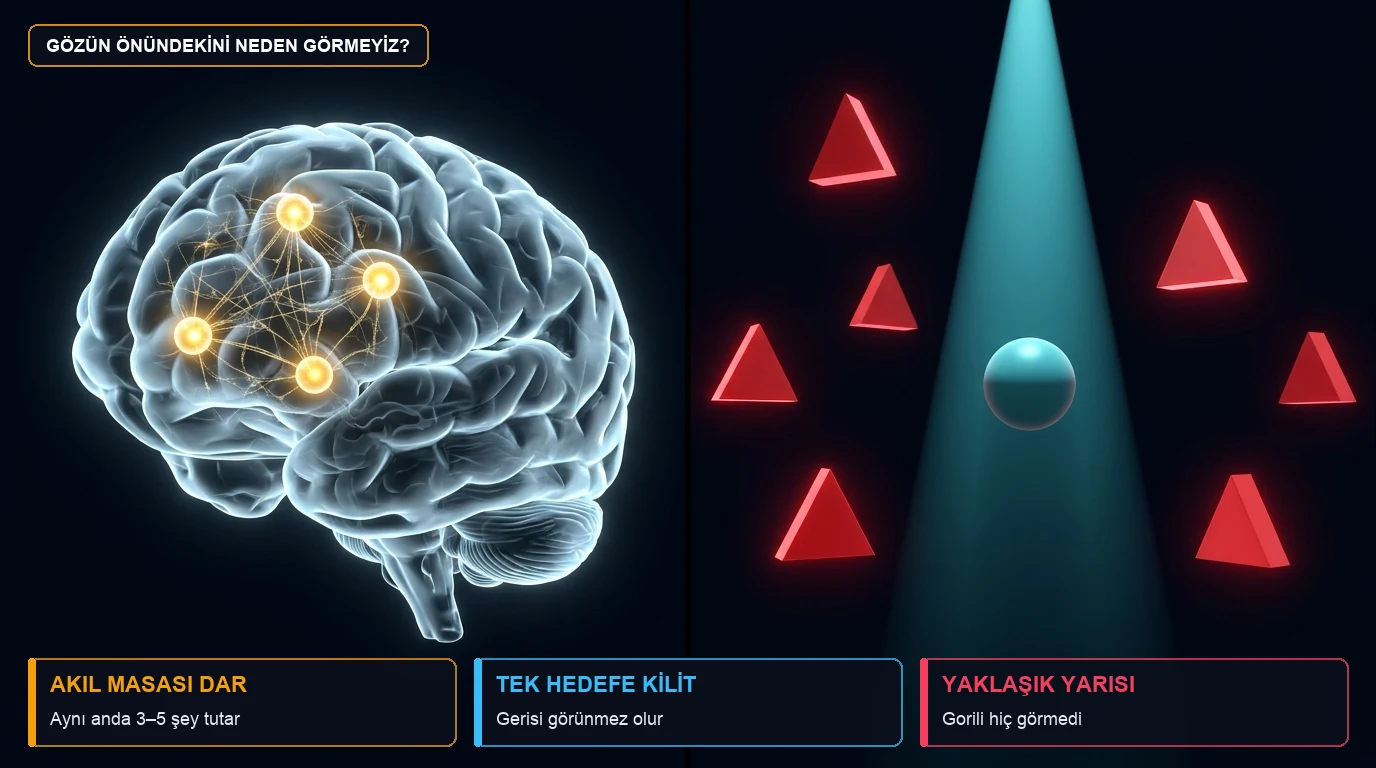
- When performing a novel, unpracticed, or demanding task, this entire workspace is monopolized by questions like “What is the next step?” As a result, zero attentional bandwidth remains to process ambient acoustic cues or emerging peripheral threats [3].
The “Invisible Gorilla” Experiment
At Harvard University, Daniel Simons and Christopher Chabris elegantly demonstrated how selective attention blinds our visual perception [1]:
- Participants watched a short video of two teams passing basketballs and were instructed to count the exact number of passes made by the team wearing white shirts.
- Midway through the 60-second video, an actor wearing a full-body gorilla costume walked directly into the center of the court, faced the camera, thumped their chest, and walked away, spending a full 5 seconds in view.
- The outcome was startling: Approximately half of all participants (46–50%) failed to notice the gorilla entirely [1].
Cognitive psychologists term this phenomenon inattentional blindness [1]. Even when your vision is 20/20, when cortical processing is locked onto a specific focal target, unexpected stimuli in plain view simply fail to reach conscious awareness.
2. Why Do Novices Make Mistakes While Masters Forget?
We intuitively understand why a beginner makes errors due to confusion. But why does a seasoned master technician with 15 years on the job, or an elite surgeon, occasionally omit a foundational safety step?
Professor James Reason established that novice errors and expert errors stem from fundamentally different cognitive mechanisms [2]:
| Error Classification | Underlying Cause | Most Vulnerable Cohort | Everyday Real-World Example |
|---|---|---|---|
| Automaticity Slip / Lapse | Routine tasks run on automatic subcortical motor programs; an unexpected interruption derails the execution sequence [2]. | Experienced Experts | A mechanic who has changed thousands of wheels gets interrupted by a phone call and lowers the vehicle believing the lug nuts were already torqued. |
| Knowledge & Rule Mistake | The individual misinterprets system state or has not yet internalized the governing safety rule [2]. | Novices & Trainees | Using a conductive aluminum ladder near energized high-voltage electrical lines due to lack of training. |
| Latent System Failures | Time pressure, inadequate illumination, missing tools, and prolonged shifts systematically prime the brain for failure [2]. | Organizational Environment | Slippery floors without warning signs, unergonomic layouts, or defective interlocking switches. |

The Swiss Cheese Model: Catastrophes Are Never Single-Point Failures
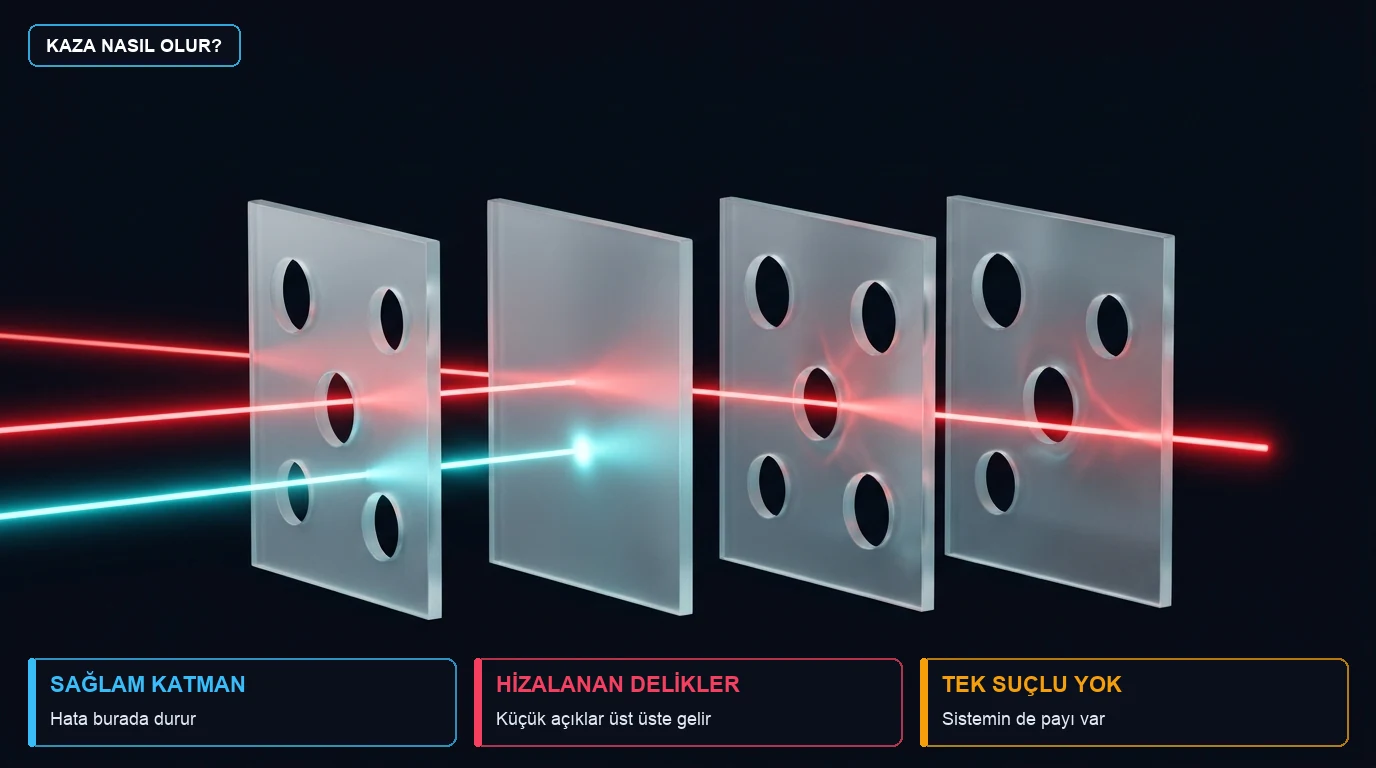
Reason conceptualized system safety using the famous Swiss Cheese Model [2]. Imagine defensive barriers as slices of Swiss cheese lined up parallel to one another. Each slice has holes representing imperfections, latent defects, or human limitations. In normal conditions, a hazard penetrating a hole in one slice (e.g., an expert interrupted by a phone call) is halted by the solid surface of the next slice (e.g., an audible torque warning system).
Systemic catastrophes occur only when the holes across every protective layer align simultaneously—combining organizational fatigue, missing equipment, time pressure, and a momentary attentional lapse [2].
3. How Sleep Deprivation Degrades the Brain Like Alcohol
Among all environmental and biological factors, nothing exacerbates inattentional blindness and cognitive lapses faster than sleep loss.
17 Hours Awake = Mild Intoxication
In a landmark study published in Nature, Australian neuroscientists Drew Dawson and Kathryn Reid kept 40 healthy volunteers awake for 28 consecutive hours, evaluating cognitive psychomotor performance against blood alcohol concentration (BAC) levels [4]:
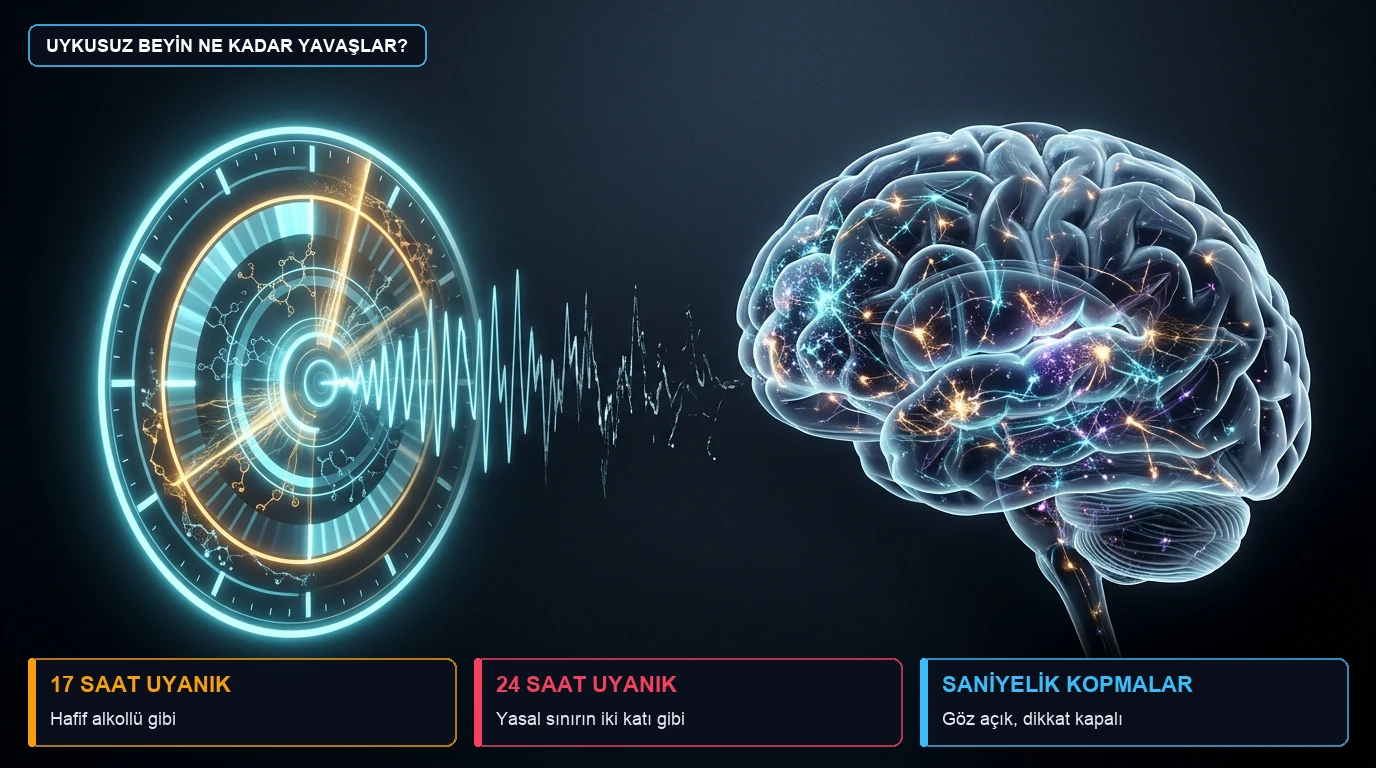
- A person who wakes up at 08:00 AM displays performance deficits by 01:00 AM (after 17 hours of sustained wakefulness) that match a driver with a 0.05% BAC (0.50 promille) [4].
- After 24 hours of wakefulness, psychomotor reaction speeds drop to levels equivalent to a 0.10% BAC (1.00 promille)—well over the legal intoxication limit in most jurisdictions [4].

Microsleeps with Eyes Wide Open
In a meta-analysis synthesizing 70 independent experimental protocols, Julian Lim and David Dinges from the University of Pennsylvania examined how acute sleep restriction impairs distinct cognitive domains [5]. The domain suffering the steepest decline was sustained attention and vigilance [5].
When chronically sleep-deprived, your eyes remain open, and subjectively you believe you are attentive. However, cortical neural populations enter involuntary local micro-sleeps lasting 1 to 3 seconds; during these brief lapses, sensory processing completely decouples, leaving you blind to a red traffic light or an emergency stop indicator [5].
4. What Can You Do? 4 Practical Neuro-Ergonomic Strategies
Merely commanding yourself to “pay closer attention” cannot bypass the biological constraints of our 3-to-5 item working memory. Instead, you must deploy neuro-ergonomic scaffolding to relieve working memory load:
- 1. Deploy physical written checklists: For safety-critical sequences, offload memory retention onto an external checklist and verify each item explicitly [6].
- 2. Utilize Pointing and Calling (Shisa Kanko): When leaving home or verifying a critical switch, physically point your finger and verbalize the state aloud: "Iron is unplugged, verified!"
- 3. Take micro-breaks under 10 minutes: Step away, rehydrate, and gaze into the far distance to reset cortical vigilance networks [7].
- 4. Implement physical poka-yoke interlocks: In high-fatigue settings, do not rely purely on alertness; use auto-shutoff appliances, thermal sensors, and mechanical interlocks [2].
The simplest and most immediate intervention is Pointing and Calling (Shisa Kanko), developed by Japanese railway operators over a century ago. Glancing passively allows the brain to make lazy assumptions (“It’s probably locked”). Pointing physically and speaking aloud simultaneously engages the motor cortex, visual visual stream, and auditory feedback loops, instantly breaking automatic pilot.
The efficacy of written checklists has been demonstrated in high-stakes clinical settings. In a landmark study led by Alex Haynes, Atul Gawande, and colleagues across 8 international hospital sites involving 7,688 surgical patients, implementing a 19-item surgical safety checklist read aloud by the operating team reduced post-surgical mortality from 1.5% to 0.8% (nearly in half) and surgical complications from 11.0% to 7.0% [6].
Furthermore, a systematic review and meta-analysis by Patricia Albulescu and colleagues encompassing 22 studies demonstrated that micro-breaks lasting under 10 minutes significantly decrease fatigue and boost subjective vigor; however, following strenuous cognitive load, true cognitive recovery requires breaks exceeding 10 minutes free from digital screens [7].
Related Guides
- Discover how smartphone notifications fragment executive function in our deep-dive on The Neurobiology of Mobile Notifications & Dopamine Loops.
- Learn how chronic acoustic stress degrades prefrontal reserves in Environmental Noise, Neurological Fatigue, and Auditory Biohacking.
- Explore how habit loops and digital latencies sap cognitive bandwidth in Digital Waiting Latency, Attention Residue, and Habit Neurobiology.
Evidence Strength & Clinical Confidence
| Finding / Principle | Scientific Confidence |
|---|---|
| Deep focus on a singular visual task blinds approximately 50% of observers to conspicuous unexpected events | 🟢 Strong Evidence |
| Sustained wakefulness of 17–24 hours degrades psychomotor response latency equivalent to 0.05–0.10% BAC | 🟢 Strong Evidence |
| Standardized written checklists significantly reduce omission errors, surgical complications, and mortality | 🟢 Strong Evidence |
| Structured micro-breaks under 10 minutes alleviate acute fatigue and boost subjective vigor | 🟢 Strong Evidence |
| Brief 2-minute micro-breaks alone are sufficient to restore peak performance after heavy cognitive overload | 🔴 Inadequate (Longer screen-free recovery required) |
💡 Understanding Confidence Levels:
- 🟢 Strong: Validated by multiple peer-reviewed randomized trials, meta-analyses, and broad scientific consensus.
- 🟡 Emerging: Backed by smaller cohorts or promising preliminary clinical trials requiring further replication.
- 🔴 Inadequate: Lacking robust human clinical validation, conflicting, or observed solely in preliminary bench settings.
Frequently Asked Questions
Is inattentional blindness a visual impairment?
No. Inattentional blindness is not an optical defect; it is a normal neurological consequence of limited attentional bandwidth [1, 3]. Even with pristine 20/20 visual acuity, when cortical processing is occupied by a smartphone screen or high cognitive load, unpredicted stimuli directly in your line of sight fail to register consciously [1].
Why do highly skilled professionals forget foundational safety steps?
When a task is repeated thousands of times, neural execution transfers to automatic subcortical motor programs; an ill-timed interruption derails the behavioral chain [2]. This lapse does not stem from ignorance, but from disrupted automaticity. Externalized written checklists are the premier defense against this phenomenon [2, 6].
Is driving sleep-deprived truly comparable to driving under the influence?
Yes. After 17 continuous hours of wakefulness, psychomotor hand-eye coordination and reaction speed drop to levels observed at 0.05% BAC [4]. At 24 hours of wakefulness, impairment mirrors 0.10% BAC, accompanied by involuntary micro-sleeps where the cortex loses sensory connectivity for several seconds [4, 5].
How frequently should we take breaks to preserve vigilance?
During routine desk work, micro-breaks under 10 minutes (standing, hydrating, looking out the window) reduce fatigue and improve focus [7]. However, after demanding cognitive tasks, genuine cognitive rejuvenation requires a screen-free break of 10 to 15 minutes every 60 to 90 minutes [7].
Conclusion
Failing to see an obvious cue right before our eyes or skipping a familiar step is rarely an issue of “carelessness.” It is the natural consequence of our narrow 3-to-5 item working memory capacity, disrupted automatic routines, and sleep debt. Enhancing safety and performance does not require demanding superhuman perfection from our brains; it requires supporting our biology with written checklists, active Point-and-Call verification, and adequate sleep.
Last Updated: October 2026
Verified References & Academic Sources
- [1] Simons, D. J., & Chabris, C. F. (1999). “Gorillas in our midst: sustained inattentional blindness for dynamic events.” Perception, 28(9), 1059–1074. DOI: 10.1068/p281059 · PMID: 10694957
- [2] Reason, J. (2000). “Human error: models and management.” BMJ, 320(7237), 768–770. DOI: 10.1136/bmj.320.7237.768 · PMID: 10720363
- [3] Cowan, N. (2001). “The magical number 4 in short-term memory: A reconsideration of mental storage capacity.” Behavioral and Brain Sciences, 24(1), 87–114. DOI: 10.1017/S0140525X01003922 · PMID: 11515286. Additional citation: Sweller, J. (1988). “Cognitive load during problem solving: Effects on learning.” Cognitive Science, 12(2), 257–285. DOI: 10.1207/s15516709cog1202_4
- [4] Dawson, D., & Reid, K. (1997). “Fatigue, alcohol and performance impairment.” Nature, 388(6639), 235. DOI: 10.1038/40775 · PMID: 9230429
- [5] Lim, J., & Dinges, D. F. (2010). “A meta-analysis of the impact of short-term sleep deprivation on cognitive variables.” Psychological Bulletin, 136(3), 375–389. DOI: 10.1037/a0018883 · PMID: 20438143. Additional citation: Lim, J., & Dinges, D. F. (2008). Annals of the New York Academy of Sciences, 1129, 305–322. PMID: 18591490
- [6] Haynes, A. B., Weiser, T. G., Berry, W. R., Gawande, A. A., et al. (2009). “A surgical safety checklist to reduce morbidity and mortality in a global population.” New England Journal of Medicine, 360(5), 491–499. DOI: 10.1056/NEJMsa0810119 · PMID: 19144931
- [7] Albulescu, P., Macsinga, I., Rusu, A., et al. (2022). “‘Give me a break!’ A systematic review and meta-analysis on the efficacy of micro-breaks for increasing well-being and performance.” PLOS ONE, 17(8), e0272460. DOI: 10.1371/journal.pone.0272460 · PMID: 36044424
For informational purposes only; consult a physician for medical diagnosis or treatment.