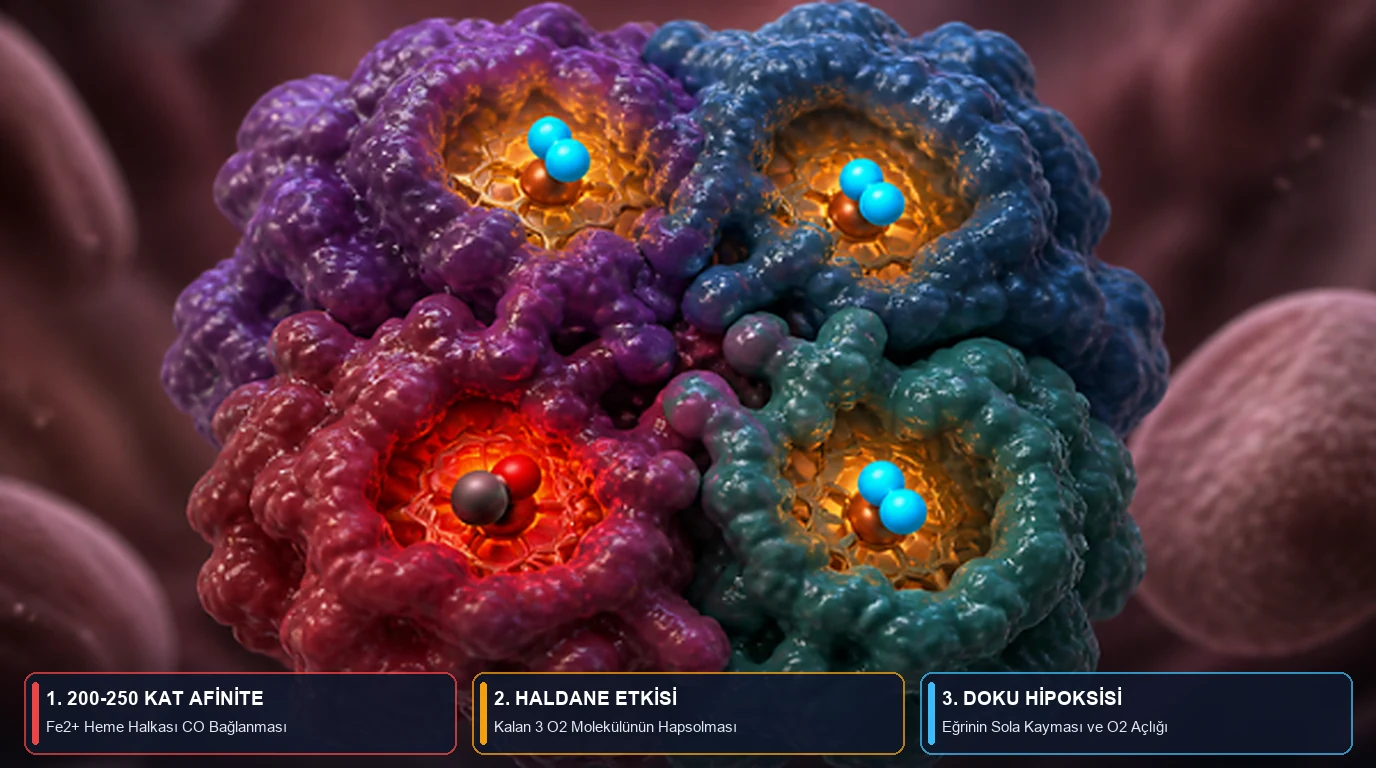
- → 200–250x Affinity and the Haldane Effect (Weaver, 2009): Carbon monoxide binds to hemoglobin's heme iron with an affinity 200 to 250 times greater than oxygen, locking the tetramer in high-affinity R-state and arresting tissue oxygen delivery (leftward shift of the oxygen dissociation curve).
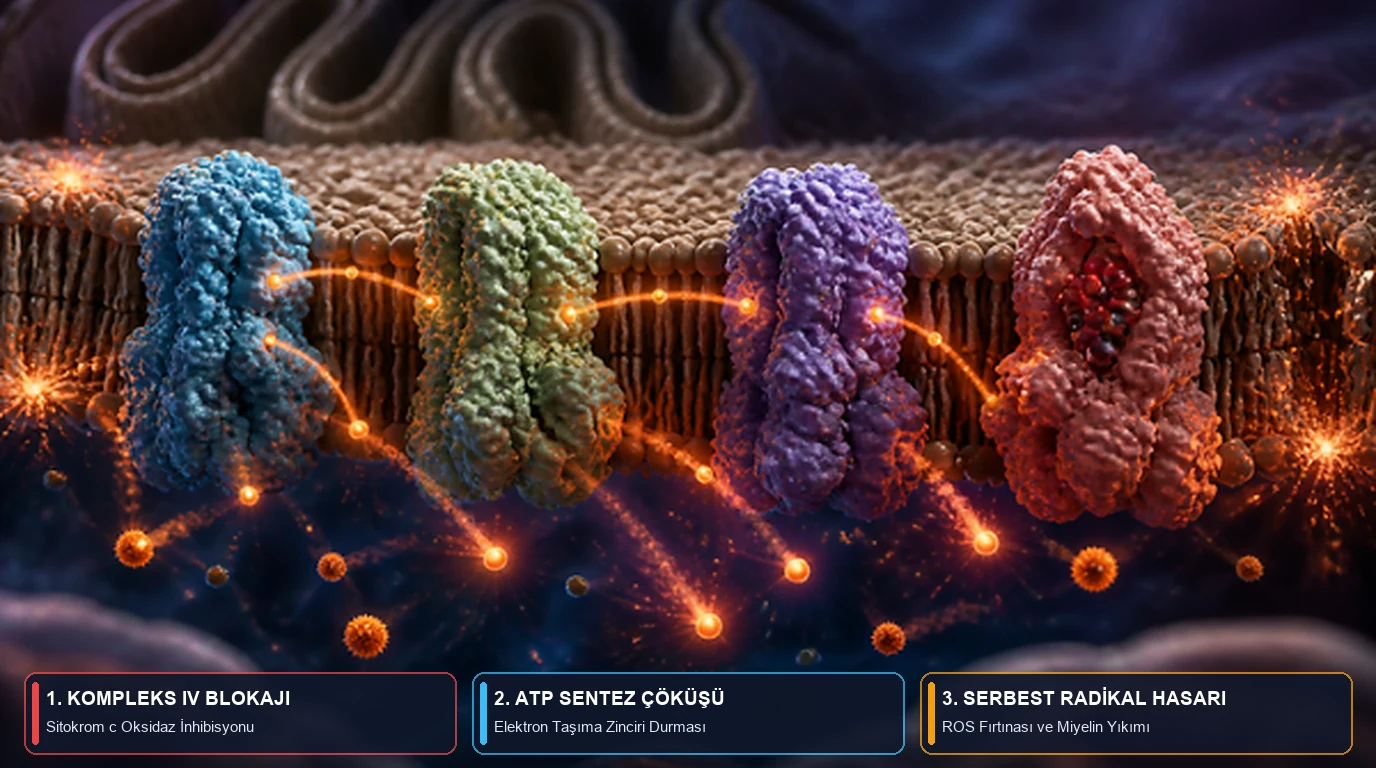
- → Mitochondrial Complex IV Arrest (Alonso et al., 2003): CO directly inhibits Cytochrome c Oxidase (Complex IV) on the inner mitochondrial membrane, halting oxidative ATP synthesis and triggering massive reactive oxygen species (ROS) production.
- → Delayed Neurological Sequelae — DNS (Rose et al., 2017): Between 15% and 40% of acute survivors develop cognitive decline, memory impairment, personality shifts, or parkinsonism after a 2- to 40-day 'lucid interval' driven by myelin basic protein (MBP) peroxidative auto-immunity.
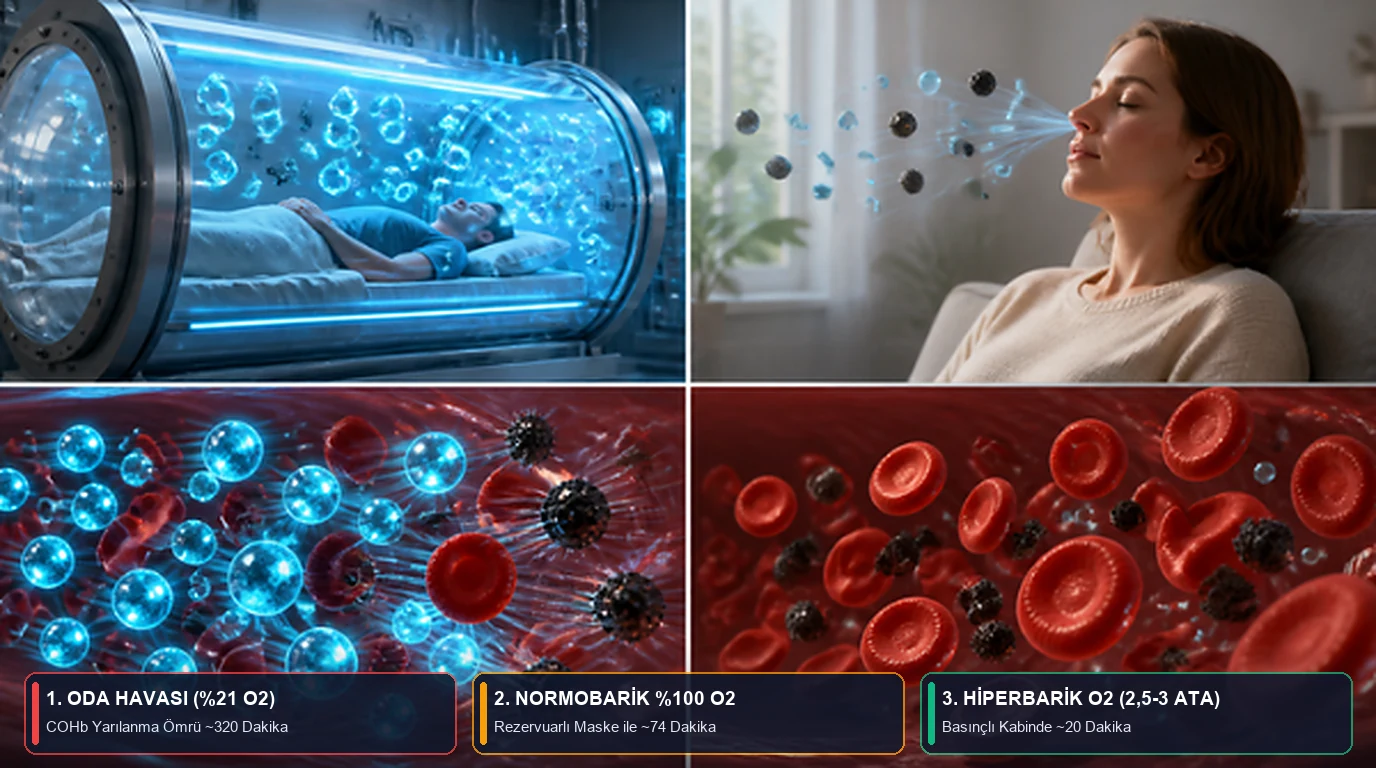
- → Hyperbaric Oxygen (HBO2) Efficacy (Weaver et al., 2002): COHb half-life drops from 320 minutes in room air to 74 minutes on 100% normobaric oxygen, and to approximately 20 minutes under 2.5–3.0 ATA HBO2, significantly cutting 6-week neurocognitive sequelae from 46.1% to 25.0%.
⚠️ Emergency Medical Notice: This content is strictly educational and grounded in peer-reviewed clinical biochemistry, physiology, and toxicology; it does not replace urgent clinical diagnosis or hospital emergency management. If you experience headache, dizziness, nausea, confusion, chest tightness, or syncope in any enclosed environment (boiler room, garage, generator room, or smoke environment), evacuate to fresh air immediately and dial emergency services (911 / 112).
Quick Summary
- The Triple Biochemical Blow: Carbon monoxide (CO) does not merely cause simple asphyxiation; it strikes by (1) Locking hemoglobin (COHb), (2) Paralyzing cardiac myoglobin, and (3) Poisoning mitochondrial Cytochrome c Oxidase (Complex IV), causing energetic collapse and oxidative stress [1, 2, 3].
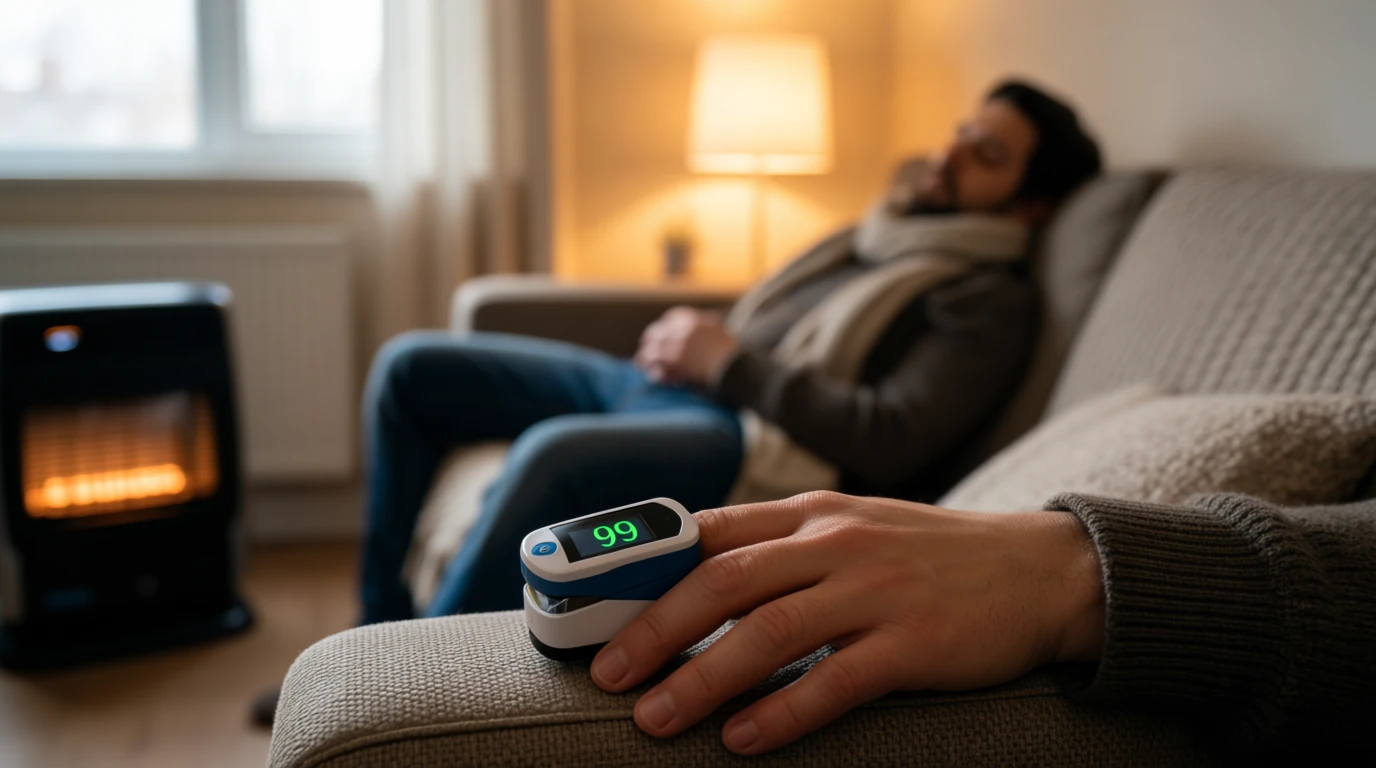
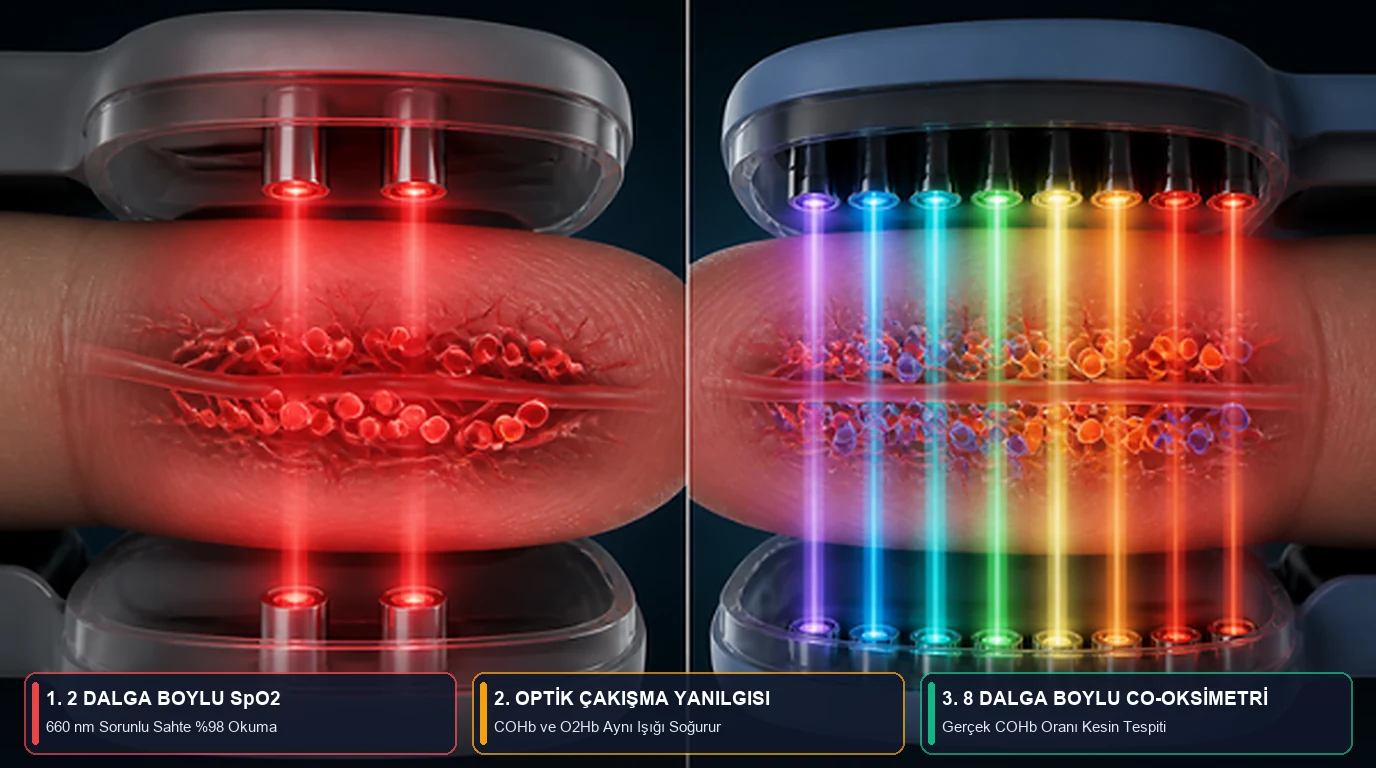
- The Pulse Oximetry Trap: Standard two-wavelength (660 nm / 940 nm) fingertip pulse oximeters (
SpO2) read carboxyhemoglobin as normal oxyhemoglobin, falsely displaying99%even during life-threatening poisoning [1, 2]. - Half-Life Elimination Kinetics: Carboxyhemoglobin elimination half-life is ~320 minutes (5.3 hours) in room air (
21% O₂), 74 minutes on high-flow100% O₂, and drops to ~20 minutes under 2.5–3.0 ATA hyperbaric oxygen (HBO₂) [1, 4]. - Delayed Brain Pathology: Even after blood COHb levels normalize, early hyperbaric oxygen therapy plays a vital neuroprotective role in preventing Delayed Neurological Sequelae (DNS) caused by leukocyte microvascular adhesion and myelin lipid peroxidation [2, 4].
Introduction: Why Do Cells Suffocate When Oxygen Is Present?
Whether caused by a malfunctioning furnace flue, an unvented portable generator running in an attached garage, or accidental discharge of fire suppression agents in an industrial mechanical room, carbon monoxide (CO) is clinically revered as the “great imitator” and the “silent killer” [1, 2].
Many assume carbon monoxide poisoning is simply a lack of atmospheric oxygen (asphyxia). In reality, cellular suffocation persists for hours after a victim reaches clean air and breathes deeply. Patients discharged as “fully recovered” may return 20 days later suffering from severe memory lapses, parkinsonian tremors, and gait disturbances [1, 2, 4]. Carbon monoxide is a multi-tiered cytotoxic agent targeting both respiratory electron transport and cerebral myelin integrity [2, 3].
1. Hemoglobin Hijacking (COHb) & The Haldane Effect
Inhaled carbon monoxide diffuses rapidly across the alveolar-capillary membrane into erythrocytes, binding avidly to the ferrous iron (Fe²⁺) porphyrin center of hemoglobin [1, 2].
200–250x Binding Affinity & Allosteric Locking
Seminal clinical reviews by Dr. Lindell K. Weaver in The New England Journal of Medicine and Jason J. Rose and colleagues in the American Journal of Respiratory and Critical Care Medicine highlight two catastrophic biophysical consequences [1, 2]:
- Massive Competitive Advantage (
200–250x): CO exhibits an affinity for human hemoglobin approximately 200 to 250 times greater than oxygen (O₂) [1, 2]. Consequently, an atmospheric concentration as low as 0.1% (1,000 ppm) CO can occupy 50% of total hemoglobin binding capacity (50% COHb) [1]. - The Haldane Effect (Leftward Shift of Dissociation Curve): When CO occupies even a single heme moiety within a hemoglobin tetramer, the quaternary structure is locked into the high-affinity relaxed (R) conformation. This dramatically increases the binding affinity of the remaining three oxygen molecules, preventing their unloading in peripheral capillaries [1, 2].
- Clinical Outcome: The oxyhemoglobin dissociation curve shifts severely to the left (becoming hyperbolic). Even if arterial blood is carrying oxygen, hemoglobin refuses to release it to hypoxic neural and myocardial cells [1, 2].
2. More Dangerous Than Hypoxemia: Myoglobin and Cytochrome c Oxidase (Complex IV) Poisoning
For decades, clinicians attempted to correlate patient symptoms strictly with blood COHb percentage. However, clinical presentations frequently contradict this metric: a patient’s initial COHb level does not reliably predict clinical severity or long-term neurocognitive risk [1, 2]. Free dissolved CO directly targets intracellular hemoproteins:
2.1. Myocardial Depression via Myoglobin Poisoning (~60x Affinity)
Carbon monoxide binds to intracellular myoglobin in cardiac and skeletal myocytes with an affinity roughly 60 times greater than oxygen [1, 2]. Because cardiac myocardium relies on uninterrupted aerobic flux, CO binding impairs myocardial contractility, precipitates systemic hypotension and ventricular dysrhythmias, and compromises cerebral perfusion pressure [1, 2].
2.2. Mitochondrial Complex IV Inhibition (Alonso et al., 2003)
In a definitive study on human mitochondrial respiration published in Pharmacology & Toxicology, Jose-Ramon Alonso and colleagues proved that CO halts cellular respiration directly [3]:
- Cytochrome c Oxidase (
Complex IV) Inactivation: Dissolved CO diffuses into the mitochondrial matrix and binds directly to the reduced ferrous (Fe²⁺) binuclear heme center of Cytochrome c Oxidase (Complex IV / cytochromeaa₃) [3]. - ATP Depletion & Electron Leakage: Inactivating Complex IV halts the electron transport chain, collapsing the proton gradient and ATP synthesis. Backlogged electrons at Complexes I and III leak directly into the matrix, generating massive amounts of superoxide (
O₂•⁻), hydrogen peroxide (H₂O₂), and peroxynitrite (ONOO⁻) [1, 2, 3]. - Prolonged Intracellular Entrapment: Even after normobaric oxygen cleanses blood COHb, CO dissociates far more slowly from tissue Cytochrome c Oxidase, sustaining intracellular mitochondrial distress for hours [2, 3].
3. Delayed Neurological Sequelae (DNS): The Post-Recovery Immune Storm
The most insidious feature of CO poisoning is the lucid interval (2 to 40 days): a patient regains consciousness, feels clinically improved, and is discharged—only to suffer sudden, catastrophic Delayed Neurological Sequelae (DNS) weeks later [1, 2, 4].
According to mechanistic investigations by Thom, Weaver, and colleagues, delayed pathology is an immune-mediated neuroinflammatory cascade [1, 2, 5]:
- Endothelial Dysfunction & Peroxynitrite Formation: CO induces endothelial nitric oxide synthase (
eNOS) de-repression, flooding the vascular bed with nitric oxide (NO), which reacts with superoxide to form the potent cytotoxin peroxynitrite (ONOO⁻) [1, 2]. - Leukocyte Sequestration & Myeloperoxidase Release: Platelet-neutrophil complexes adhere to cerebral microvasculature via β₂-integrins, releasing myeloperoxidase (MPO) into surrounding brain parenchyma [1, 2, 5].
- Myelin Basic Protein (MBP) Peroxidation: Free radical oxidation alters the antigenic structure of Myelin Basic Protein (MBP) in the insulating sheath of cerebral axons. Microglia and autoreactive T-lymphocytes identify modified MBP as a foreign epitope, mounting an autoimmune-like demyelinating attack on subcortical white matter [1, 2, 5].
- Clinical Manifestations: Bilateral lesions target the globus pallidus, hippocampus, and deep periventricular white matter, manifesting as retrograde amnesia, cognitive impairment, emotional blunting/psychosis, urinary incontinence, and parkinsonism [1, 4].
4. Normobaric Oxygen vs. Hyperbaric Oxygen (HBO₂): The Weaver Trial (NEJM, 2002)
Dislodging carbon monoxide from heme centers relies on mass action: elevating dissolved plasma oxygen partial pressure (PaO₂) accelerates competitive displacement [1, 2, 4]:
| Treatment Regimen | Delivered Oxygen Pressure | COHb Elimination Half-Life (t₁/₂) | Cellular & Immunological Efficacy |
|---|---|---|---|
1. Ambient Room Air (21% O₂, Sea Level) | 1.0 ATA (~0.21 bar O₂) | ~320 minutes (5h 20m) [1] | Extremely slow clearance; severe ongoing tissue hypoxia and mitochondrial block. |
2. 100% Normobaric Oxygen (NBO₂) (Non-Rebreather Mask) | 1.0 ATA (1.0 bar O₂) | ~74 minutes (1h 14m) [1, 4] | Accelerates blood COHb clearance; poorly attenuates β₂-integrin leukocyte adherence [5]. |
3. Hyperbaric Oxygen (HBO₂) (Hyperbaric Chamber — Weaver Protocol) | 2.5 – 3.0 ATA (100% O₂) | ~20 minutes [1, 2, 4] | Maximizes dissolved plasma O₂, rapidly restarts Complex IV, and blocks neutrophil-mediated MBP peroxidation [1, 4, 5]. |
The Double-Blind Randomized Controlled Trial (Weaver et al., NEJM 2002)
Dr. Lindell K. Weaver and colleagues conducted a seminal double-blind randomized clinical trial (152 patients) comparing three HBO₂ sessions (initial 3.0 ATA, subsequent 2.0 ATA) against normobaric oxygen within 24 hours of exposure [4]:
- Cognitive Sequelae at 6 Weeks: In the normobaric oxygen group, 46.1% (35/76) of patients suffered persistent neurocognitive deficits (memory and attention decline); in the HBO₂ group, sequelae were reduced to 25.0% (19/76) (
p = 0.007; adjusted odds ratioOR = 0.39) [4]. - Long-Term Protection at 12 Months: The cognitive protection persisted significantly at 1-year follow-up (
32%vs.18%;p = 0.04) [4].
5. Practical Safety Protocols: 4 Layers of Defense
- Install EN 50291 Certified Electrochemical CO Detectors: Smoke detectors do not detect carbon monoxide. Every residence with gas appliances, fireplaces, or attached garages requires an electrochemical CO alarm placed at breathing level near sleeping areas [1, 2].
- Never Run Portable Generators in Enclosed/Semi-Enclosed Spaces: Portable generators or fuel engines must never be operated inside garages, basements, or near open windows—even with doors open [1].
- Industrial Confined Space Isolation (LOTO): In commercial mechanical spaces with fixed gas suppression systems, strictly enforce mechanical Lockout/Tagout (LOTO) protocols and continuous multi-gas personal monitoring (
O₂,CO,H₂S,LEL). - Never Rely on Conventional Fingertip Pulse Oximetry: Dual-wavelength oximeters cannot distinguish COHb from O2Hb; only multi-wavelength pulse CO-oximeters or arterial blood gas co-oximetry provide accurate diagnostics [1, 2].
Evidence Confidence Ratings
| Clinical Finding | Evidence Confidence |
|---|---|
| CO binds to hemoglobin with 200–250x higher affinity and induces the Haldane effect | 🟢 Robust |
| CO inhibits mitochondrial Cytochrome c Oxidase (Complex IV), reducing ATP and elevating ROS | 🟢 Robust |
Standard 2-wavelength pulse oximeters (SpO2) cannot differentiate COHb from O2Hb | 🟢 Robust |
| Hyperbaric oxygen reduces COHb half-life to ~20 minutes and curbs delayed cognitive deficits | 🟢 Robust (Weaver et al., 2002 double-blind RCT) |
| Standalone antioxidant pharmacotherapy reliably prevents Delayed Neurological Sequelae | 🟡 Emerging (Active preclinical and translational investigation [2]) |
Frequently Asked Questions
Can a fingertip pulse oximeter (SpO2) detect carbon monoxide poisoning?
No; standard fingertip pulse oximeters cannot detect carbon monoxide and often read falsely normal (98–100%) [1, 2]. Standard devices use only two light wavelengths (660 nm and 940 nm), where carboxyhemoglobin absorbs light similarly to oxyhemoglobin. Accurate non-invasive testing requires an 8-wavelength pulse CO-oximeter or a clinical co-oximetry blood gas panel [1, 2].
Why do memory loss and personality changes appear weeks after apparent recovery?
Because CO induces microvascular endothelial injury, generating peroxynitrite (ONOO⁻) and leukocyte adhesion that oxidizes Myelin Basic Protein (MBP) [1, 2, 5]. This triggers an autoimmune-like demyelinating process across subcortical white matter, culminating in Delayed Neurological Sequelae (DNS) 2 to 40 days post-exposure [1, 4, 5].
Which patients should be considered for Hyperbaric Oxygen (HBO₂) therapy?
According to clinical guidelines (Weaver, 2009), HBO₂ is strongly indicated for patients presenting with loss of consciousness, neurological/cognitive deficits, acute myocardial ischemia, severe metabolic acidosis, pregnancy, or a blood COHb level exceeding 25% [1, 2, 4].
Scientific References
- Weaver LK. Clinical Practice: Carbon Monoxide Poisoning. The New England Journal of Medicine. 2009;360(12):1217-1225. PMID: 19297574 | DOI:
10.1056/NEJMcp0808891 - Rose JJ, Wang L, Xu Q, et al. Carbon Monoxide Poisoning: Pathogenesis, Management, and Future Directions of Therapy. American Journal of Respiratory and Critical Care Medicine. 2017;195(5):596-606. PMID: 27753502 | DOI:
10.1164/rccm.201606-1275CI - Alonso JR, Cardellach F, López S, Casademont J, Miró O. Carbon monoxide specifically inhibits cytochrome c oxidase of human mitochondrial respiratory chain. Pharmacology & Toxicology. 2003;93(3):142-146. PMID: 12969439 | DOI:
10.1034/j.1600-0773.2003.930306.x - Weaver LK, Hopkins RO, Chan KJ, et al. Hyperbaric Oxygen for Acute Carbon Monoxide Poisoning. The New England Journal of Medicine. 2002;347(14):1057-1067. PMID: 12362011 | DOI:
10.1056/NEJMoa013121 - Thom SR, Bhopale VM, Fisher D, Zhang J, Gimotty P. Delayed neuropathology after carbon monoxide poisoning is immune-mediated. Proceedings of the National Academy of Sciences (PNAS). 2004;101(37):13660-13665. PMID: 15342916 | DOI:
10.1073/pnas.0405642101
For informational purposes only; consult a physician for medical diagnosis or treatment.